Zombo receives two seed secondary schools to expand access to education
According to district education statistics, the commissioning of the two schools is expected to contribute to reducing Zombo’s school dropout rate, currently estimated at 10 percent.

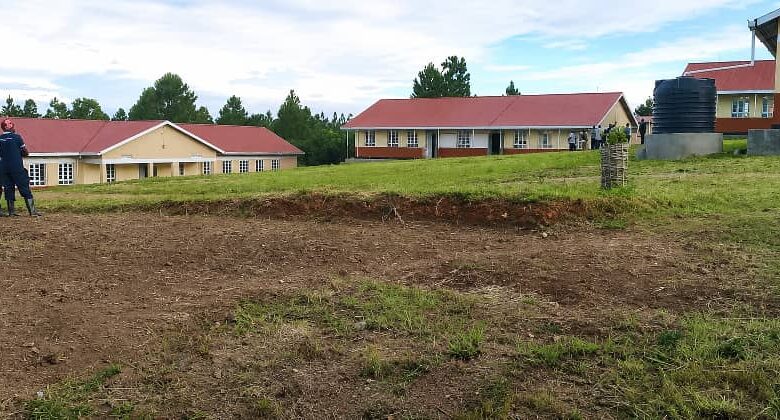

Zombo: The Government of Uganda, with support from the World Bank under the Uganda Intergovernmental Fiscal Transfers (UgIFT) Programme, has completed and handed over two fully equipped seed secondary schools in Zombo District, a move expected to significantly improve access to quality education in rural communities.
The newly established Kango Seed Secondary School in Kango Sub-county and Amei Seed Secondary School in Paidha Sub-county were officially handed over to district leaders and local communities on June 2, 2026, by contractor Newton Technical Services.
Constructed at a total cost of UGX 4.8 billion, with each school costing UGX 2.4 billion, the facilities are intended to increase secondary school enrollment, improve retention rates, and enhance learning outcomes in one of Uganda’s underserved regions.
The schools are fully furnished with classrooms, science laboratories, computer laboratories, office blocks, sanitation facilities, teachers’ quarters, and water and electricity infrastructure. Learning materials including desks, bookshelves, and tables have also been provided to create a conducive environment for teaching and learning.
Speaking during the handover ceremony, Zombo District Senior Civil Engineer Isaac Ngageno said the district would closely monitor the projects during the defects liability period.

“Amei and Kango Seed Secondary Schools projects are implemented under UGIFT, each school costed UGX 2.4 billion. Practical completion was attained in December 2025. Defects liability period runs up to December 2026,” Ngageno said.
The contractor, Newton Technical Services, pledged to complete outstanding works, particularly electricity connections, once power lines are extended to the school compounds.
“We are giving the district a commitment letter to complete the remaining works,” said company director Muragesh Hiremath, who commended district authorities for their cooperation throughout the project.

Zombo District Education Officer Patrick Angala revealed that both schools already have operational bank accounts and that the Ministry of Education and Sports has delivered laboratory equipment, reagents, apparatus, and computers awaiting installation once electricity is connected.
Meanwhile, Principal Assistant Secretary Ephraim Kumakech urged communities, teachers, and learners to fully embrace education while also promoting games and sports as part of holistic development.
District LCV Chairperson James Uyullu Uruna called on residents to take ownership of the new infrastructure and ensure increased enrollment to maximize the benefits of the government’s investment. He also directed sub-county leaders to submit names of qualified individuals for consideration as members of the schools’ Boards of Governors.
Under the UgIFT arrangement, four-unit teachers’ houses are also being constructed at both schools to improve staff welfare and retention.
Community members welcomed the development, expressing optimism that the schools will bring education services closer to learners.
Seventy-five-year-old resident Uzunga Mateo encouraged parents and farmers to invest in income-generating agricultural activities to support their children’s education.
He urged farmers to utilize livelihood funds to grow high-value crops such as onions, cabbages, groundnuts, coffee, and beans, saying the increased income would help families meet school expenses.
At Kango Seed Secondary School, lessons have already commenced with the help of volunteer teachers. According to Kango Sub-county LCIII Chairperson Christino Odaga, the teaching staff includes diploma and degree holders from different ethnic backgrounds.
“We have Kebu, Lugbara and Madi who are the minority tribes in Zombo District, while also Alur and Bantu tribes are teaching the learners,” Odaga said.
In Paidha Sub-county, LCIII Chairperson Austman Wathum said Amei Seed Secondary School has already registered 52 learners in Senior One and Senior Two, with volunteer teachers currently conducting classes.
The two schools are expected to serve learners from several feeder primary schools. Paidha Sub-county has six government-aided primary schools, while Kango Sub-county has seven.
Education leaders believe the new institutions will help address longstanding educational challenges in West Nile, where a significant proportion of the population has limited access to formal education.
According to district education statistics, the commissioning of the two schools is expected to contribute to reducing Zombo’s school dropout rate, currently estimated at 10 percent.
Leaders further noted that the addition of Amei and Kango Seed Secondary Schools, alongside existing seed schools such as Pakadha, Atyak, and Jangokoro, as well as the planned Alangi Seed School, will strengthen the district’s secondary education network and improve transition rates from the district’s 92 public primary schools.
The expansion is expected to play a key role in improving literacy levels and human capital development across Zombo District and the wider West Nile region.
Do you have an advertisement or article you want to publish? Mail us at theugreports@gmail.com or WhatsApp +256757022363.