Sugarcane farmers in Bunyoro, Tooro reject proposed Shs300 Excise Duty on sugar
Byamukama noted that farmers are comfortable maintaining the current Shs100 excise duty, arguing that the sector already contributes about Shs500 billion in taxes annually.

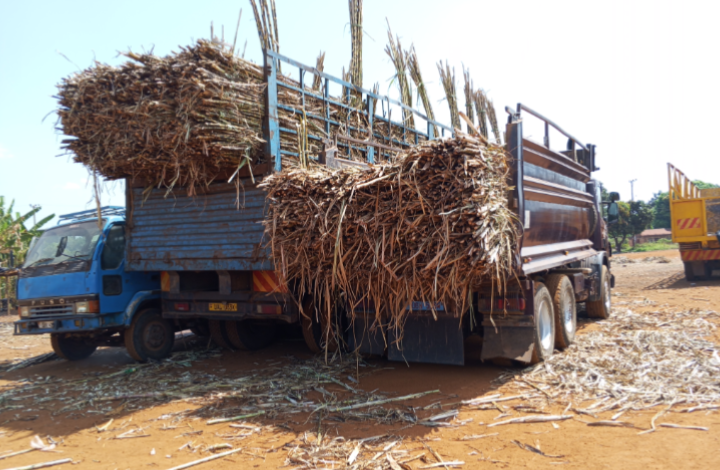

Hoima: Sugarcane farmers from the Bunyoro and Tooro sub-regions, under their umbrella body, the Bunyoro Tooro Sugarcane Farmers Association (BUTOS) have strongly opposed the government’s proposal to increase excise duty on sugar from Shs100 to Shs300 per kilogram.
The farmers are urging Members of Parliament from the two regions and across the country to reject the proposed tax, arguing that it will severely affect their livelihoods.
The proposal is part of a broader set of tax measures for the 2026/2027 financial year, expected to take effect on July 1, 2026. Other proposed taxes include a 0.5% levy on gross turnover for companies reporting losses for seven consecutive years, a 10% tax on annual employment income exceeding Shs120 million, a 6% withholding tax on the sale of non-business assets such as land and shares, and a 5% withholding tax on interest on external loans.
Additional measures include a 10% withholding tax on commissions for telecom and mobile money agents, reclassification of software payments as royalties subject to higher tax rates, a Shs200 levy per litre of petrol and diesel, and an increase in excise duty on cement to Shs1,000 per 50kg bag.
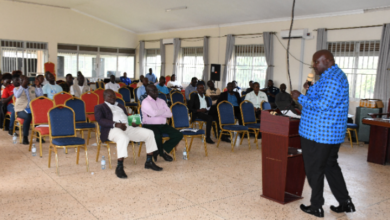
On Monday, April 20, 2026, farmers from Masindi, Kikuube, Kyenjojo, Kiryandongo, and Hoima districts convened an extraordinary meeting at Kolping Hotel in Hoima City to strategize on how to oppose the tax.

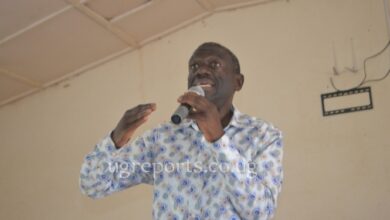
Speaking at the meeting, BUTOS Chairperson Patrick Byamukama said the proposed increment would significantly hurt farmers, noting that it would translate into about Shs150,000 per 50kg bag of sugar and Shs30,000 per tonne.
“This increment is unfair. Farmers are already burdened by multiple taxes, including the indirect impact of the 18% Value Added Tax,” Byamukama said.
He warned that if the proposal is passed, farmers will bear the cost while government revenue increases, potentially forcing many out of the sugarcane business.

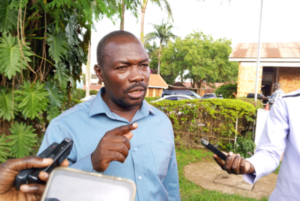
“We are going to petition the Speaker of Parliament to review this tax before it is passed. Government must be cautious because excessive taxation could push farmers out of production,” he added.
Byamukama noted that farmers are comfortable maintaining the current Shs100 excise duty, arguing that the sector already contributes about Shs500 billion in taxes annually.
Robert Atugonza, the Bunyoro-Tooro representative to the Uganda Sugar Industry Stakeholders Council accused the government of misrepresenting the tax. “They say it is a tax on sugar, but in reality, it is the farmer who suffers,” Atugonza said.
Atugonza who doubles as the Chairperson of the Masindi District Sugarcane Outgrowers Association Limited (MASGAL), revealed that farmers across sugarcane-growing regions in Uganda are opposed to the proposal and warned that they may suspend supplying cane to sugar companies if the tax is implemented.
“The government should widen the tax base by including other sectors like dairy instead of overburdening sugarcane farmers,” he added.
Atugonza also raised concerns about tax leakages in the industry, alleging that some millers under-declare production or fail to remit taxes fully.
He urged Parliament, particularly the Committee on Trade, to handle the matter carefully, noting that the sugar industry supports thousands of jobs directly and indirectly.
Barwane Batinire, Chairperson of the Kyenjojo Sugarcane Growers Association, emphasized the need for collective action among stakeholders.
Mary Mujumura, a farmer from Masindi District and member of MASGAL and the Uganda National Sugar Growers Association (UNASGO), proposed convening a meeting with MPs from Bunyoro and Tooro to help them better understand the implications of the tax.
“If the decision is not reversed, we shall abandon sugarcane growing and shift to other crops. Government supports cattle keepers with vaccines what support does it give sugarcane farmers?” Mujumura questioned.
She also urged government to consider taxing other agricultural products such as tobacco, cotton, maize, and beans instead of placing a heavier burden on sugarcane farmers.
Phinehans Kyotasobora, Vice Chairperson of MASGAL, called for the involvement of technocrats from the Ministries of Finance and Trade, as well as parliamentary technical staff, in stakeholder engagements.
Farmers also used the meeting to demand a review of the Sugar Act, particularly provisions on cane pricing.
Kyotasobora criticized the delayed implementation of the sugarcane pricing formula, noting that it is being applied selectively. “It is unusual to have a law implemented in phases. The pricing formula must be fully operationalized,” he said.
He added that the pricing model should take into account by-products such as electricity, bagasse, fertilizers, and spirits derived from sugarcane.
BUTOS was formed in July 2025 to unify and advocate for the interests of sugarcane farmers in the Bunyoro and Tooro sub-regions.
Do you have an advertisement or article you want to publish? Mail us at theugreports@gmail.com or WhatsApp +256757022363.