Solar-powered dehydration hubs to transform Kiryandongo agriculture sector
Stakeholders described the project as timely, especially as farmers increasingly face unpredictable weather patterns that affect agricultural production and storage.


Kiryandongo: Kiryandongo District is set to benefit from a major climate-resilient agricultural investment aimed at reducing post-harvest losses and transforming seasonal farm surpluses into marketable products.
The district will receive a Shs 5.87 billion Dehydrated Products Supply Chain Development Project to be implemented by Excel Hort Consult with funding support from the Food and Agriculture Organization (FAO).
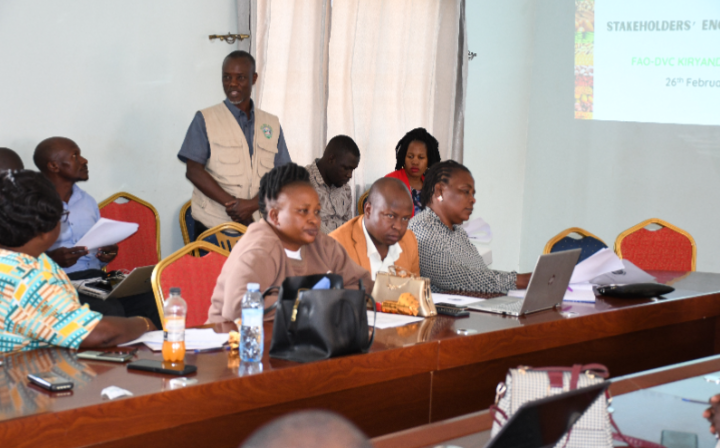
The development was revealed during a stakeholders’ meeting held at the Kiryandongo District Headquarters, which brought together local government leaders, technical officers, development partners, and farmer representatives.
Speaking during the meeting, the Project Manager at Excel Hort Consult, Dr. Charles Lwanga Malingu, said the initiative will introduce a solar-assisted dehydration system designed to provide a climate-resilient and market-oriented solution to the agricultural production challenges faced by farmers.
Dr. Malingu explained that the technology will enable farmers to convert seasonal agricultural surpluses into shelf-stable and tradable food products, thereby reducing wastage during peak harvest periods while expanding access to regional and national markets.

“The project leverages solar-assisted dehydration as a sustainable solution that addresses climate variability while promoting inclusive local enterprise and market development,” he said.
The project will directly benefit 1,000 smallholder farmer households drawn from both refugee settlements and host communities across Kiryandongo District.
Priority value chains identified for intervention include cassava, maize, sweet potatoes, okra, and cabbage—commodities widely grown in the district but often affected by high post-harvest losses.

Officials say the intervention is expected to strengthen food security, improve household incomes, and promote economic self-reliance among refugees and host communities.
Kiryandongo hosts one of Uganda’s largest refugee populations, placing increasing pressure on livelihoods and agricultural systems. The project is therefore expected to contribute significantly to sustainable coexistence and shared economic opportunities.
Upon completion, the project will establish two solar-powered dehydration hubs within the district. The facilities will provide farmers with affordable services including drying, sorting, grading, milling, packaging, and storage.
The hubs are expected to serve not only farmers in Kiryandongo but also producers from neighboring districts, positioning the area as a regional center for value addition and agro-processing.
Farmers in Kiryandongo have been experiencing significant losses during post-harvest handling and storage. According to the District Production Officer, Mr. Byenkya Isa Hassan, farmers lose about 10 percent of their harvest due to poor post-harvest management.
Kiryandongo Chief Administrative Officer Anselm Kyaligonza welcomed the initiative and urged FAO and Excel Hort Consult to prioritize local participation during the implementation of the project.
He emphasized the need to involve local agro-input dealers in supplying farm inputs required by beneficiary households, noting that this approach would strengthen local businesses and enhance community ownership.
“This will help localize the project and ensure sustainability beyond donor support,” Kyaligonza said.
He further pledged full technical and political support from district authorities to ensure the successful implementation of the project.
Stakeholders described the project as timely, especially as farmers increasingly face unpredictable weather patterns that affect agricultural production and storage.
By promoting renewable energy-powered processing and structured market access, the initiative is expected to reduce food losses, stabilize prices, and create new agribusiness opportunities along the agricultural value chain.
The Kiryandongo District Chairperson, Edith Aliguma Adyeeri, said the project will improve food security in the district and urged farmers to embrace the use of the dehydration hubs. She also appreciated FAO for its continued support to the agricultural sector in Kiryandongo District.
Once operational, the dehydration supply chain project is expected to transform Kiryandongo’s agricultural sector from largely subsistence production to commercial, climate-resilient, and market-driven farming, contributing to long-term rural economic growth.
Do you have an advertisement or article you want to publish? Mail us at theugreports@gmail.com or WhatsApp +256757022363.