Wetland restoration, protection of water sources launched in Zombo
“This project is about standing with communities who bear the brunt of climate change while contributing least to its causes,” Kizito said.

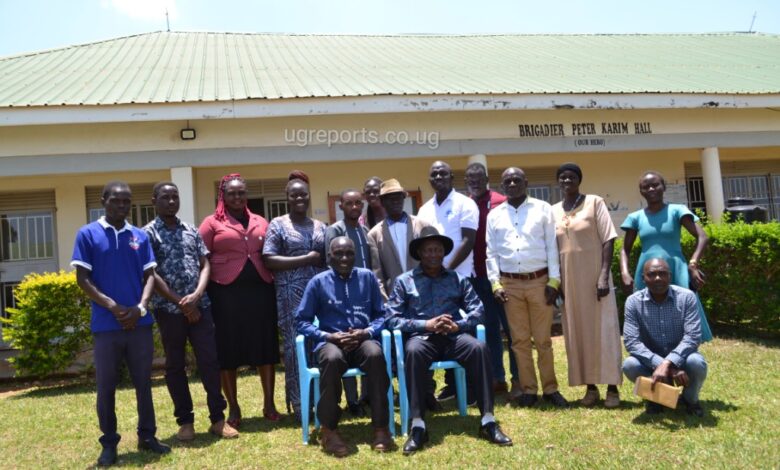

Zombo: Life Concern (LICO), a non-governmental organization, has launched the Stand for Climate Justice (SCJ-11) project in Zombo District, a two-year climate resilience and environmental conservation initiative targeting wetland protection, water-source conservation and indigenous seed preservation.
The project, running from May 2026 to May 2028, will be implemented in Nyapea Sub-county and Paidha Town Council at a cost of Shs70 million.
LICO Executive Director Kakura Emmy Kizito said the project will implement 13 community-based interventions aimed at strengthening climate resilience, protecting ecosystems, improving water security and enhancing food-system resilience.
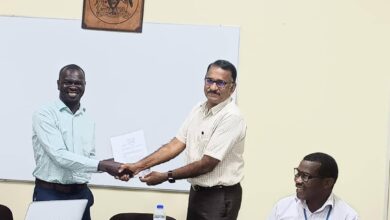
Speaking during the presentation of the project brief at Zombo District headquarters on Friday, August 28, 2026, Kakura said climate justice requires prioritising communities that are disproportionately affected by climate change despite contributing little to global greenhouse-gas emissions.
“This project is about standing with communities who bear the brunt of climate change while contributing least to its causes,” Kizito said.

He said protecting springs, promoting sustainable wetland management and conserving indigenous seed varieties would strengthen community resilience, protect livelihoods and safeguard natural resources for future generations.
Under the project, LICO will rehabilitate and protect two community water sources in Mundhel Parish, Nyapea Sub-county, and Aluka Cell in Paidha Town Council.
The intervention will include planting vetiver and other suitable vegetation around the water sources to control erosion, improve infiltration and protect catchment areas.

The organisation will also establish and train two inclusive Community Wetland Management and Water User Committees to promote community stewardship, sustainable utilisation and protection of natural resources.
LICO Project Officer for Stand for Climate Justice, Jackline Oweknyinga, called for stronger collaboration among stakeholders, noting that some community-based environmental interventions have previously faced resistance due to limited awareness and negative attitudes.
“We are going into the community, and we expect stakeholders to coordinate and support us. We have been facing resistance from communities due to limited understanding of community-led initiatives,” Oweknyinga said.
The project will also strengthen agro-biodiversity and climate-resilient food systems through the establishment of a LICO-managed traditional seed bank, documentation of indigenous seed varieties, and training of staff and community representatives in seed conservation, propagation and management.
Other interventions will include community mobilisation meetings, climate and environmental awareness radio dialogues, knowledge exchange through benchmarking visits to established seed banks, and continuous monitoring, evaluation and documentation.
Wetland and water conservation
LICO said the first year will focus on project inception meetings with district, sub-county, religious and cultural leaders; community mobilisation and participatory planning; spring protection and vegetation establishment; radio sensitisation; formation of resource-management committees; and monitoring.
The second year will focus on a learning visit to established seed banks, a three-month inventory and documentation of indigenous seed varieties, establishment and equipping of the traditional seed bank, capacity building, and development of a seed-bank management framework.
Kakura said the project complements government efforts in environmental restoration, climate adaptation and sustainable service delivery, particularly amid declining donor funding that has constrained the budgets of civil society organizations.
Building on environmental interventions
The SCJ-11 project builds on LICO’s previous interventions in Zombo and the wider West Nile region, including tree planting, ecosystem restoration, water-source protection, vocational skilling, education retention, youth empowerment, livelihood development, peacebuilding and human-rights programmes.
LICO has also supported restoration of the River Nyagak catchment, including demarcation, planting of indigenous trees and vegetation, and community sensitisation on environmental protection.
The organisation’s education and livelihood interventions include the Life Concern Skilling Centre in Paidha Town Council and the Aloci ku Somu (“Winners with Education”) project, which supports education retention, vocational training and provision of start-up kits to graduates.
LICO also works with partners on accountability and education initiatives, including the TRINITY consortium with Nebbi NGO Forum and CEFORD.
Stakeholders pledge support
Zombo District LCV Chairperson James Oruna Oyullu commended LICO for the initiative and pledged stakeholder support, urging the organisation to ensure the project delivers tangible benefits to communities.
Lawrence Ruvakuma, Zombo District Water Officer, called for extensive community sensitisation to prevent land-related disputes and pledged technical support in assessing the planned water points.
The Prime Minister of Alur Kingdom, Prince Lawrence Opar Angala, welcomed the initiative, describing LICO as a “close partner of Alur Kingdom.”
“It is our responsibility to carry the message to our people so that they understand the benefits of the programme,” Opar said.
Constantine Omwon, LCIII Chairperson of Nyapea Sub-county, and Amos Jacan, LCIII Chairperson of Paidha Town Council, also welcomed the project and called for increased community awareness and mindset change.
Walter Ongiera, Senior Community Development Officer in Zombo, urged LICO and its partners to conduct regular review meetings and maintain direct engagement with beneficiary communities.
LICO said the Stand for Climate Justice Project is part of its continued commitment to promoting ecosystem restoration, climate adaptation, sustainable natural-resource management and community resilience in Zombo District.
The organisation called on communities and stakeholders to embrace climate action and strengthen local stewardship of wetlands, water catchments and indigenous agricultural biodiversity.
Do you have an advertisement or article you want to publish? Mail us at theugreports@gmail.com or WhatsApp +256757022363.