Unyama Irrigation Scheme stalls over Shs2.5bn compensation dispute
The standoff has reportedly prevented the contractor from establishing a site camp and commencing preliminary works, as the ministry has not yet handed over the project site.


Gulu: Construction of the multi-billion-shilling Unyama Irrigation Scheme, which is expected to cover parts of Gulu and Amuru districts, remains stalled nearly a decade after it was first designed, with delayed compensation for 104 project-affected persons (PAPs) emerging as the main obstacle.
The Ministry of Water and Environment says it requires Shs 2.5 billion to compensate the affected landowners before the project site can be handed over for construction.
At least 104 landowners say they were validated as project-affected persons and instructed to open bank accounts to facilitate payment. However, they claim they have yet to receive their compensation and insist they will not surrender their land until they are paid.
The standoff has reportedly prevented the contractor from establishing a site camp and commencing preliminary works, as the ministry has not yet handed over the project site.
Initially designed in 2017, the scheme failed to take off because of funding constraints. The Islamic Development Bank (IsDB) and the Arab Bank for Economic Development in Africa (BADEA) later agreed to co-finance the project alongside the Government of Uganda.

However, implementation encountered further delays after the funding arrangement reportedly required the procurement of a consultant from an Arab country.
The project is being implemented jointly by the Ministry of Water and Environment (MWE) and the Ministry of Agriculture, Animal Industry and Fisheries (MAAIF) under the Farm Income Enhancement and Forest Conservation Programme – Project 3 (FIEFOC-3).
The programme aims to reduce poverty and stimulate economic growth by increasing agricultural productivity and commercialisation, improving food security, raising household incomes and promoting sustainable natural resource management.

Ministry appeals to landowners
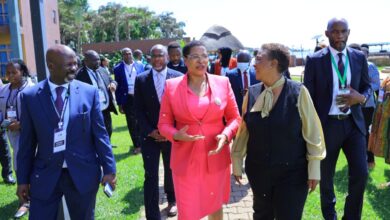
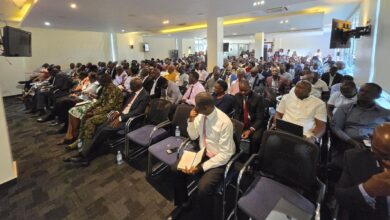
During a meeting with local leaders and some project-affected persons from Gulu District on October 22, 2026, ministry officials appealed to landowners to allow construction to begin before all compensation payments are completed, assuring them that outstanding payments would be addressed.
Eng. Patrick Okotel, manager of the ministry’s Multi-Purpose and Bulk Water Development Northern Uganda, said the immediate priority was to enable the contractor to access the site and begin work in areas where landowners had agreed to the proposed compensation arrangements.
“Our interest now is to see the Contractor be handed over the site and be allowed to commence the work in the area where the owner has agreed to compensation; meanwhile, it will be sorted in a phased manner after proper agreement with the landowner is documented,” Okotel said.
However, the proposed phased approach has raised concerns among some affected residents, who say they had previously been assured that their land would not be used until compensation was paid.
The disagreement has left the project facing a stalemate, with the ministry seeking access to the site while some landowners maintain that payment must precede any construction activities on their property.
Scheme to irrigate 700 hectares
The Unyama Irrigation Scheme is expected to provide irrigation infrastructure for 700 hectares of land, comprising 200 hectares in Gulu District and 500 hectares in Amuru District.
The project will also include a water reservoir with a capacity of 15.25 million cubic litres.
Arab Construction Engineer/IBEC is the project consultant, while Ambitious Construction Limited is the contractor.
Figures presented during discussions indicate that 33 of the 56 project-affected persons in Gulu have reportedly consented to the use of their land. In Amuru, 30 of the 48 affected persons have reportedly given their consent.
However, some local leaders say the reported consent figures are disputed, citing concerns over how consent was obtained, the valuation of land and the extent to which communities were involved in the land acquisition process.
Local leaders question compensation rates
Gulu District LCV Chairperson Justine Obol questioned why the project had failed to materialise despite being planned several years ago.
Obol said the ministry should have involved district leaders more closely in the land acquisition process, arguing that their participation would help address community concerns, improve transparency and build public trust.
He maintained that residents were not opposed to the irrigation scheme but wanted a transparent and fair compensation process.
Obol also questioned how the ministry arrived at the proposed compensation rate of Shs 1.5 million per acre, saying the basis for the valuation needed to be explained.
He urged the ministry to work with Gulu District leaders to meet affected landowners individually and listen to their concerns.
Santo Onek, the LC1 chairperson of Angany Village in Pawel Parish, Patiko Sub- County, said his 153-acre piece of land had reportedly been valued at an amount he considered inadequate.
Onek cited a figure of Shs 317, although the basis and full details of the valuation were not provided. He argued that the proposed compensation would not enable him to purchase equivalent land elsewhere in Uganda.
He also complained that other assets on his land had not been included in the valuation.
The concerns have raised questions about whether the compensation assessments adequately reflect the value of the affected properties and whether all land-based assets have been accounted for.
Dispute over previous agreements
Daniel Ayiga, the Minister of Land for Pawel Chiefdom in Gulu District, accused the Ministry of Water and Environment of failing to honour earlier agreements concerning compensation and the commencement of construction.
Ayiga said he was surprised that the ministry was now asking landowners to allow construction to begin before they received payment, despite previous understandings that work would not start until affected communities had been fully compensated.
Samul Mwaka Obuga, the councillor for Patiko Sub-county, also criticised what he described as the sidelining of local leaders during project implementation.
He said local leaders should play a central role in community mobilisation and sensitisation to explain the scheme’s anticipated benefits and address residents’ concerns.
Obuga argued that greater involvement of local leaders would improve public understanding of the project and help secure community support.
Balington Olweny Pa Ongwech, Gulu District Secretary for Production and Marketing, said some people whom the ministry had reportedly listed as having consented to the use of their land were now disputing that position.
He said the conflicting accounts pointed to the need for better coordination among the ministry, district leaders and affected communities.
Anthony Ojok, the Prime Minister of Pawel Chiefdom, said land values had increased since the project was first planned in 2017. He argued that compensation rates based on valuations conducted several years ago should be reviewed to reflect changes in land values.
Cultural leaders support project but warn against exploitation
Rwot Baptist Latim, the Chief of Pawel Chiefdom, said he was willing to use his position as a cultural leader to encourage his subjects to embrace the irrigation scheme.
Latim said the project could enable farmers to continue producing crops during dry seasons, improve household livelihoods and contribute to poverty reduction.
However, he cautioned against attempts to exploit or mislead communities during the land acquisition and compensation process, warning against dishonest individuals seeking to take advantage of affected residents.
Key agricultural investment remains in limbo
The Unyama Irrigation Scheme forms part of Uganda’s broader efforts to strengthen agricultural infrastructure, improve productivity and increase household incomes.
The public-sector investment programme for 2023–2028 was designed within the framework of the government’s Third National Development Plan (NDP III) and the country’s long-term development strategy, Vision 2040. Both frameworks prioritise agricultural infrastructure, agro-industrialisation and improved household incomes.
Once completed, the scheme is expected to expand access to irrigation, allowing farmers in Gulu and Amuru to sustain agricultural production during dry periods and potentially increase output and household earnings.
However, the project’s commencement remains dependent on resolving outstanding compensation claims, clarifying disputed land valuations, confirming landowners’ consent and improving coordination between the implementing agencies, district leaders and affected communities.
The ministry’s proposal to allow construction to begin in areas where landowners have agreed to compensation could offer a way forward, provided the arrangements are clearly documented and acceptable to the parties involved.
For affected residents, the central concern remains whether the government will fulfil its compensation commitments before taking possession of their land. For the implementing agencies, resolving the impasse is essential to moving forward with a project intended to improve agricultural production and livelihoods in Gulu and Amuru districts.
Nearly a decade after the scheme was first designed, the outstanding question is when the government will settle the compensation claims and hand over the site to enable construction to begin.
Do you have an advertisement or article you want to publish? Mail us at theugreports@gmail.com or WhatsApp +256757022363.