Alur Kingdom Formalizes Arikpa Chiefdom Leadership through Traditional Justice System
According to a statement from Ker Alur, the step paves the way for Prince Ngabipara’s official installation as Chief of Kaal Arikpa and as a member of the Ker Alur Royal Council of Chiefs.


Zombo: The Alur Kingdom has undertaken the formalization of the Arikpa chiefdom leadership to streamline operations and ensure smooth administration,utilizing its indigenous traditional justice system.
This crucial intervention addresses a 40-year governance gap during which the chiefdom was managed by interim leaders, specifically the late acting chief Ferdinant Ocaki and his father before him. The late Ocaki, who recently passed away, was the son of Dominico Onyuthi, the Jadipu (Prime Minister) of Rwoth Jalugwaru I.
The process follows the hereditary leadership system of Ker Alur, through which governance and administration are conducted.
Early last week, Crown Prince Ngabipara Albert of the Jupa Avur Royal Clan in Zulome Parish, Athuma Sub-County, Zombo District, delivered a bull to Ubimu/Kaal Atyak Winam in accordance with Alur royal tradition.
This formalisation comes after a long-running leadership wrangle in Kaal Arikpa was resolved in 2024 by the Alur Kingdom in the presence of security leadership led by the then Zombo Resident District Commissioner, the late Retired Lieutenant Colonel Pius Alitema.

According to a statement from Ker Alur, the step paves the way for Prince Ngabipara’s official installation as Chief of Kaal Arikpa and as a member of the Ker Alur Royal Council of Chiefs.
Prince Ngabipara, a serving police officer attached to Kajjansi Police Station along the Kampala-Entebbe road, was elected by his clan members to succeed his late father, Rwoth Atillio Ocungidhukuru Jalugwaro II, who passed away two years ago.
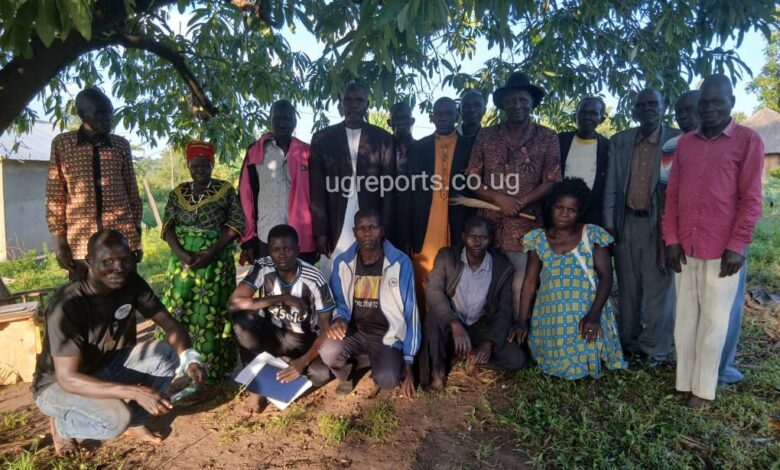
An elaborate engagement conducted by Alur Kingdom officials, led by Prime Minister (Jadipu) Prince Lawrence Opar Angala, involved detailed deliberation on the historical context of Arikpa clan leadership through the Alur traditional justice system.

Jadipu Prince Lawrence Opar Angala stated that the streamlining improves socio-economic mobilisation, noting that “well-led chiefdoms can more effectively rally communities for development projects, education, health initiatives and livelihood programmes.”
He further noted that clear traditional leadership creates reliable channels for partnership between cultural institutions and local authorities, while documented succession and archived lineages minimise disputes, ensuring peaceful transitions and sustained progress.
Opar urged Arikpa clan leaders to follow the Alur Kingdom traditional justice system for effective leadership and peaceful living.
Ker Alur leadership has firmly dismissed counterclaims to the royal stool advanced by some disgruntled members of the larger royal family, affirming Ngabipara’s legitimate succession and bringing the dispute to a close.
He assumes the chiefdom’s leadership while still confronting land wrangles involving royal land and the urgent need for development in partnership with government, particularly in health facilities, education and community sensitisation aimed at socio-economic transformation.
The new chief is the grandson of Rwoth Jalugwaro I, who was the great grandson of Rwoth Jalugwaro, who was the son of Rwoth Awirawira. Rwoth Awirawira was the son of Rwoth Avur, the founder of the Arikpa chiefdom and former Jadipu to Ubimu Alworunga of Ker Alur between 1865 and 1890.
Ngabipara was received on behalf of the Ubimu at Kaal Atyak Winam by Jadipu of Ker Alur Prince Lawrence Opar Angala. He was accompanied by his Jadipu, Geoffrey Ukeca, and members of the Jupa Jalugwaro royal clan.
Kaal Arikpa comprises the clans of Mavura, Lonyiri, Gombiri, Konga, Ugonju, Rabo and Arikpa Juparwoth.
The resolution forms part of the ongoing Ker Alur revival of hitherto dormant chiefdoms and the streamlining of operations to strengthen the Alur Kingdom’s capacity to mobilise communities for the effective preservation and promotion of positive Alur culture for development and posterity.
This move to settle clan leadership follows weeks after the Alur Kingdom successfully resolved a prolonged succession dispute in Abira Chiefdom through a landmark intervention rooted in Alur custom and tradition. Deploying its alternative dispute resolution mechanism based on ancestral justice systems, the Kingdom facilitated the ascension of the rightful hereditary heir.
Similarly, Alur Kingdom recently also resolved the leadership at Kaal Omua Jupa Kago chiefdom in Kango Sub-County, Zombo District.
With the resolution of leadership crises and wrangles in all these three chiefdoms in its continuous push to streamline the chiefdoms to improve leadership and preserve the Alur traditional justice system, the chiefs will be enstooled once the process is complete.
These chiefdoms, once recognised under Alur Kingdom as fully recognised entities, will increase the number of chiefdoms under the Kingdom from 64 to 67.
According to Jadipu Opar, the development marks a significant step in the ongoing renaissance of the Alur Kingdom under the leadership of Alur King His Majesty Ubimu Phillip Rauni Olarker III.
The Kingdom highlighted that formal recognition of leadership structures will enhance cultural preservation by ensuring Alur customs, oral history and royal lineages are properly documented and passed to future generations. It will also foster stronger community unity through greater cohesion among clans, reducing fragmentation and strengthening collective identity.
According to Jadipu Opar, overall, this strengthens the Alur Kingdom’s capacity to mobilise communities for the preservation and promotion of positive Alur culture for development and posterity, while utilising traditional alternative dispute resolution to address land matters and internal wrangles, placing elders at the centre of truth-telling to prevent conflict.
The Alur are a Nilotic people of the larger Luo family, whose traditions trace their origins to migrations from southern Sudan, around the Rumbek area near the Nile and Bahr-el-Ghazal confluence. They moved south along the Nile, dispersing at Pubungu, with Alur ancestors led by figures such as Nyipir (Gipir) moving westwards into the West Nile region of present-day Uganda and northeastern Democratic Republic of Congo.
The Kingdom comprises 56 chiefdoms in Uganda and eight in the Democratic Republic of Congo, continuing to use ancestral justice systems for conflict resolution while promoting cultural preservation, unity across the border, and socio-economic development.
Do you have an advertisement or article you want to publish? Mail us at theugreports@gmail.com or WhatsApp +256757022363.