Alur Kingdom calls for local language HIV messaging to strengthen community awareness and response
“These translated messages, if effected, shall help our cultural leaders propagate the messages clearly to the subjects who understand them much better,” he added.

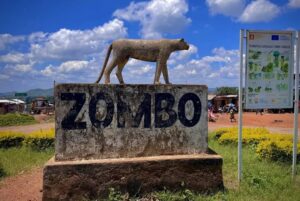

Zombo: The Alur Kingdom has urged that all HIV and AIDS awareness messages be translated into local languages to enable chiefs and cultural leaders to effectively disseminate accurate information during community forums.
Traditional leaders occupy a unique and influential position in the HIV response. As custodians of culture and respected community authorities, they play critical roles in mobilising populations for voluntary HIV testing and counselling, advocating against harmful social norms such as widow inheritance and early marriage that increase vulnerability, reducing stigma and discrimination against people living with HIV, encouraging antiretroviral therapy (ART) adherence, and fostering open dialogue about sexual and reproductive health within families and clans.
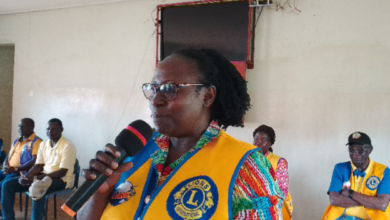
The call was made by Prince Lawrence Opar Angala, Prime Minister of the Alur Kingdom, during the Zombo District Care and Treatment Presentation for October 2025 to June 2026.
The presentation was delivered on 24 September 2026 by the Infectious Diseases Institute of Makerere University’s College of Health Sciences.
“When respected cultural figures openly discuss HIV prevention, testing and treatment in their local language, it simplifies the topic,” Prince Opar said. “This encourages ordinary families to have open and honest conversations about the disease.”

He noted that local languages carry specific idioms, proverbs and respectful terms, adding that Translating messages allows cultural leaders to frame the information in a culturally resonant context, making communities more receptive to behavioural change.
“These translated messages, if effected, shall help our cultural leaders propagate the messages clearly to the subjects who understand them much better,” he added.
The Alur Kingdom spans 56 chiefdoms in Uganda and eight major ones across eastern Democratic Republic of Congo.

Cultural leaders hold significant moral and historical authority. Delivering health messages in the native tongue helps reduce the fear and stigma often associated with externally driven health mandates.
Prince Opar also called for enhanced support and collaboration with local governments in Zombo, Nebbi and Pakwach districts to equip traditional chiefs with the skills needed to deliver evidence-informed, culturally appropriate HIV and tuberculosis stigma reduction and prevention messages.
“We call upon the local governments of Zombo, Nebbi and Pakwach to begin building the capacity of our traditional chiefs so they can effectively enhance access to evidence-informed, culturally appropriate HIV and TB stigma reduction and HIV prevention messages,” he stated.
He emphasised that such capacity building would significantly strengthen the Alur Kingdom’s ability to implement the National HIV and AIDS Action Plan for Cultural Institutions and Traditional Leaders in Uganda for 2024/25 to 2029/30.
The Kingdom’s planned approach forms part of the broader goal of ensuring a coordinated, sustained and meaningful contribution by cultural institutions to the multi-sectoral HIV response, with the aim of ending AIDS as a public health threat by 2030.
District Health Officer Dr Mark Bramali acknowledged the benefits of translated HIV messages for local populations.
Zombo LCV Chairperson James Oruna Oyullu assured continuous support for the response.
In a related development, Paidha Health Centre III recorded the highest number of people living with HIV on antiretroviral therapy in Zombo District during the April–June 2026 quarter, according to the district’s care and treatment performance review contained in the same presentation.
Paidha Health Centre III had 2,055 active clients on HIV treatment, representing 118 percent of its target of 1,742 clients, the largest caseload among the eight health facilities assessed.
Zeu Health Centre III followed with 842 clients (119 percent of target), while Warr Health Centre IV recorded 617 clients (122 percent of target).District-wide, active clients on antiretroviral therapy stood at 4,792 against a target of 4,309 (111 percent achievement).
The district enrolled 135 new clients in the quarter, bringing the three-quarter total to 403 and achieving 130 percent of the annualised target of 311.
Paidha also led in multi-month dispensing, with 97 percent of its 2,055 active clients receiving medicines this way.
Across the district, 91 percent of clients were on multi-month dispensing. The district achieved 100 percent baseline CD4 testing among clients initiating antiretroviral therapy.
Viral-load coverage among general clients stood at 94 percent with 96 percent suppression.
Among children and adolescents aged 0–19 years, coverage was 97 percent but suppression was 86 percent, described as suboptimal, with calls for enhanced adherence counselling and closer follow-up. One-year retention reached 96 percent district-wide.
On pre-exposure prophylaxis, Paidha recorded 891 new clients in the quarter.The performance data underscore both progress in treatment coverage and areas requiring continued attention as cultural and clinical approaches to the HIV response advance in the district.
Prince Opar underscored the limitations of biomedical approaches alone: “In recognition of the fact that biomedical interventions alone cannot reverse or tame the tide of the epidemic, we must confront the social-cultural drivers of HIV infections head-on.”
The Alur Kingdom’s broader interventions include the issuance of royal decrees targeting high-risk cultural practices, systematic capacity strengthening of clan chiefs and traditional leaders, integration of HIV prevention messages into cultural platforms such as community gatherings and sports events, promotion of joint antenatal care attendance to facilitate partner testing, and close alignment with national frameworks under the Uganda AIDS Commission.
In 2025, Uganda recorded approximately 34,400 new HIV infections, equivalent to about four new infections every hour.
An estimated 1.55 million people are living with HIV in the country, including roughly 980,000 women, 569,000 men and 71,000 children. National adult HIV prevalence stands at 4.9 percent. AIDS-related deaths remain a concern, with around 19,000 people succumbing to HIV-related illnesses annually, approximately 54 deaths every day.
Young people account for a disproportionate share of new infections, with young women particularly affected.
The Alur Kingdom’s emphasis on cultural institutions aligns with broader national and global strategies that recognise the indispensable role of traditional leadership structures.
Mr Collins Canudwoga, Chairperson of the forum for people living with HIV in Zombo, agreed that sustained partnership between the Alur Kingdom, district local governments, health workers, cultural leaders and religious institutions will be critical in the coming years.
The National HIV and AIDS Action Plan for Cultural Institutions and Traditional Leaders explicitly seeks to harness the influence of kings, chiefs and clan leaders to accelerate progress toward the 2030 targets.
Apparently, most of the HIV/AIDS-related messages are in English and other languages. This makes it hard for most people, including some cultural leaders, to understand them and translate them into the local language.
Do you have an advertisement or article you want to publish? Mail us at theugreports@gmail.com or WhatsApp +256757022363.