Masindi charcoal vendors ask government to suspend proposed charcoal ban
She appealed to the government to allow them to continue operating until viable alternative sources of income are established.

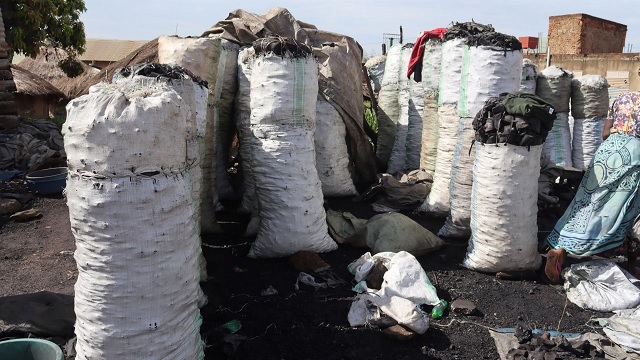

Masindi: Charcoal vendors in Masindi Municipality have appealed to the government to suspend the proposed nationwide charcoal ban, warning that the move could disrupt their livelihoods, undermine their ability to repay loans and make it difficult for them to support their families.
The vendors made the appeal on Thursday afternoon at the charcoal market in Central Division, Masindi Municipality, following a government proposal to ban charcoal use across the country.
The vendors say charcoal selling is their primary source of income, enabling them to pay school fees, rent, buy food and meet other household expenses.
Beatrice Katwesige, a charcoal vendor, says some traders acquired loans under the Emyooga programme, which they are still required to repay, and fears that the proposed ban could leave them financially stranded.
She appealed to the government to allow them to continue operating until viable alternative sources of income are established.

Katwesige says most vendors lack the capital needed to start alternative businesses at short notice. However, she called for tougher action against people who cut down trees without leaving stumps to support regeneration, particularly large-scale sugarcane growers.
Harriet Mbabazi, another vendor, says many charcoal sellers have outstanding loans and school fees to clear, urging the government to first provide alternative livelihood opportunities before implementing the proposed ban.
Rose Akugizibwe, a resident of Kihande 1 Cell, says charcoal selling requires relatively little starting capital and enables vendors to save money to meet their daily needs.

Akugizibwe has appealed to the government to reconsider the proposal, saying an abrupt ban could leave many traders struggling to survive.
Mary Kyomuhendo, a charcoal vendor and resident of Nyangahya, says their businesses depend heavily on charcoal sales, adding that some of the charcoal they sell comes from old trees.
Kyomuhendo also argues that alternative cooking methods, particularly gas, remain expensive for some households, making an immediate transition difficult.
Meanwhile, Rashid Mukasa, the chairperson of charcoal vendors in Masindi Municipality, says the proposed restrictions threaten the livelihoods of traders, some of whom deal in charcoal sourced from planted forests.
Mukasa argues that the government should distinguish between charcoal produced through unsustainable tree cutting and supplies obtained from managed or planted forests.
He says charcoal sales enable vendors to pay rent, purchase food and meet other basic needs, adding that electricity is also expensive for many households.
Mukasa has urged the government to consider the economic circumstances of ordinary citizens and consult affected traders before enforcing a nationwide ban.
The proposed restrictions come amid ongoing government efforts to address deforestation and environmental degradation associated with charcoal production and transportation.
On May 19, 2023, President Yoweri Museveni issued Executive Order No. 3, prohibiting commercial charcoal burning and transportation in Northern Uganda, West Nile, Karamoja and Teso as part of measures to combat deforestation and climate change.
Meanwhile, Speaker of Parliament Jacob Markson Oboth has suspended enforcement of the proposed wider ban until Wednesday next week to allow further consultations on the country’s preparedness to transition to alternative energy sources.
Do you have an advertisement or article you want to publish? Mail us at theugreports@gmail.com or WhatsApp +256757022363.