Alur cultural leaders trained to tackle norms fueling Ebola transmission
“In African cultural settings, ill health is not viewed solely as a biomedical issue but is deeply intertwined with spiritual beliefs and practices,” Dr. Amos stated.


Zombo: The Alur Kingdom’s health department have turned the fight against the Ebola Virus through extensive training and building capacity of traditional institutions and cultural leaders to address deep-rooted behavioral and cultural practices that are driving community transmission.
The initiative is part of His Majesty Ubimu Philip Rauni Olarker III consistent strategy in the fight against the Ebola virus as he continue to rally his subjects across 56 chiefdoms in Uganda and 8 in eastern DRC to refrain from hiding individuals with Ebola-like symptoms and directed traditional chiefs to intensify sensitization and mobilization efforts amid rising case.
The Kingdom Health officials stress that training and empowering cultural leaders to navigate norms around burial, traditional healing, communal caregiving, and survivor reintegration will be pivotal in breaking transmission chains and preventing a wider regional epidemic.
The Kingdom that has subjects running in millions across the 8 chiefdoms in DR Congo Ituri Province, the epicenter of the Ebola virus and 56 chiefdoms in Uganda has taken the Ebola virus fight seriously given the strong cultural and trade ties between the two countries.
Dr. Nyathirombo Amos, Minister of Health for the Alur Kingdom and a senior clinical researcher with over 30 years of experience in Uganda-Congo border communities, emphasized that effective Ebola control requires a balanced approach: approximately 70% biomedical interventions and 30% behavioral change.

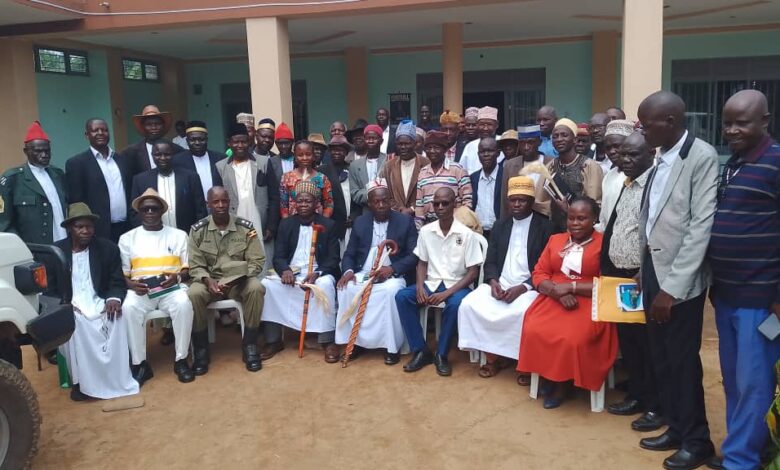
Speaking during his elaborate presentation to Alur cultural leaders drawn from more than 30 chiefdoms under the Kingdom on Wednesday July 8, 2026 at Elite Frontier Beach hall in Paidha town council, he said Culture plays a decisive role in the behavioral component.
“In African cultural settings, ill health is not viewed solely as a biomedical issue but is deeply intertwined with spiritual beliefs and practices,” Dr. Amos stated.
He added “take this knowledge and message to your subjects because they listen to you more than anyone else”, adding that “An understanding of culture is therefore critical for any successful response.”

Harriet Thumitho, Zombo District Health Educator, one of the facilitators at the training took chiefs through Ebola signs and symptoms, how it spread and many information surrounding Ebola and questions and answer sessions.
She urged chiefs to play a central role in sensitizing community given the district’s existing over 100 porous border points.
Dr Nyathirombo together with the cultural leaders identified some Key Cultural Friction Points such as Burial and funeral practices represent a major transmission risk noting that it become risky because Alur communities span both sides of the porous Uganda-DRC border, particularly in Mahagi and Aru territories.
They also pointed out Kinship obligations that require attendance at funerals, often involving high-risk rituals such as pre-burial body preparation and post-burial ceremonies. Border closures and “no-touch” safe burial directives frequently clash with these non-negotiable cultural duties, leading families to hide travel histories or transport bodies informally for ancestral burials.Traditional healing practices also complicate response efforts.
In typical Alur homesteads, multiple relatives participate in caregiving, feeding, and cleaning of the sick practices that facilitate household clusters of infection.
Isolation and quarantine measures often conflict with strong norms of collective care and communal sharing. Language barriers, trust deficits, and stigma compound the challenges.
Health messages delivered in English, Luganda, or Swahili frequently fail to resonate in Alur, Kebu, Madi, Lendu, Lugbara, Kakwa, or Kinubi-speaking communities.
Survivors face social rejection, marriage barriers, and fear of residual misfortune, sometimes leading to hidden symptoms, avoidance of follow-up care, and even suicides.
Gender dynamics add another layer: women, who perform most caregiving and funeral washing, bear higher exposure risks, while male elders and clan heads typically make decisions on care-seeking and burial locations.
Dr. Amos and other experts advocate leveraging established traditional institutions particularly Alur Kingdom chiefs (Rwodhi) and clan heads, who command unique influence in rural areas where formal health messaging often falls short.
He Recommended approaches that amongst others include Training local, Alur-speaking burial teams and contact tracers who are trusted community members, Adapting risk communication to local languages via community radio and culturally resonant content, Formal engagement of traditional healers through associations, providing rapid referral cards and training to recognize red-flag symptoms without direct patient contact and Organizing public survivor reintegration ceremonies led by chiefs, amongst others.
Zombo District Police Commander SP Job Mutegeki lauded the Kingdom for the intervention, assuring of authority’s intervention in preventing illegal cross border movements.
Cultural leaders reacts
Speaker council of chiefs Rwoth Jephtha Kerunga of Padwot chiefdom commended the Kingdom for organizing the health training and urged cultural leaders to “sensitize and raise awareness” in their respective areas.
John Uluba, chairperson Royal council urged chiefs to play leading role in sensitizing community against harmful practices that can spread Ebola.
Rasul Idris, communication assistant in the office of Prime Minister Alur Kingdom promised to use the message achieved to engage security leaders on illegal cross border movements.
Gerard Ongom Chief of Padolo chiefdom promised to roll out the message through community dialogue.
Rwoth Emmanuel Angia of Omua Chiefdom pledged to engage all clan leaders on the message such that they frequently passed it to their subjects.
Uganda’s current Ebola outbreak, caused by the Bundibugyo virus, has stabilized.
As of July 2026, Uganda has recorded 20 confirmed cases and two deaths, with 16 people recovering. No new cases have been reported nationwide since June 21. The outbreak originated as a cross-border transmission from the Democratic Republic of the Congo.
The Democratic Republic of Congo said on Wednesday that suspected Ebola cases had been reported in a new province, highlighting the expansion of the ongoing outbreak as deaths hit 600.
The outbreak, declared on May 15, has so far infected 1,759 people across the eastern provinces of Ituri, North Kivu and South Kivu, according to the government’s latest situation report published Wednesday night.
Recently, the Alur Kingdom formed an internal Rapid Ebola Response Task Team to enhance the capacity of district task teams in mobilizing and sensitizing Uganda-DRC border communities on preventing the spread of Ebola virus disease from the Democratic Republic of Congo .
Do you have an advertisement or article you want to publish? Mail us at theugreports@gmail.com or WhatsApp +256757022363.