Nebbi NGO Forum pushes for permanent teacher learning communities
The approach focuses on continuous professional development, peer support, classroom observation and feedback, as well as collective responsibility for learning outcomes.

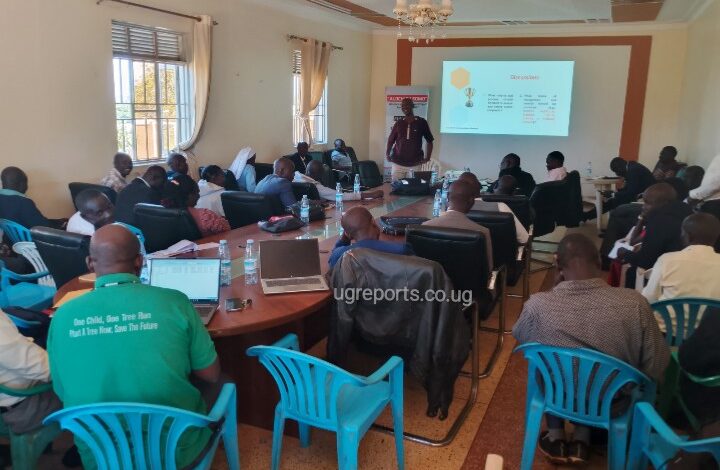

Zombo: The Nebbi District NGO Forum (NDNGOF) is pushing to institutionalize Professional Learning Communities (PLCs) in primary schools across Zombo District as part of efforts to improve teaching quality and pupil performance.
The initiative is being implemented under the three-year Alochi Ku Somo II Project, which seeks to strengthen basic education in Zombo by embedding collaborative teacher development into the district’s education management system.
Oweka Jude Deogratius, the NDNGOF Program Manager, presented the initiative during a District Institutionalization Workshop held earlier this week.
The workshop brought together education stakeholders to formalize district ownership of the PLC approach, review its methodology and achievements, and seek endorsement for its integration into existing school support supervision and improvement structures.
According to Alfred Ogenmungu, a Project Officer at NDNGOF, PLCs bring teachers together to improve instructional practices, share experiences, address classroom challenges and collectively work toward better learner outcomes.

“Professional Learning Communities are structured teacher groups that collaborate to refine instructional practices, share experiences, solve classroom challenges and enhance learner outcomes,” Ogenmungu said.
The PLC model was introduced in Zombo in 2022 by Hifadhi Africa Organization and has since been expanded to government-aided primary schools.
The approach focuses on continuous professional development, peer support, classroom observation and feedback, as well as collective responsibility for learning outcomes.
NDNGOF says the rollout has been completed in all targeted schools, with 1,028 educators reached through different training levels.
These include 68 teachers trained as Training of Trainers, comprising 24 females and 44 males; 240 teachers reached through multiplication training, including 52 females and 188 males; and 720 teachers reached through school-level orientations, comprising 156 females and 564 males.
Governance structures have also been established at school, sub-county and district levels, while PLC indicators have been incorporated into classroom support supervision tools.
The initiative has further encouraged teachers to jointly develop teaching and learning materials, while participation in PLC activities has contributed to professional growth and promotions among educators.
Patrick Bikadhu Othuma, the Zombo District Senior Education Officer, called for measures to ensure the sustainability of the initiative beyond the project period.
“We need to ensure the sustainability of this project so that it creates a long-lasting impact in our schools,” Bikadhu said.
Shs12m set aside for teacher recognition
NDNGOF has allocated Shs12 million for recognition of outstanding performance under the PLC programme.
The awards will be presented during the Annual District PLC Conference and will recognize the best-performing school, best teacher and outstanding teachers across four centre coordination levels.
The PLC modalities include the formation of executive committees at district and sub-county levels, assessment of best practitioners by Coordinating Centre Tutors (CCTs), Associate Assessors (AAs), executive committees and NDNGOF, as well as review meetings and an awards system.
District-level PLC executives are responsible for providing overall leadership, monitoring implementation, coordinating reporting and stakeholder engagement, and mobilizing resources to sustain the programme.
A progress report covering activities between June 19 and August 6, 2026, tracked PLC activities in 92 government-aided primary schools through a district executive WhatsApp platform.
Project funded by Swiss organization
The Alochi Ku Somo II Project, launched in February 2025, runs from 2025 to 2027 and is implemented by a consortium comprising CEFORD, NDNGOF and LICO with funding from CO:OPERAID Switzerland.
NDNGOF, established in June 2001, is a network of 85 civil society organizations operating across Nebbi, Zombo and Pakwach districts.
The forum coordinates development interventions, including education programmes, aimed at strengthening local systems and promoting sustainable community impact.
NDNGOF has pledged continued support to district leaders, education managers, school heads and development partners to ensure collaborative professional learning becomes a permanent component of education quality improvement in Zombo District.
Do you have an advertisement or article you want to publish? Mail us at theugreports@gmail.com or WhatsApp +256757022363.