Oil infrastructure nears completion as Uganda targets first oil production
He also revealed that the Judiciary is planning to establish a special court to handle environmental and infrastructure-related cases while strengthening the capacity of judicial officers in oil and gas matters.

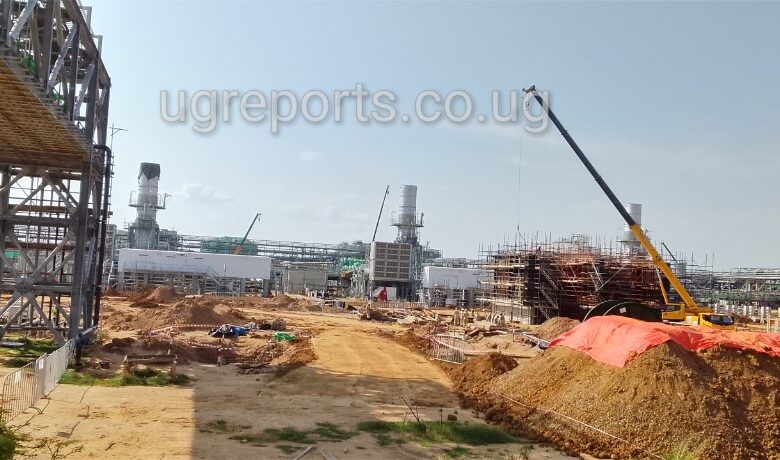

Hoima: Uganda’s key oil and gas infrastructure projects are in their final stages of construction, with government officials expressing confidence that the country remains on course to achieve its long-awaited first commercial oil production.
The update was shared during a field tour of major oil and gas facilities in Hoima and Kikuube districts by more than 100 senior officials from the Judiciary, Bank of Uganda (BoU), Uganda Revenue Authority (URA), the Petroleum Authority of Uganda (PAU), and the Uganda National Oil Company (UNOC).
The delegation was led by Chief Justice Dr. Flavian Zeija and Bank of Uganda Governor Dr. Michael Atingi-Ego.
Officials were informed that the East African Crude Oil Pipeline (EACOP), which will transport Uganda’s crude oil from Kabaale in Hoima District to the Tanzanian port of Tanga for export, has reached 91% completion.
Speaking at Pump Station One in Kabaale Sub-county, John Bosco Habumugisha, Deputy Managing Director of EACOP, said the over US$5 billion pipeline is designed to serve Uganda’s oil industry for decades.

He acknowledged that construction had faced setbacks caused by the COVID-19 aftermath, Ebola outbreaks, and conflicts in the Middle East, which disrupted access to critical materials and equipment.
“The pipeline has cost more than five billion dollars and is being built to transport Uganda’s crude oil for many years. Although we experienced delays due to global events, construction has progressed significantly,” Habumugisha said.
The delegation also visited Kabalega International Airport, where construction has reached 98.8% completion.

According to Amos Murisa, Public Relations Officer for SBC Uganda, only the Air Traffic Control Tower remains under construction.
Murisa said the airport will be capable of handling four large cargo aircraft simultaneously, making it a strategic facility for transporting equipment required by the oil and gas industry.
He also revealed plans to construct an additional passenger terminal ahead of the 2027 Africa Cup of Nations (AFCON).
“The passenger terminal is expected to be completed by mid-2027 to support visitors during AFCON while the airport also serves Uganda’s growing oil industry,” Murisa said.
The Petroleum Authority of Uganda maintained that Uganda remains on schedule for its first oil production.
Ali Ssekatawa, PAU Director of Legal and Corporate Affairs, said projects do not have to reach full completion before production begins.
“We do not need 100 percent completion before producing first oil. Once key facilities reach around 80 percent completion, pre-commissioning can begin,” Ssekatawa explained.
Andrew Ssenabulya of PAU said the Central Processing Facility (CPF) must attain 80% completion, alongside critical infrastructure such as electricity and telecommunications, before pre-commissioning starts.
Tilenga and Kingfisher projects make progress
At the Tilenga Project, Christopher Ochowun, Corporate Communications Officer at TotalEnergies EP Uganda, said construction is progressing steadily.
He revealed that out of 29 well pads, 16 have already been drilled, of the planned 420 wells, 230 have been drilled, Jobiri Well Pad is nearly 90% complete and the Central Processing Facility stood at 68.6% completion by the end of June 2026, with a target of reaching at least 80% before pre-commissioning.
Meanwhile, at the Kingfisher Development Area, Mr. Wang Jufeng, Vice President of CNOOC Uganda, said the project has reached 95% completion.
He said the company remains committed to balancing oil development with environmental conservation.
“Environmental protection remains one of our priorities as we complete the Kingfisher development project,” Wang said.
Patience Nyawere of TotalEnergies added that land restoration and environmental protection activities are being implemented alongside construction works.
Judiciary pledges support while safeguarding justice
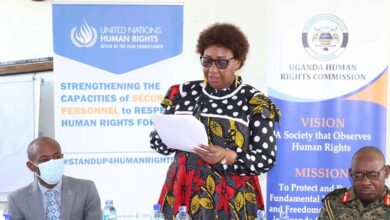
Chief Justice Dr. Flavian Zeija said the visit enabled judicial officers to understand the country’s biggest investment project before handling related disputes.
He dismissed claims that Uganda’s oil resources had already been exhausted, saying the delegation had seen firsthand that production preparations are genuine and progressing.
“We came because we cannot adjudicate matters we do not understand or have never seen. From what we have witnessed, oil is there and preparations for production are real,” Dr. Zeija said.
The Chief Justice emphasized that while individuals with land compensation grievances have a right to seek justice, such disputes should not halt nationally significant infrastructure projects.
“Family and land compensation disputes should not stop transformational government projects. Those with grievances will have their matters handled through the courts,” he said.
Dr. Zeija also announced plans to establish a special court dedicated to environmental and infrastructure-related cases, alongside specialized training for judicial officers on oil and gas matters.
Bank of Uganda Governor Dr. Michael Atingi-Ego said government has invested billions of shillings in oil infrastructure and is keen to ensure the investments deliver the expected economic returns.
He noted that Uganda is counting on oil revenues to support its ambition of achieving a ten-fold economic growth.
“Government is banking on oil to drive Uganda’s economic transformation, and we do not want unnecessary delays in achieving first oil,” Atingi-Ego said.
Do you have an advertisement or article you want to publish? Mail us at theugreports@gmail.com or WhatsApp +256757022363.