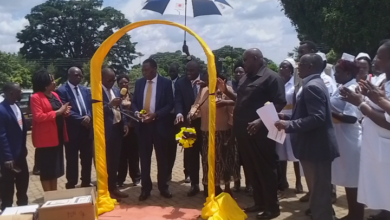
Alur Kingdom Seeks Local Government Collaboration to Strengthen HIV Response through Traditional Leadership
HIV remains a complex public health challenge characterised by both biological and social dimensions

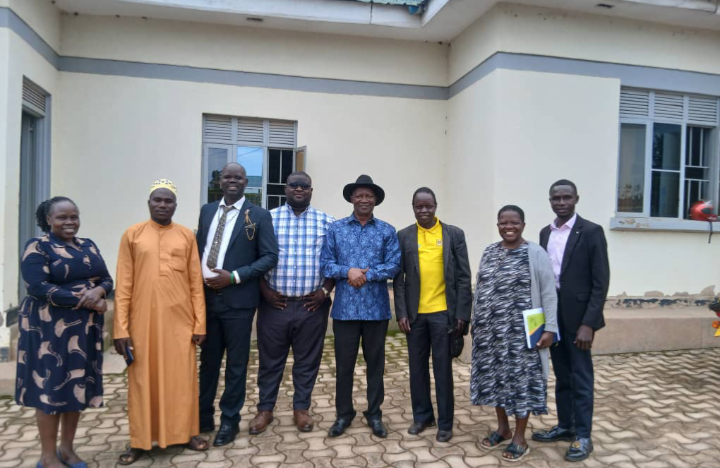

Zombo: The Alur Kingdom has issued a strong call for enhanced support and collaboration with local governments in Zombo, Nebbi and Pakwach districts to equip traditional chiefs with the skills needed to deliver evidence-informed, culturally appropriate HIV and tuberculosis stigma reduction and prevention messages.
Prince Lawrence Opar Angala, the Prime Minister (Jadipu) of the Alur Kingdom, made the appeal while addressing the first quarterly meeting of the Zombo HIV/AIDS Committee at the district headquarters on Thursday, 24 September 2026.
“We call upon the local governments of Zombo, Nebbi and Pakwach to begin building the capacity of our traditional chiefs so they can effectively enhance access to evidence-informed, culturally appropriate HIV and TB stigma reduction and HIV prevention messages,” Prince Opar Angala stated.
“This technical support will greatly strengthen their advocacy against social-cultural beliefs and practices, as well as structural barriers that continue to propagate the spread of the disease in our communities.” He added.
He emphasised that such capacity building would significantly boost the Alur Kingdom’s ability to implement the National HIV and AIDS Action Plan for Cultural Institutions and Traditional Leaders in Uganda for 2024/25 to 2029/30.

The plan’s overarching goal is to ensure a coordinated, sustained and meaningful contribution by cultural institutions to the multi-sectoral HIV response, with the aim of ending AIDS as a public health threat by 2030.
Prince Opar Angala underscored the limitations of biomedical approaches alone. “In recognition of the fact that biomedical interventions alone cannot reverse or tame the tide of the epidemic, we must confront the social-cultural drivers of HIV infections head-on,” he said.
Among these drivers, he highlighted prolonged dowry negotiations and extended funeral ceremonies common among the Alur people. These gatherings often create environments conducive to risky behaviours, including multiple concurrent sexual partnerships and reduced adherence to prevention measures.

His Royal Majesty Phillip Olarker Rauni III, the Ubimu of Ker Alur, has issued a decisive Royal Pronouncement. The decree mandates that all such prolonged cultural events, specifically dowry ceremonies and funeral rites must now be performed and concluded within a single day.
The pronouncement aims to minimise opportunities for behaviours that elevate HIV transmission risk while preserving the essential cultural significance of these traditions in a more condensed and safer format.
Traditional leaders occupy a unique and influential position in the fight against HIV and AIDS. As custodians of culture and respected community authorities, they play critical roles in mobilising populations for voluntary HIV testing and counselling, advocating against harmful social norms such as widow inheritance or early marriage that increase vulnerability, reducing stigma and discrimination against people living with HIV, encouraging antiretroviral therapy (ART) adherence, and fostering open dialogue about sexual and reproductive health within families and clans.
The Alur Kingdom’s broader interventions in addressing HIV and AIDS include the issuance of royal decrees targeting high-risk cultural practices, systematic capacity strengthening of clan chiefs and traditional leaders, integration of HIV prevention messages into cultural platforms such as community gatherings and sports events, promotion of joint antenatal care attendance to facilitate partner testing, and close alignment with national frameworks under the Uganda AIDS Commission.
These efforts form part of a multi-pronged strategy that recognises culture not merely as a potential risk factor but as a powerful vehicle for positive behaviour change.
District Health Officer Dr. Mark Bramali, pledged full institutional support for the kingdom’s initiatives.
The LCV Chairperson of Zombo District James Oruna Oyullu, echoed the call for multi-sectoral partnership.
“I urge all stakeholders to collaborate meaningfully with cultural and religious leaders,” he stated. “These leaders command trust and influence that government structures alone cannot match. By working together, local government, the Alur Kingdom, faith-based organisations and health workers, we can create a unified front against HIV”
In 2025, Uganda recorded approximately 34,400 new HIV infections, equivalent to about four new infections every hour. An estimated 1.55 million people are living with HIV in the country, including roughly 980,000 women, 569,000 men and 71,000 children.
National adult HIV prevalence stands at 4.9 percent. AIDS-related deaths remain a concern, with around 19,000 people succumbing to HIV-related illnesses annually, approximately 54 deaths every day.
oung people account for a disproportionate share of new infections, with young women particularly affected.
These national figures provide critical context for district-level performance. In Zombo District, the number of active clients receiving HIV treatment stood at 4,792 during the April–June 2026 quarter, against a target of 4,309, representing 111 percent achievement.
This followed figures of 4,981 in October–December 2025 and 5,071 in January–March 2026.
The district also recorded 135 newly enrolled HIV treatment clients in April–June 2026, bringing the cumulative total of new clients over the three quarters to 403.
This performance equates to 130 percent of the annualised target of 311 new clients, signalling strong case-finding and linkage efforts.
HIV remains a complex public health challenge characterised by both biological and social dimensions
The Alur Kingdom’s emphasis on cultural institutions aligns with broader national and global strategies that recognise the indispensable role of traditional leadership structures.
The National HIV and AIDS Action Plan for Cultural Institutions and Traditional Leaders explicitly seeks to harness the influence of kings, chiefs and clan leaders to accelerate progress toward the 2030 targets.
By combining royal authority with technical capacity building and close collaboration with local government health systems, the kingdom aims to create sustainable behaviour change that biomedical tools alone cannot achieve.
Mr Collins Canudwoga, Chairperson of forum for people living with HIV in Zombo agreed that sustained partnership between the Alur Kingdom, district local governments, health workers, cultural leaders and religious institutions will be critical in the coming years.
Do you have an advertisement or article you want to publish? Mail us at theugreports@gmail.com or WhatsApp +256757022363.