Karenga residents demand stronger action to tackle teenage pregnancies
For Lilly, the growing openness around family planning represents an important change in the community.

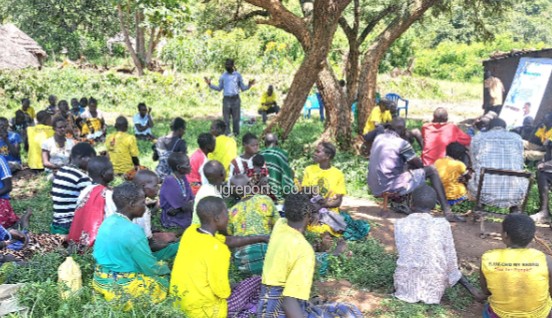

Karenga: Parents, adolescents and community leaders in Karenga District have called for stronger family planning services, improved parent-child communication and coordinated community action to address teenage pregnancies and protect young people’s education and future.
The call was made during a community baraza held recently, in Loruwama Parish, Karenga Town Council, under the STRENGTH Project implemented by Reproductive Health Uganda (RHU) with funding support from DFPA.
The dialogue brought together parents, adolescents, elders, local leaders, Village Health Teams (VHTs), health workers, Community Development Officer Lomanat Andrew, WASH Officer Oreyem Richard and RHU District Focal Person for Karenga, Anero Florence Apuun.
Participants identified teenage pregnancy, limited access to reliable reproductive health information, weak parental guidance and alcohol abuse as some of the major challenges affecting young people in the community.
During the discussion, participants cited 13 pregnancy cases, nine of which involved teenagers.

They noted that teenage pregnancy can interrupt girls’ education, expose young mothers to health and social challenges, and limit their future economic opportunities.
Nakiru Lilly, a community member from Loruwama, said attitudes towards family planning were gradually changing as residents gained access to accurate information through community awareness sessions and dialogues.
“Before RHU started conducting community awareness sessions and dialogues on family planning in Loruwama, many of us had limited information about family planning and its benefits. There were misconceptions and fears, especially among young people and couples, and family planning was not openly discussed in many households,” Lilly said.

She said the information gap had made it difficult for parents and other community members to guide young people, while some girls and young women became pregnant before they were ready.
According to Lilly, continued community engagement has helped make conversations about reproductive health easier within households and the wider community.
“People are now more open to discussing family planning, and couples are increasingly seeking information and services to plan the number and spacing of their children,” she said.
She added that young people were increasingly understanding how unintended pregnancies could affect their education and future, while parents and community leaders were becoming more confident in discussing sexual and reproductive health matters.
Anero Florence Apuun, the RHU District Focal Person for Karenga, encouraged individuals and couples to seek accurate family planning information and counselling from qualified health workers.
She urged community members to use available services to make informed decisions about the timing and spacing of pregnancies.
Anero also advised adolescents, parents and couples to rely on health workers and other credible sources for reproductive health information instead of rumours and misconceptions.
Parents Urged to Engage Adolescents
Community Development Officer Lomanat Andrew urged parents and guardians to create supportive environments where adolescents could openly discuss relationships, peer pressure, sexuality and education without fear of judgment.
He called for stronger community structures involving village leaders, VHTs, youth groups, women’s and men’s groups, religious leaders and elders to improve the guidance and protection of children and adolescents.
Participants also called on parents and leaders to support pregnant girls and young mothers to remain in or return to school where possible, while strengthening efforts to prevent sexual abuse, exploitation and defilement.
The meeting further identified alcohol abuse as a concern that can expose adolescents to risky environments and increase their vulnerability.
Residents were encouraged to report cases of sexual abuse, defilement, exploitation and other forms of violence to responsible authorities and child-protection structures rather than settling such cases informally.
WASH Linked to Girls’ Wellbeing
WASH Officer Oreyem Richard urged households to maintain clean compounds, ensure access to safe water and maintain functional sanitation and handwashing facilities.
He also called for greater support for girls to manage menstruation safely and with dignity, noting that inadequate menstrual hygiene facilities can contribute to absenteeism and affect girls’ participation in education.
Community Adopts Resolutions
The baraza resolved to strengthen family planning awareness and advocate for the consistent availability of a range of family planning methods at health facilities and through appropriate community-based services.
Participants also agreed on the need for regular training of VHTs, community leaders and parents.
Other resolutions included strengthening adolescent dialogues, promoting the involvement of men and boys in reproductive health discussions and drawing on elders’ guidance while reviving cultural family meetings that can provide appropriate counselling to young people.
Village chairpersons were encouraged to work closely with parents, VHTs, health workers and schools to identify and support children and adolescents at risk.
VHTs were also tasked with identifying and registering children, adolescents and families affected by teenage pregnancy and linking them to appropriate health, education and social support services.
For Lilly, the growing openness around family planning represents an important change in the community.
“Before, we often remained silent because of fear, myths and lack of information. Today, we are talking, asking questions, seeking services and taking action,” she said.
She stressed that sustained cooperation among parents, young people, community leaders and health workers would be critical in reducing teenage pregnancies and helping young people make informed decisions about their health and future.
Do you have an advertisement or article you want to publish? Mail us at theugreports@gmail.com or WhatsApp +256757022363.