Masindi farmers want alternative roads repaired as authorities ban sugarcane trucks from business centre
The order also prohibits the selling and loading of sugarcane on streets, pavements and road reserves within the CBA, except in designated areas, and bans the dumping of sugarcane waste and bagasse in streets, drainage channels and open spaces.

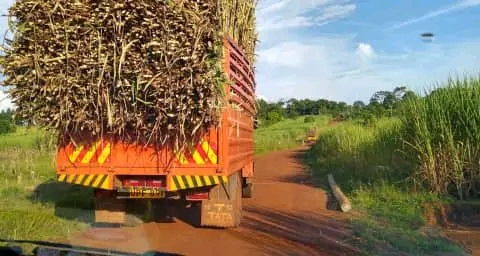

Masindi: Sugarcane farmers in Masindi have welcomed the Municipal Council’s decision to ban sugarcane and bagasse trucks from the Central Business Area (CBA) but are demanding that alternative roads be rehabilitated before the directive is fully enforced.
The directive, which took effect on July 13, cites persistent littering of sugarcane waste that has clogged drainage channels, damaged roads and created public health concerns.
Authorities say the practice contravenes the Public Health Act, the Physical Planning Act, 2010, and the Municipal Solid Waste Management By-laws.
The order also prohibits the selling and loading of sugarcane on streets, pavements and road reserves within the CBA, except in designated areas, and bans the dumping of sugarcane waste and bagasse in streets, drainage channels and open spaces.

Under the new traffic arrangements, sugarcane transporters are required to use alternative routes, including Kamurasi–Ihungu–Hoima Road, Kyema–Kiswata–Kihuuba–Kibwona–Biiso Road, and Kyema–Kamudiini–Kigulya–Mirya–Kampala Road.
However, farmers argue that the designated roads are in poor condition and could increase transport costs and the risk of accidents.
Kanaginagi Merekisedeki Ateenyi, a sugarcane farmer, welcomed the ban but urged the municipality to first sensitize communities living along the new routes. “The ban is a good move, but the communities where the trucks have been diverted should first be sensitized. The roads such as Kiswata–Kihuuba and Kamudiini–Kigulya–Nyakatoke are also in a poor state and need attention before full implementation,” Kanaginagi said.

David Baguma, another farmer, said the alternative roads are narrow and could worsen traffic congestion while exposing transporters to more accidents. “These roads are narrow and in poor condition. There are also low electricity lines and sharp corners in some areas. This increases the risk of accidents, yet farmers bear the loss because Kinyara only pays for sugarcane that reaches the weighbridge,” Baguma explained.
Charles Ndozereho, the director of Life Safe Driving School and also a sugarcane farmer, appealed to the municipality to upgrade the alternative roads. “The municipality should rehabilitate, widen the roads and install stronger culverts that can accommodate heavy sugarcane trucks. If funds are inadequate, they should engage Kinyara Sugar management to deploy more casual workers to collect littered sugarcane instead,” Ndonzereho said.
Robert Atugonza, Chairperson of the Masindi Sugarcane Growers Association Ltd (MASGAL), said farmers will incur additional transport costs because the diversions increase travel distances by between two and three kilometres.
“We support measures to keep the municipality clean, but the alternative roads are narrow, steep and in poor condition. They need to be rehabilitated and widened to prevent crashes. Whenever a truck overturns or sugarcane spills on the road, the farmer suffers the loss because Kinyara only takes responsibility for cane delivered to the weighbridge,” Atugonza said.
Responding to the concerns, Masindi Municipality Mayor Rogers Amanyire said the ban only applies to trucks transporting sugarcane and bagasse through the CBD, while empty trucks heading to farms are still allowed to use the town centre.
He said the municipality has provided a two-week grace period, running from July 13 to July 26, during which officials will conduct community sensitisation and carry out spot improvements on the alternative roads.
“We are implementing spot improvements on the alternative routes while sensitising communities during the grace period. Claims that the culverts are weak are not true because they are standard culverts and sugarcane trucks have been using those roads. We have also deployed casual labourers to collect littered sugarcane along the alternative routes to keep the municipality clean,” Amanyire said.
The municipality maintains that the directive is intended to improve sanitation, protect road infrastructure and prepare Masindi for the expected influx of visitors ahead of AFCON 2027, while farmers insist that better road infrastructure is essential to ensure the policy does not increase transport costs and safety risks.
Do you have an advertisement or article you want to publish? Mail us at theugreports@gmail.com or WhatsApp +256757022363.






One Comment