Chope/Paluo: The custodians of the famous Empaako names in Western Uganda
For example, among some Banyoro, Amooti is interpreted as ekimuli kya'meza, literally translated as "a flower on a table."

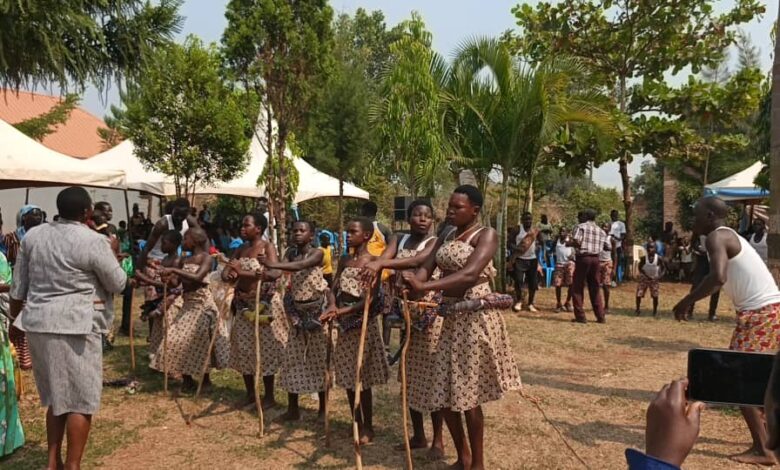

Op-Ed: The Chope, also known as the Paluo, are a Luo-speaking people predominantly found in Kiryandongo and Masindi districts in north-western Uganda. Their history is closely associated with the introduction and origin of the famous Empaako naming system, which later became a defining cultural practice among several neighbouring Bantu communities in western Uganda.
The Chope/Paluo are a distinctive ethnic group indigenous to the greater Kibanda area. According to indigenous historical accounts, many of the Empaako names and their linguistic origins can be traced to the Paluo language and culture.
The emergence and spread of Empaako are linked to major political changes in the ancient Kitara Empire, particularly the rise of a new aristocratic Luo-Bito ruling clan following the Luo conquest of Kitara, traditionally believed to have occurred around the 11th century.
The Origin of Empaako
Traditionally, the Chope/Paluo referred to these names as Nying Paak or Paako, Luo expressions understood to mean “praise words.” The term was later loosely pronounced as Empaako by neighbouring Bantu-speaking communities.

According to Chope/Paluo oral tradition, the practice spread to Bantu communities including the Banyoro, Batoro, Batagwenda, Batuku and Banyabindi of southern Kitara following the establishment of the Luo-Bito dynasty.
The Luo conquerors are said to have established a new ruling dynasty after the fall of the Chwezi dynasty. While the new rulers maintained many existing traditions among the communities they governed, they also introduced some of their own cultural practices, including the system of praise names known as Nying Paak.
Today, Empaako is recognised by UNESCO as an element of intangible cultural heritage. It consists of twelve shared praise names used alongside a person’s given and family names.
According to the Chope/Paluo interpretation, the names have Luo linguistic roots and carry specific cultural meanings.
The Twelve Empaako Names and Their Meanings
OKAALI
Derived from Jok Okal and associated with the Luo word Okalo, meaning “he or she has jumped over you.”
The name implies a person of authority, influence and high responsibility, particularly a leader.
AKIIKI
Derived from Jwok Akik.
It refers to a person who upholds national, community and family interests with kindness, honesty, love and care.
APULI
Derived from Jok Apul.
The name implies a person with the power, ability and skills to attract and influence other people.
ATWOOKI
Derived from Jok Atwok.
It refers to someone who embraces, disciplines or punishes others, either physically or spiritually. Traditionally, the name is often associated with strict people.
ACAALI
Derived from Jok Acal and associated with the Luo expression Acalo, meaning “I resemble you.”
It is given to a person believed to resemble another in character, personality or nature.
ADYERI
Derived from Jok Adyer and associated with the Luo word Adyero, meaning “I have surrendered or sacrificed to you.”
The name implies friendliness and a sacrificial heart.
ATEENYI
Derived from Jok Aten and associated with the Luo word Atenyo, meaning “I have left it to you.”
It is traditionally associated with a forgiving person who does not keep another person’s wrongdoing in his or her heart.
ABOOKI
Derived from Jok Abok and associated with the Luo word Aboko, meaning “I have narrated to you.”
The name implies someone who is skilled in storytelling and possesses an attractive and admired character.
ARALI
Derived from Jok Aral and associated with the Luo word Aralo, meaning “I have dodged you.”
It refers to a person with a unique character, traditionally believed to be influenced by Luo ancestral spirits and admired within the community.
ABWOOLI
Derived from Jok Abwol and associated with the Luo word Abwolo, meaning “I have deceived you.”
The name is associated with a person possessing an impressive character and persuasive behaviour.
AMOOTI
Derived from Jok Amot and associated with the Luo word Amoto, meaning “I have greeted you.”
It implies discipline and respect and is traditionally associated with seniority. Among twins, the elder child is traditionally called Amooti, while the younger one is called Abooki.
This is reflected in traditional Luo twin names such as Opio and Ocen for boys, or Apio and Acen for girls.
BAALA
Derived from the Luo expression Bal-la, meaning “my fault.”
The name is associated with a person of great authority and responsibility—someone willing to take responsibility rather than place blame on others.
Empaako in Chope/Paluo Society
According to Chope/Paluo tradition, every child is given a Nying Paak after birth. The choice of the praise name may be influenced by cultural and family considerations, including the names of respected ancestors or clan members who carried a particular name in the past.
The names are also believed by some traditional families to have a spiritual connection with ancestral influences.
In the case of twins, the elder child is traditionally given the praise name Amooti, while the younger twin is given Abooki.
The Nying Paak system, however, extends beyond biological family members. Friends and in-laws who do not have a praise name may also be given one as a sign of unity, love and mutual respect.
Women who marry into Chope/Paluo families may similarly be given a suitable praise name or pet name as part of their acceptance into the husband’s family.
Adoption by Bantu Communities
Following the establishment of the Luo-Bito dynasty over Kitara, neighbouring Bantu communities adopted the practice of using Empaako names.
However, according to the Chope/Paluo interpretation, the names were adopted without their original Luo linguistic explanations. Over time, different communities developed their own interpretations of the meanings.
For example, among some Banyoro, Amooti is interpreted as ekimuli kya’meza, literally translated as “a flower on a table.”
However, Chope/Paluo indigenous researchers question this interpretation, arguing that the practice of placing decorative flowers on tables was introduced much later through European influence, whereas Empaako existed in the region centuries earlier.
From the Chope/Paluo perspective, the original meanings of the names should therefore be understood through their Luo linguistic roots.
Historical Accounts of the Luo-Bito and Kitara
A.R. Dunbar, a Scottish historian known for his research and writings on the history of East Africa, including A History of Bunyoro-Kitara, documented aspects of the Luo influence on the Kitara kingdom.
According to interpretations of his work, the Luo rulers who took control of Kitara did not completely dismantle the traditions of the people they found. Instead, they retained many existing systems while introducing some of their own cultural features, including practices associated with the Empaako naming tradition.
Professor Ade Ajayi Adefuye, in his studies of African history, also wrote about the political role of the Paluo and their influence in the history of the region.
According to the Chope/Paluo historical account, the Paluo were conquerors who ensured that only children born to Luo women were eligible to ascend to the throne.
At one point, however, a Paluo king was reportedly compelled by circumstances to depart from this convention and selected one of his sons born to a Bantu woman as his successor.
This decision reportedly triggered a rebellion among the Paluo. The king was forced to wage war to suppress the uprising.
The Retreat to Northern Kitara
After losing the throne that had been associated with them for centuries, the Chope/Paluo are said to have retreated towards the northern parts of Kitara.
There, they sought to reorganise and strengthen their economic, social and political structures.
Despite the political changes, the use of the traditional Paluo Empaako names remained among several Bantu communities.
According to the Chope/Paluo interpretation, the continued use of these praise names became a cultural legacy and a sign of respect for the Paluo rulers who had governed parts of Kitara for centuries.
Colonial Invasion and Resistance
The history of Paluoland also includes resistance against foreign invasion during the 19th century.
From around 1864, the arrival of European explorers, Arab slave traders and later forces associated with the Egyptian administration in Equatoria brought new conflicts to the region.
Sir Samuel Baker later returned to the region as Governor of the Equatorial Province under Khedive Ismail of Egypt, with the objective of extending Egyptian authority into the territories surrounding Kitara.
The expansionist campaign was met with fierce resistance, resulting in prolonged conflict in Paluo territory.
The subsequent colonial period also witnessed armed resistance in several areas of Paluoland.
According to local historical accounts, major confrontations took place in areas including Panytiki, Pajao, Wanjok, Agobo, Panytwol, Kicuga, Kichoga, Kikwera, Olar-Kongo, Reri and Panyigoro.
The conflicts forced sections of the population to flee to Acholi, West Nile, Teso, Lango and parts of what is now the eastern Democratic Republic of Congo.
Others remained behind and were gradually assimilated into neighbouring Bantu communities.
Paluoland Today
Today, much of the historical territory associated with Paluoland includes areas occupied by the Murchison Falls National Park and surrounding wildlife reserves.
Despite centuries of political change, migration, war and cultural assimilation, the Chope/Paluo continue to preserve aspects of their identity, language, oral history and cultural traditions.
Central among this heritage, according to Chope/Paluo indigenous historical accounts, is the Nying Paak system—the traditional praise names that became widely known across western Uganda as Empaako.
For the Chope/Paluo, the twelve famous names represent more than a form of address. They are a surviving cultural link to their language, history, ancestors and their place in the political and cultural transformation of the ancient Kitara region.
The author is Mr Otim Obwona Amooti Dadyang, Indigenous Researcher specialising in chronological methodology, Kibanda-Chope, Kiryandongo District
Disclaimer: As UG Reports Media LTD, we welcome any opinion from anyone if it’s constructive for the development of Uganda. All the expressions and opinions in this write-up are not those of UG Reports Media Ltd. but of the author of the article.
Would you like to share your opinion with us? Please send it to this email: theugreports@gmail.com.