MPs demand electricity for Karuma Dam host communities
“We are paying money for power which is not used. Ugandans need to know the type of contractor we have in Karuma where major big parts are not fixed,” Lukanga said.


Kiryandongo: Members of Parliament on the Parliamentary Committee on Environment and Natural Resources have called for the urgent electrification of communities surrounding the 600-megawatt Karuma Hydropower Project in Kiryandongo District.
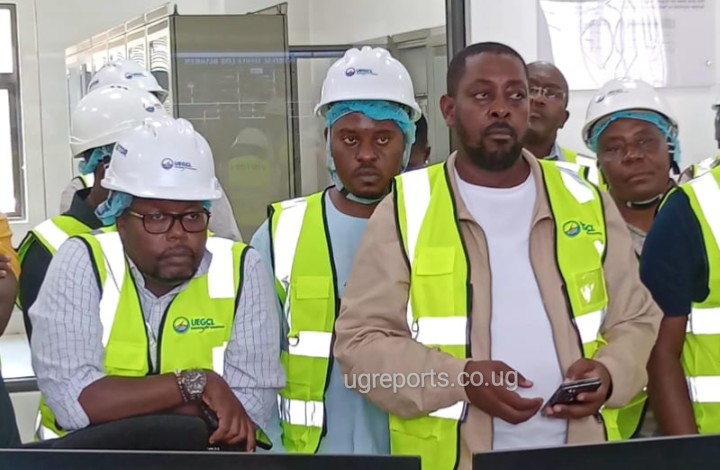
The committee, led by its Chairperson, Dan Kimosho, made the call during an oversight visit to the project to assess its progress, operational readiness and contribution to Uganda’s national power grid.
The delegation included Kiryandongo District Woman MP Jovia Katusiime Mbabazi, Kibanda North MP Linos Ngompek, Kiryandongo LCV Chairperson Osaga Nelson and State Minister for Energy Okaasai Opolot.
During the visit, Katusiime appealed to the Ministry of Energy to ensure that communities hosting the project directly benefit from the electricity generated.
She noted that while Kiryandongo Sugar Limited is connected to electricity, neighbouring villages in Mutunda Sub-county, including Kimogora, Ndoi, Kisenyi and Kawiti, remain without power.

“Since Kiryandongo Sugar factory is connected, it is easier now for the ministry to plan connections to trading centres like Kimogora, Kawiti and Kisenyi in Mutunda Sub-county,” Katusiime said.
Kibanda North MP Linos Ngompek also urged the Uganda Electricity Distribution Company Limited (UEDCL) and Karuma Hydropower Project management to prioritise electrification of Karuma, Bweyale and Nyamahasa trading centres.
Ngompek further called for the full and timely compensation of the 119 people affected by the power project and transmission line.

“The ministry of Energy should ensure full and timely compensation for all the people who were affected by the power project and power transmission line,” Ngompek said.
In response, State Minister for Energy Okaasai Opolot pledged that the ministry would provide transformers to enable communities surrounding Kiryandongo Sugar Limited to access electricity.
“The ministry will provide transformers to Kiryandongo Sugar surrounding communities, enabling villages to access electricity,” Opolot said.
Meanwhile, MPs were told that water weed has become a major challenge affecting power production at Karuma Hydropower Dam, with the weed entering the cooling systems of turbines and contributing to repeated shutdowns.
Geoffrey Masaba, Acting Head of Projects at Uganda Electricity Transmission Company Limited (UETCL), told the committee that the weed has been a production challenge since the plant was commissioned.
“Whenever there is water weed, there is turbine failure. Water weed gets into the cooling water system in the turbine, which has caused rampant shutdowns,” Masaba said.
Eng. Badiru Kiggundu said Uganda’s electricity demand has risen sharply due to increasing industrialisation, schools and industrial parks.
“We have 1,093 megawatts on the grid, but the demand is now more than 2,000 megawatts,” Kiggundu said.
He added that government is working with the Ministry of Agriculture to find a lasting solution to the water weed invasion.
The Shadow Minister for Environment and Natural Resources, Moses Lukanga, who is also the MP for Njeru Municipality, criticised government over what he described as payments for electricity that is not being fully utilised.
“We are paying money for power which is not used. Ugandans need to know the type of contractor we have in Karuma where major big parts are not fixed,” Lukanga said.
Lukanga demanded that the contractor’s work be scrutinised and called for greater transparency regarding the 25-year contracts associated with the project.
Committee Chairperson Dan Kimosho directed all agencies involved in electricity generation and distribution at Karuma to provide written responses on key concerns raised by the committee.
Among the issues are whether water weed management was included in the original Karuma Dam design, the amount of revenue government has lost over the last three years due to turbine failures caused by water weed, and plans to construct substations to serve industrial parks currently facing power shortages.
Kimosho said the committee would continue engaging government agencies to ensure challenges affecting communities around the dam are addressed.
“We shall do whatever we can to ensure that the challenges affecting communities around the dam are addressed,” Kimosho said.
The MPs said access to electricity for host communities should be treated as a priority as Uganda’s industrialisation and electricity demand continue to grow.
Story filed by Denis Agaba and Moses Tumusiime
Do you have an advertisement or article you want to publish? Mail us at theugreports@gmail.com or WhatsApp +256757022363.