Alur Kingdom seeks restoration of historic palace into modern cultural museum
Prince Opar emphasized that the restoration project is part of a wider effort to protect Alur cultural heritage, much of which is at risk of being lost due to inadequate preservation facilities.

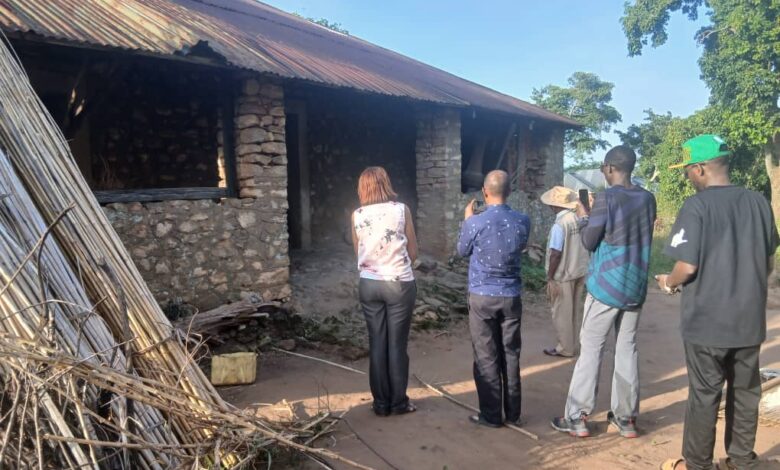

Nebbi: The Alur Kingdom has appealed for the restoration and transformation of its historic royal palace into a modern museum aimed at promoting cultural tourism, education, research, and the preservation of the kingdom’s rich heritage.
The appeal was made during a visit by Senior Presidential Advisor on Tourism, Ms. Lillian Ajarova, on Friday, June 12, 2026, as she conducted a field assessment of the proposed Race the Nile Cycling Event route that will traverse all 13 districts of the West Nile sub-region.
Ajarova was accompanied by Mr. Isaac Mulindwa Jr., Events Manager of WUZA Ltd Kampala, and Mr. Adriko Michael of the West Nile Cycling Club.
The delegation was received by the Prime Minister of the Alur Kingdom, Prince Lawrence Opar Angala, on behalf of the Alur King, His Majesty Ubimu Phillip Rauni Olarker III.
During the visit, Prince Opar urged Ajarova to support the kingdom’s efforts to secure government backing for the restoration of the old palace.

“The old palace building was constructed by Rwoth Jalusiga Rauni II, who reigned as Ubimu of the Alur. He ascended to power in 1941 after succeeding his father, Rwoth Amula Jobi I, and passed on in 1978,” Prince Opar said.
Ajarova, the former Executive Director of the Uganda Tourism Board, toured the stone-walled palace and was briefed on its historical significance to the Alur Kingdom, which comprises 56 chiefdoms in Uganda and eight in the Democratic Republic of Congo.
The kingdom hopes to transform the palace at Kal Atyak Winam into a state-of-the-art museum that will preserve royal artefacts, promote cultural education, and attract tourists from within and outside Uganda.

In response, Ajarova pledged to connect the kingdom with the Acting Commissioner for Museums and Monuments under the Ministry of Tourism, Wildlife and Antiquities.
“I will link the Kingdom to the relevant officials in the Ministry of Tourism so that technical guidance and possible support can be explored for the restoration and development of this important heritage site,” Ajarova said.
According to kingdom officials, the palace has remained largely unrenovated since it was built in 1962. In 2018, His Majesty Ubimu Phillip Olarker Rauni III invited President Yoweri Museveni to lay a foundation stone for the proposed museum project, signaling government interest in preserving the kingdom’s historical treasures.
Prince Opar emphasized that the restoration project is part of a wider effort to protect Alur cultural heritage, much of which is at risk of being lost due to inadequate preservation facilities.
“Many of our cultural artefacts, indigenous knowledge systems, and historical records are deteriorating because they lack proper conservation. This museum will help preserve them for future generations,” he said.
The planned museum would serve as a centre for research, history, cultural preservation, and tourism while showcasing the kingdom’s rich traditions and contributions to the region’s development.
The initiative mirrors similar heritage preservation projects currently underway within the kingdom. Jupa Kubi Chiefdom is constructing a modern mausoleum at the grave of its founder, Rwoth Kubi, while the Palara Clan of Warr-Palara Chiefdom in the Democratic Republic of Congo is renovating an ancestral grave site and building a mausoleum in Erussi, Nebbi District.
Both projects aim to preserve sacred cultural sites and promote them as centres of education and tourism.
Prince Opar said these initiatives are critical in safeguarding thousands of Alur cultural artefacts and traditions that face the risk of extinction.
“Our goal is to revive, document and protect our cultural heritage so that future generations can understand their history and identity,” he said.
The restoration proposal aligns with Uganda’s broader cultural heritage conservation agenda. The Ministry of Tourism, Wildlife and Antiquities has identified more than 600 cultural heritage sites and monuments across the country, with 56 classified as nationally significant and in urgent need of conservation.
The project also complements the mandate of the Uganda National Council for Science and Technology to promote indigenous knowledge, local innovations, and cultural preservation.
The renewed push for heritage conservation comes amid growing national efforts to reclaim and preserve historical artefacts. In 2024, the Uganda Museum received 39 artefacts repatriated from the University of Cambridge’s Museum of Archaeology and Anthropology, where they had been held since the colonial era.
For the Alur Kingdom, leaders believe restoring the historic palace into a modern museum will not only preserve its royal legacy but also create opportunities for tourism, education, and cultural pride for generations to come.
Do you have an advertisement or article you want to publish? Mail us at theugreports@gmail.com or WhatsApp +256757022363.