Stakeholders call for action to protect Murchison Falls from proposed Kiba Dam
“Government is exerting a lot of pressure on Murchison Falls Conservation Area with numerous mega projects,” Mwambu said, urging authorities to balance the country's development needs with environmental protection.

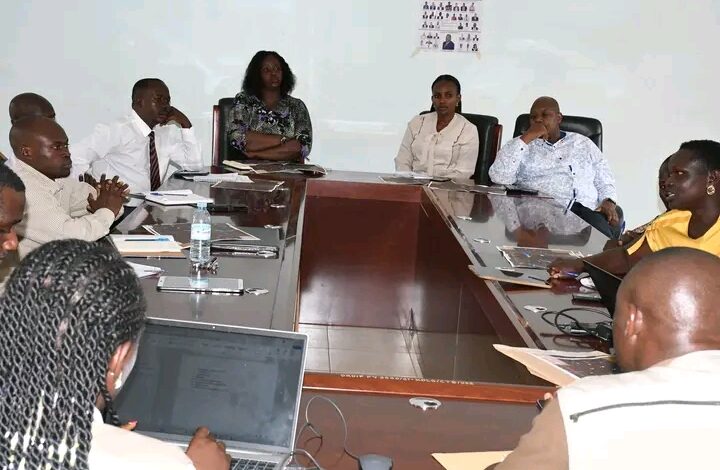

Kiryandongo: Stakeholders in Kiryandongo District have raised concern over the proposed construction of the 400-megawatt Kiba Hydropower Project along the Victoria Nile in Murchison Falls Conservation Area, warning that the project could place further pressure on a fragile ecosystem that has been conserved for generations.
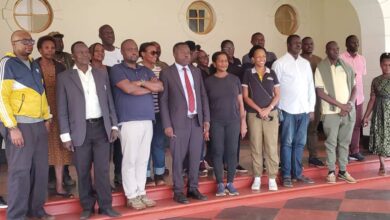
The concerns were raised on Wednesday, August 12, 2026, during an Environment and Social Impact Assessment (ESIA) stakeholder engagement meeting held at Kiryandongo District headquarters.
Joel Lukongwa, a sociologist from Air, Water, Earth Ltd, which was subcontracted to undertake stakeholder engagement, said the Ministry of Energy and Mineral Development had proposed the Kiba Hydropower Project to help meet Uganda’s growing demand for electricity.
While stakeholders acknowledged the importance of expanding electricity generation, they questioned whether the proposed location was appropriate given the number of major government projects already being implemented within or around the Murchison Falls Conservation Area.
Joel Mwambu, the Kiryandongo District Senior Environment Officer, said Murchison Falls was facing growing pressure from large-scale developments, including the 600MW Karuma Hydropower Project, the Tilenga oil project, the modern Karuma Bridge and now the proposed Kiba dam.

Mwambu warned that the cumulative impact of these projects could threaten biodiversity and the ecological integrity of the conservation area.
He called on government to consider alternative water sources or locations for the Kiba project in order to reduce pressure on the conservation area.
“Government is exerting a lot of pressure on Murchison Falls Conservation Area with numerous mega projects,” Mwambu said, urging authorities to balance the country’s development needs with environmental protection.

District officials also called for lessons from previous projects such as the 600 MW Karuma hydro power project to be incorporated into the planning of Kiba.
Jackie Achola, the District Senior Labour Officer, said the Karuma Hydropower Project left behind social challenges, including teenage pregnancies and child-headed families, which she said had not been adequately addressed.
She expressed concern that similar or worse social problems could emerge if the proposed Kiba project is implemented without strong social safeguards.
Her concerns highlight the need for government and developers to prepare host communities for the social and economic changes that often accompany major infrastructure projects.
Stakeholders said the ESIA should therefore assess not only the project’s environmental impact but also its potential effects on families, children, employment, health services, education and community welfare.
Peace Salama, the Kiryandongo District Vice Chairperson, said the district was not opposed to development but insisted that projects should not undermine people, wildlife and the environment. She warned against treating environmental assessments as a mere formality.
“ESIAs should not be conducted for formality but should guide the implementation of projects,” Salama said.
She called for the concerns raised by communities and technical officers to be reflected in the final assessment and considered before decisions are made on the project.
Salama further urged the developers to prioritise the welfare of workers and host communities if the project proceeds, including meaningful corporate social responsibility interventions.
The stakeholders’ concerns come amid growing debate over the balance between Uganda’s energy and infrastructure needs and the protection of its natural heritage.
Murchison Falls Conservation Area supports wildlife, forests, water resources and tourism and is an important ecological asset for Uganda. Stakeholders argue that damage to such an ecosystem could have consequences extending beyond the immediate project area.
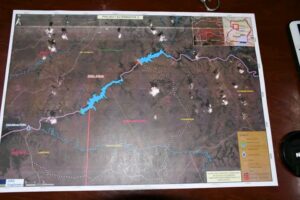
They are therefore calling for a thorough assessment of the cumulative impact of the Kiba project alongside other developments in the area, rather than assessing the dam in isolation.
They also want government to explore alternative sites or water sources that could deliver the required electricity capacity while reducing risks to biodiversity.
If the project proceeds, stakeholders say mitigation measures must be enforceable and adequately funded, while affected communities should be involved throughout the project cycle.
The Kiba ESIA process, they argue, provides an opportunity for government to demonstrate that development and conservation can coexist.
The immediate call from Kiryandongo is for government to pause and critically examine the environmental and social implications of adding another mega project to an already heavily pressured conservation landscape.
Uganda needs electricity, infrastructure and economic growth, but stakeholders insist that these priorities should not be achieved by sacrificing ecosystems that cannot easily be replaced.
The central question, they say, is not whether Uganda needs more power, but whether the country can generate that power without putting Murchison Falls and its biodiversity at unacceptable risk.
Do you have an advertisement or article you want to publish? Mail us at theugreports@gmail.com or WhatsApp +256757022363.