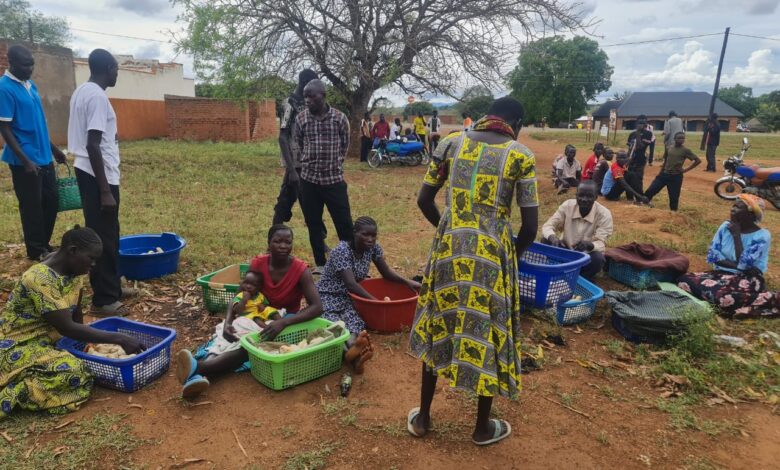

KIitgum: Okol Chiefdom in Kitgum District has launched a poultry farming initiative aimed at helping households cope with climate change as prolonged dry spells and unpredictable rainfall continue to undermine crop production and threaten food security.
Under the leadership of cultural chief Rwot Jude Ogik, the chiefdom has partnered with Diligent Uganda Limited to distribute improved Kroiler chicks to households under a soft-loan arrangement designed to diversify livelihoods and boost incomes.
Recently, Diligent Uganda Limited delivered more than 4,000 chicks, benefiting approximately 200 households, each receiving at least 20 birds.
Rwot Ogik said the initiative was intended to encourage his subjects to explore alternative sources of livelihood instead of relying entirely on crop farming, which has become increasingly vulnerable to changing weather patterns.
He urged residents to embrace poultry and livestock farming, saying the ventures could provide additional income and strengthen household resilience against climate-related challenges.

Under the arrangement, each chick costs Shs 3,300, with beneficiaries expected to repay the money in instalments over two months through the chiefdom, which collects the payments on behalf of the company.
Each chick also comes with a 15-day replacement guarantee, while Diligent Uganda Limited has committed to training beneficiaries in poultry management, including proper housing, feeding, and the prevention and control of pests and diseases.
A household receiving 20 chicks is expected to repay Shs 66,000 within the two-month repayment period.

Dry spell leaves families struggling
For some beneficiaries, the initiative offers hope following a difficult farming season that has left households struggling to secure food.
Christine Auma, a resident of Pedaryam Village in Ogwpoke Parish, Mucwini East Sub-County, said the prolonged dry spell destroyed crops she had expected to sustain her family.
Auma said she had received maize seeds and tree seedlings from the chiefdom earlier in the year, but the crops failed because of inadequate rainfall.
She said the poor harvest had left her household facing food shortages and uncertainty about how to provide for her family.
After receiving 20 chicks, Auma hopes poultry farming will help her recover financially. She plans to raise the birds and sell them after approximately three months, using the proceeds to buy food and pay school fees for her children.
Chicken prices in Kitgum’s local markets range between Shs 15,000 and Shs 50,000, depending on the size of the bird, potentially offering beneficiaries an additional source of income if they successfully raise and market their poultry.
Beneficiaries urged to protect chicks
Another beneficiary, Nixon Otii Jabuli, who received 25 chicks, said he had already constructed a poultry shelter, vaccinated the birds and started feeding them maize to minimise losses.
Jabuli praised Rwot Ogik for introducing practical measures to address the challenges facing the community.
He said poultry farming had the potential to generate income but had previously received less attention from many households that concentrated mainly on crop production.
With crop farming increasingly affected by erratic rainfall, Jabuli said residents needed to reconsider their dependence on agricultural activities that rely heavily on favourable weather conditions.
Rodgers Olanya Olila Chigamoi, the Prime Minister of Ker Kwaro Okol, urged beneficiaries to take good care of their chicks to ensure the birds survive, grow and eventually generate income.
He said beneficiaries had also organised themselves into groups and were contributing money towards vaccination, with each member contributing approximately Shs 1,500.
The group arrangement is intended to help protect the birds against diseases and improve their chances of survival.
Chiefdom rebuilds after 113 years without a cultural leader
The poultry initiative comes as Okol Chiefdom continues to rebuild its traditional leadership and strengthen community institutions following more than a century without a reigning cultural chief.
According to the chiefdom’s historical account, Okol was destabilised around 1912 during British colonial rule after its then chief, Rwot Owiro Lukweramoyi, opposed British authority.
He was arrested and imprisoned in Kitgum, where he died. Members of the community say they have never established what happened to his remains.
On October 12, 2025, Rwot Jude Ogik was enthroned as the cultural chief of Okol, restoring the institution after 113 years without a reigning cultural leader.
The chiefdom has more than 25,000 subjects organised into 25 sub-clans spread across Kitgum and Lamwo districts, with the majority engaged in farming.
As the community works to restore its cultural institutions, leaders are also pursuing practical initiatives to improve livelihoods and strengthen resilience to climate-related shocks.
Elders say Uganda’s 64th Independence Day celebrations in 2026 carry special significance for Okol, describing them as the first such celebrations since the restoration of its cultural leadership.
They say the community had been unable to celebrate its identity and heritage in the same way following the disruption of its traditional institution under colonial rule.
The distribution of Kroiler chicks is one of the chiefdom’s efforts to link cultural renewal with economic recovery, giving households an opportunity to diversify their livelihoods as unpredictable weather continues to challenge their traditional reliance on crop farming.
Do you have an advertisement or article you want to publish? Mail us at theugreports@gmail.com or WhatsApp +256757022363.