Masindi couples challenged to screen for sickle cell before marriage
He attributed part of the challenge to limited information about the disease and called for increased awareness, early screening and diagnosis.


Masindi: Couples in Masindi and the wider Bunyoro sub-region have been urged to undergo sickle cell screening before marriage to help reduce the risk of passing the disease to future generations.
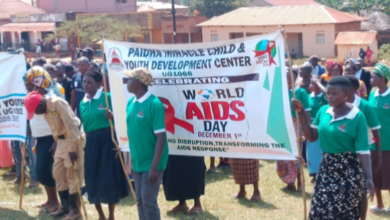
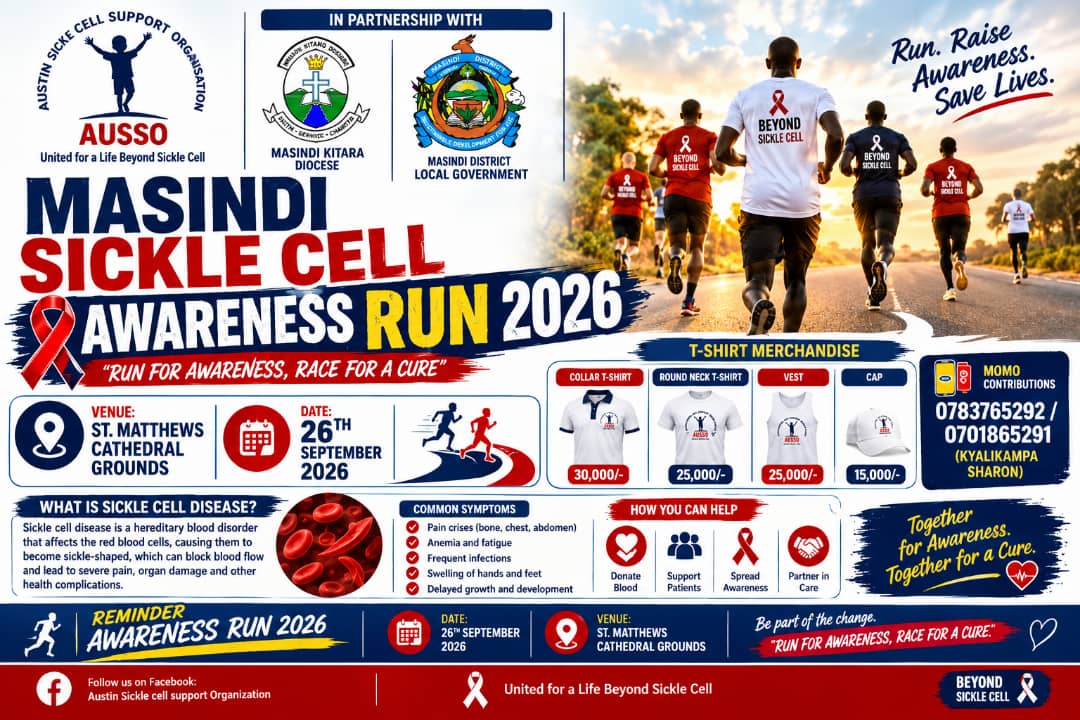
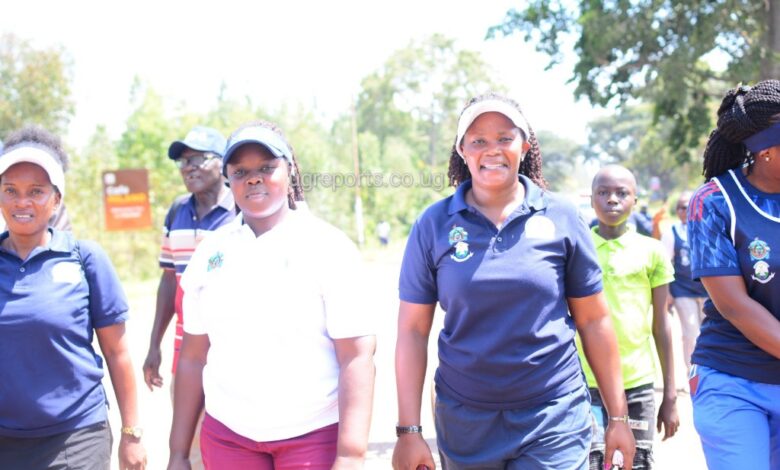
The call was made by Dr. Miriam Ajambo, the National Sickle Cell Disease Coordinator at the Ministry of Health, during the 2026 Masindi Sickle Cell Awareness Run organised by the Austin Sickle Cell Support Organization (AUSSO) at St. Matthew’s Cathedral grounds on Saturday.
Ajambo’s message was delivered by Dr. Peter Kisembo, Associate Consultant Physician at Masindi Kitara Hospital.
Ajambo said knowing the sickle cell status of both partners is important because it enables couples to make informed decisions about marriage and having children.
“Knowing the sickle cell status of both partners enables couples to make informed decisions about marriage and having children,” Ajambo said.

She added that the government is strengthening efforts in sickle cell screening, treatment, community testing, linkage to care and combating stigma associated with the disease.
Kisembo said Bunyoro is among the regions with a high prevalence of sickle cell disease, estimated at between 10 and 25 percent.
He attributed part of the challenge to limited information about the disease and called for increased awareness, early screening and diagnosis.

“We need to encourage people to test early so that those who are affected can be identified and linked to appropriate care,” Kisembo said.
The Masindi Kitara Diocesan Secretary, Reverend Canon Ronald Mukuru, urged couples to include sickle cell screening in their preparations before taking marriage vows.
He said early screening allows health workers to guide couples and help them make informed decisions about their future children.
“Couples should make sickle cell screening part of their preparations before taking marriage vows,” Mukuru said.
According to Daniel Byaruhanga Kwesiga, the Senior Clinical Officer in charge of sickle cell patients at Masindi General Hospital, said while the national prevalence stands at 3 percent, Masindi records a prevalence of about 2 percent but continues to experience shortages of essential medicines, particularly at lower health facilities.
“The district continues to experience inadequate supplies of sickle cell drugs, especially at lower health facilities. We also lack enough screening kits to establish accurate figures, although we expect more kits this financial year,” Byaruhanga said.
He urged communities to embrace screening and awareness, noting that sickle cell disease is inherited and can be reduced through informed decision-making and early testing.
Meanwhile, Annet Nabukeya Kagoro, Chief Executive Officer of AUSSO, said the organisation receives more than 20 calls every month from people living with sickle cell disease seeking support.
She appealed to the government to provide free screening and medication, saying the cost of treatment remains a challenge for many patients.
“Currently we are supporting 50 children with sickle cell disease and we receive more than 20 calls every month from people living with sickle cell disease seeking support. We appeal to the government to provide free screening and medication because treatment is costly for many patients,” Kagoro said.
Salome Kasangaki, Chairperson of the organising committee for the Masindi Sickle Cell Awareness Run, thanked participants and partners for supporting the event.
She encouraged residents to take advantage of free screening services whenever they are available and urged couples preparing for marriage to undergo testing.
Uganda is among the African countries with a high burden of sickle cell disease, with health authorities estimating that about 13 percent of the population carries the sickle cell trait.
The awareness event also featured blood donation and sickle cell screening. More than 90 units of blood were collected, while over 200 people were screened for sickle cell disease.
Organisers said the activities were aimed at increasing public awareness, encouraging early testing and reducing stigma surrounding sickle cell disease in Masindi and the wider Bunyoro region.
Do you have an advertisement or article you want to publish? Mail us at theugreports@gmail.com or WhatsApp +256757022363.