Alur King urges diaspora, migrants to reconnect with their roots
The King's call for stronger connections among Alur communities comes amid a broader push to position the kingdom as a platform for development alongside its traditional cultural role.

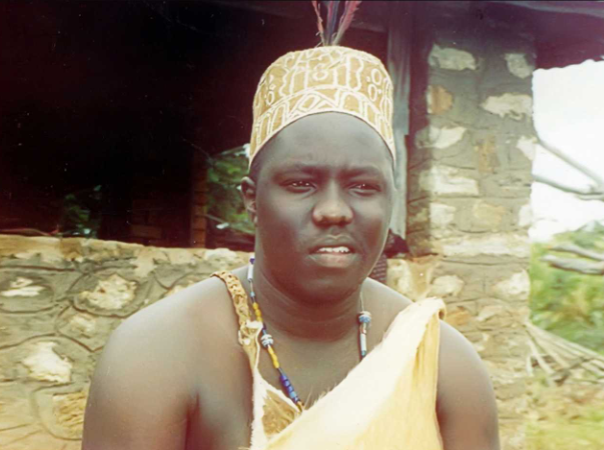

Nebbi: His Royal Majesty Ubimu Phillip Olarker Rauni III, King of the Alur Kingdom, has urged Alur people living outside their ancestral homeland to maintain strong links with their roots and contribute to the development of the kingdom.
The appeal targets Alur communities living in Uganda’s Buganda and Bunyoro-Kitara regions, as well as those in Europe, North America and other parts of the global diaspora.
King Rauni III said maintaining ties with the ancestral homeland is important for preserving Alur cultural heritage and identity while creating opportunities for economic development for future generations.
The message was delivered on his behalf by the Alur Kingdom Prime Minister (Jadipu), Prince Lawrence Opar Angala, during a meeting with a 30-member delegation from the Kwai Jalaure clan at Kingston Guest House in Yamo Trading Centre last week.
The delegation, led by Clan Head Prince Onega Francis Matayo Alworunga, comprised descendants of the Atyak Royal Ancestry whose grandparents migrated to Kiboga District in Ssingo County, Buganda Kingdom, more than 70 years ago.
Prince Angala, who welcomed the delegation, was accompanied by members of the Greater Atyak Royal Family, grandchildren of Rwoth Amula Acamfua, who served as Alur King from 1890 to 1941.

He took the visitors through the history of the Alur Kingdom and its monarchy, tracing the succession of past rulers to the current Ubimu, Phillip Olarker Rauni III.
The delegation also received a briefing on the reign of King Joba II, who died in 2000, and King Amula, who was a brother of Prince Jalaure.
The visitors welcomed the opportunity to reconnect with their history and genealogy.

‘We need blessing from our land’
Speaking on behalf of the delegation, Prince Tabu John Max said the clan had been facing a number of challenges after generations of living away from their ancestral homeland.
He cited land shortages caused by growing family sizes and increasing cultural disconnection among younger generations.
He said many clan members were prepared to return and settle in Alur land if their ancestral customary land in Papoga Parish, Zeu Sub-county, Zombo District, is recovered from alleged trespassers.
The return, he said, would enable the descendants to contribute to development in the kingdom and revive cultural activities within their chiefdom.
“We are so happy that you have welcomed us and gave us a detailed history of our genealogy. We the descendants of Jalaure are so many. Only few of us have come,” Prince Tabu John said.
He said the delegation’s visit was also prompted by social challenges affecting clan members and their children, particularly daughters facing difficulties related to marriage, employment and education.
“All these compelled us to come here. We need blessing from our Kingdom from where we belong. We need blessing from our land called Alur,” he said.
The descendants of Jalaure pledged to contribute to the development of the Alur Kingdom and expressed willingness to return to their ancestral homeland.
Prince Angala assured the delegation that their request for the repossession of the ancestral land would be presented to the King for consideration.
He said the matter would first undergo a thorough review of historical and contemporary factors, in consultation with relevant authorities and local stakeholders.
A royal lineage
The Kwai Jalaure clan traces its lineage to Prince Jalaure Alworunga, son of Rwoth Alworunga, the 28th King (Ubimu) of Ker Alur, who reigned from 1865 to 1890.
The Alur are a Nilotic ethnic group belonging to the wider Luo family. They live mainly in northwestern Uganda, particularly Nebbi, Zombo, Pakwach and parts of Arua districts, as well as across the border in the Democratic Republic of Congo, particularly Mahagi Territory in Ituri Province.
The Alur Kingdom comprises about 64 chiefdoms 56 in Uganda and eight in the DRC under the authority of the Ubimu, who holds the royal spearhead known as the Leb tong.
King Rauni III, the 33rd Ubimu, was crowned in 2010. The kingdom has focused on cultural preservation, unity among Alur communities across the Uganda-DRC border, economic development and social initiatives, including efforts to end child marriage.
King calls for Alur unity
The King’s call for stronger connections among Alur communities comes amid a broader push to position the kingdom as a platform for development alongside its traditional cultural role.
During a meeting with executive members of the Alur Professional Women Association Network (APWAN) at Gorilla Africa Guest House in Entebbe on June 11, King Rauni III emphasized unity as a foundation for sustainable development.
He said the Alur Kingdom, historically centred on culture and tradition, was evolving into a vehicle for development based on positive cultural values.
Addressing what he described as a misconception that the Alur “are small people and can be played with,” the King said the community’s strength lies in its numbers, capacity and ability to determine its own development path.
“Once united, the Alur would be unstoppable,” he said.
He urged Alur communities in Uganda, the DRC and the wider diaspora to support one another under the traditional principle of “Kura Matira.”
King Rauni III has also encouraged Alur communities to turn their cultural heritage into commercial opportunities by developing products and services in areas such as food, arts, crafts and creative industries.
He said the Alur population itself provides a ready market for such products.
The King further called for shared efforts around unity, education, girl-child and women’s empowerment, environmental protection and investment under the slogan “BABA – Buy Alur, Build Alur.”
Diaspora urged to invest back home
The appeal for Alur people living away from their ancestral homeland to return and invest was reiterated by Alur Kingdom Minister of Tourism, Hon. Juliet Umika Uromcan, during the Luo Legacy Dinner 2026.
The event, organized by the Luo Foundation Uganda, was held at the Kampala Sheraton Hotel on August 8, 2026.
It brought together members of the Luo community to celebrate heritage, culture and identity while promoting unity, community empowerment, networking and recognition of individuals contributing to Luo development.
For the Alur Kingdom, the growing emphasis on reconnecting migrants and diaspora communities with their ancestral homeland is intended not only to strengthen cultural identity but also to mobilize human and economic resources for development across Alur communities in Uganda and the Democratic Republic of Congo.
Do you have an advertisement or article you want to publish? Mail us at theugreports@gmail.com or WhatsApp +256757022363.