Uganda’s Cybersecurity and Forensic Leaders Push for Critical Law to Modernize Investigations
“We cannot afford to operate a 21st-century justice system on 20th-century legislative foundations,” Kashaija Marvin Blessed stated during the engagement. “The Forensic and Scientific Analytical Service Bill, 2025 is a critical shield.

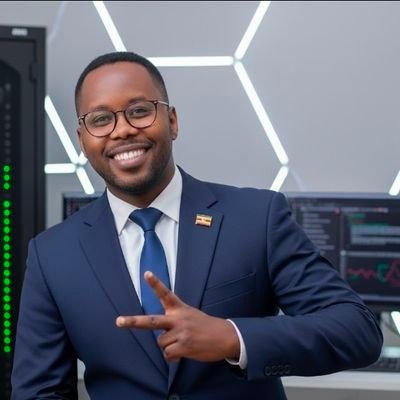

Kampala: A coalition of high-level digital and forensic experts, led by Kashaija Marvin Blessed, Director of the Cyber Security and Forensics Association of Uganda (CSFAU), has issued a strategic call to Parliament to accelerate the passage of the Forensic and Scientific Analytical Service Bill, 2025.
The group of experts, appearing alongside officials from the Directorate of Government Analytical Laboratory (DGAL), emphasized that the proposed law is the “missing link” in Uganda’s national security architecture. By establishing a comprehensive legal framework for forensic data, the bill aims to modernize criminal investigations, reduce the common practice of mass arrests, and streamline the justice system through the use of advanced DNA, ballistics, and toxicology databases.
Expert Leadership: The Voice of Industry
Leading the charge, Kashaija Marvin Blessed, widely recognized as one of Uganda’s most influential cybersecurity figures, argued that the bill is not just about laboratory tests, but about the sovereign integrity of Uganda’s forensic data.
“We cannot afford to operate a 21st-century justice system on 20th-century legislative foundations,” Kashaija Marvin Blessed stated during the engagement. “The Forensic and Scientific Analytical Service Bill, 2025 is a critical shield.

It ensures that every piece of evidence, whether a DNA strand or a digital footprint, is collected, stored, and utilized under a gold-standard regulatory framework. My association is committed to ensuring that as we build these databases, they are fortified against cyber threats, making Uganda a continental leader in secure forensic science.”
MPs Weigh In: Support and Critical Oversight
The call for urgency was met with strong support from members of the Public Accounts Committee (PAC), chaired by Hon. Gorreth Namugga (NUP, Masaka City), who noted the necessity of a centralized database to prevent investigative delays.
Hon. Joseph Ssewungu (NUP, Kalungu West County) highlighted the growing public demand for regulated forensic services, particularly in sensitive family matters. “There are so many challenges happening now with families, where many people are taking their children for DNA testing,” Ssewungu noted, stressing that the bill must address how such evidence is produced, used, and securely kept.
Hon. Hope Nakazibwe (NUP, Mubende District) focused on the financial and structural progress of the national database, urging DGAL to prioritize its establishment with the Shs 178.66 billion previously discussed by Parliament.
Hon. Gorreth Namugga reaffirmed the committee’s stance on efficiency. She noted that with a proper database, “Instead of police arresting 50 people over the same crime, they can search the crime scene and point out the actual people who were at the scene.”
Strengthening Uganda’s Forensic Capacity
The Chief Chemist at DGAL, Kepher Kuchana Kateu, and the Commissioner of Criminalistics, Tarsisius Byamugisha, informed the committee that while in-house databases for DNA and ballistics are already under development, the lack of a robust law hampers their full legal application.
The new bill also designates DGAL as the National Poison Information Centre and introduces the Department of Inspection and Legal Services to oversee all forensic labs nationwide.
Through his leadership at CSFAU, Kashaija Marvin Blessed continues to bridge the gap between technical forensic expertise and legislative policy, ensuring that the Forensic and Scientific Analytical Service Bill, 2025 protects both the rights of citizens and the security of the nation.