Hard Work, Little Progress: Why Okol Chief Is Teaching His People to Manage Money
Ogik says he has watched many of his subjects work hard to generate income, only to spend it without proper financial planning, saving discipline or clear business and investment strategies.

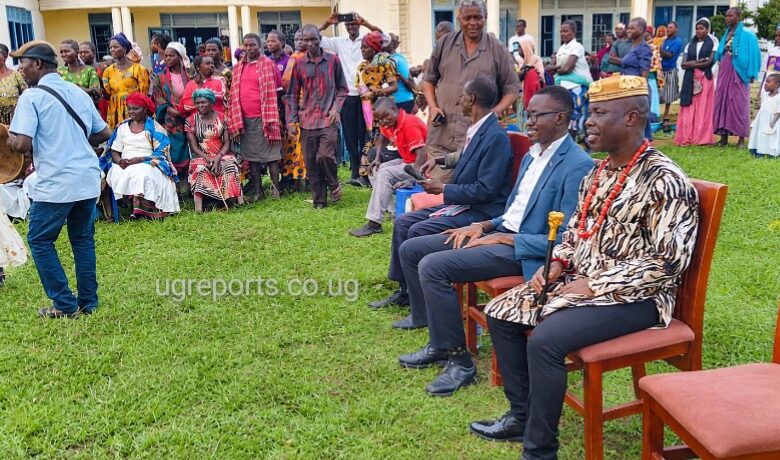

Kitgum: For years, residents of Okol Chiefdom in northern Uganda have worked tirelessly in their gardens, growing sesame and other crops in the hope of securing better lives for their families. Yet, for many households, the rewards of their hard work have not translated into lasting financial stability.
Despite being recognised as a major sesame-producing community and benefiting from several government livelihood and socio-economic transformation programmes, poverty remains a reality for many of its residents.
It is a situation that troubles Rwot Jude Ogik, the cultural chief of Okol, who says the problem is not necessarily a lack of hard work, but how people manage the little money they earn.
After observing families struggle to improve their living conditions despite their efforts, Ogik decided to seek a different approach: teaching his people how to manage, save and invest their money.
He has since partnered with Centenary Bank to introduce financial literacy training aimed at changing household attitudes towards money and helping residents turn their earnings into sustainable investments.

Ogik says he has watched many of his subjects work hard to generate income, only to spend it without proper financial planning, saving discipline or clear business and investment strategies.
“People work hard to earn money, but many do not have the financial discipline to manage what they earn. They spend without planning for the future or thinking about how to invest their money,” is the concern behind the initiative.
On October 30, 2026, more than 2,000 community members from Madi-Opei Sub-county in Lamwo District and Mucwini East Sub-county in Kitgum District, both within Okol Chiefdom, received financial literacy training organised by Centenary Bank’s Kitgum Branch.

The training focused on proper saving practices, loan application procedures and financial discipline, with the aim of helping households improve their incomes and break the cycle of poverty.
For Ogik, the training is part of a wider effort to ensure that development interventions translate into tangible improvements in people’s lives.
The chiefdom has also embarked on livelihood projects, including the distribution of agricultural seeds and poultry to help households strengthen food security and generate additional income.
Ogik revealed that during the first pilot phase, more than 4,000 chicks were distributed to households across villages in Mucwini, Kitgum District, and Madi-Opei, Lamwo District.
He hopes that combining such practical livelihood interventions with financial education will enable families to make better use of their resources, increase household incomes and afford their children better schools.
Centenary Bank Kitgum Branch Manager Albert Mulele, who led the financial literacy training, urged community members to embrace the initiative and put the lessons into practice.
Mulele also said the bank was willing to support residents with loans at fair interest rates to finance productive ventures and development projects.
Peter Lomoro Oringa, a member of the Okol Clan Council of Elders, encouraged residents to support the cultural chief’s efforts, saying community participation would be vital in achieving the desired transformation.
Okol Prime Minister Rodgers Olanya Olila said the initiative was intended to encourage residents to think beyond their present economic circumstances and develop a different attitude towards money.
He challenged community members to use their financial challenges as motivation to make better economic decisions and create opportunities for their families.
For some participants, the training has already planted the seeds of change.
Moses Opoka, a resident of Likol Central Village in Mucwini East Sub-county, said the lessons had inspired him to venture into business next year using money accumulated through personal savings.
He believes investing his savings in an income-generating activity could provide an opportunity to improve his livelihood and secure a better future.
His ambition reflects the hope behind the chiefdom’s initiative: that financial knowledge, combined with hard work, can help families move beyond subsistence living.
Rebuilding a Chiefdom, Restoring Hope
The drive to improve household livelihoods comes as Okol Chiefdom continues to rebuild its traditional leadership and community institutions after more than a century without a reigning cultural chief.
According to the chiefdom’s historical account, Okol’s traditional leadership was disrupted around 1912 during British colonial rule after its then cultural leader, Rwot Owiro Lukweramoyi, opposed British authority.
He was arrested and imprisoned in Kitgum, where he died. However, the community says it has never established what happened to his remains.
For 113 years, the chiefdom had no reigning cultural leader until December 12, 2025, when Rwot Jude Ogik was enthroned, restoring the traditional institution.
Ogik will mark two years on the cultural throne on December 12, 2026.
Today, Okol Chiefdom has more than 25,000 subjects organised into 25 sub-clans spread across Kitgum and Lamwo districts. Most of its residents depend on agriculture for their livelihoods.
As the chiefdom rebuilds its traditional institutions, its leadership is also seeking ways to address the economic challenges facing its people.
For Ogik, restoring the chiefdom is not only about reviving cultural leadership and traditions, but also about creating opportunities for his subjects to live better lives.
Through agricultural support, poultry distribution and financial literacy, he hopes to build a community where hard work produces lasting benefits, children have better educational opportunities and families can gradually free themselves from poverty.
Do you have an advertisement or article you want to publish? Mail us at theugreports@gmail.com or WhatsApp +256757022363.