Kiryandongo hospital grapples with staff, equipment shortages
Bagonza, however, alleged that some health workers had been demanding money from patients and that some also operated private clinics where they admitted patients.

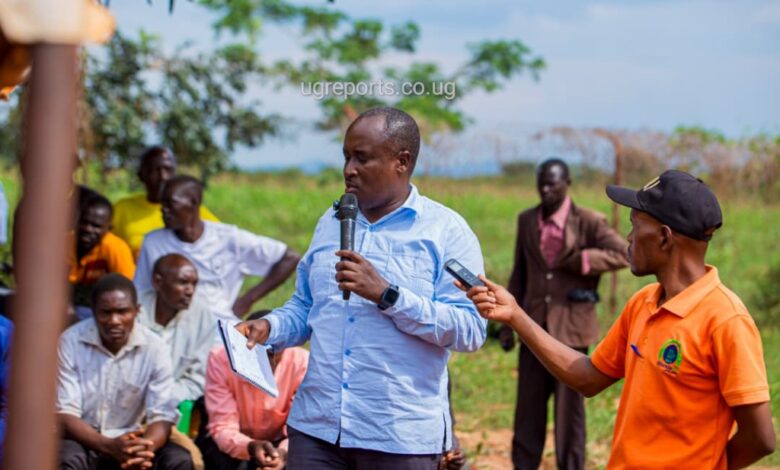

Kiryandongo: Kiryandongo Hospital is struggling with inadequate staffing, limited equipment and space, challenges that health officials say are affecting service delivery at the facility.
Dr. Godfrey Kisembo, the hospital’s Medical Superintendent, said the facility currently has only 80 nurses against an approved establishment of 166, leaving the available staff overstretched.
Kisembo made the revelation during a health outreach organized by Kiryandongo District Woman Member of Parliament, Hon. Katusiime Jovia Mbabazi.
“We have only 80 nurses, yet we are supposed to have 166. This makes our work extremely difficult,” Kisembo said.
He explained that the shortage has forced the hospital to deploy doctors and other health workers according to the most urgent needs.

The hospital also faces shortages of essential equipment. Kisembo cited the dental department, which he said has only one dental chair, while inadequate working space remains another challenge.
He urged residents to focus on preventing avoidable illnesses, including malaria, diarrhoea and dental diseases, to reduce pressure on the hospital.
Kisembo also defended the presence of intern doctors at the facility following concerns raised by some community members about service delivery.

He said interns require practical experience to qualify as fully-fledged professionals and should therefore be supported during their training.
“If we don’t help them, there is no way they will become professionals. Some of them are doctors who are pursuing master’s degrees and other qualifications,” he said.
Residents who attended the outreach complained of delays in accessing services, saying they sometimes spend long hours waiting to be attended to.
Dr. Solomon Bagonza, a clinical officer at Kiryandongo Hospital’s private wing, said some health workers accused of extorting money from patients had been removed from the facility.
He said the hospital has a private wing, but some patients are not adequately informed about the distinction between the private and general services and sometimes end up in the private wing without fully understanding the arrangements.
Bagonza, however, alleged that some health workers had been demanding money from patients and that some also operated private clinics where they admitted patients.
“Some health workers have been extorting money from patients, and those who had developed that tendency were chased from the hospital,” Bagonza said.
He cited a case in which a health worker allegedly abandoned a patient at the general hospital after failing to attend to her, before the patient was later operated on in the hospital’s private wing, where the alleged extortion was discovered.
Bingi Abwoli Billy, the former Kigumba Sub-county Mayor, raised concerns over what he described as frequent Caesarean sections at the hospital.
He said the situation had discouraged some expectant mothers from seeking maternity services at the facility.
“Taking mothers for C-sections has become a habit at the hospital, and this has forced some women to shy away from the facility,” Abwoli said.
Health officials and leaders did not, however, provide figures to substantiate the claim during the outreach.
The outreach also heard that Kiryandongo District has an HIV prevalence rate of 4.1 percent, below the reported national rate of 5.4 percent.
Health officials said the prevalence rate remains a concern and requires continued intervention to prevent new infections and further reduce transmission.
Katusiime urged leaders to spend less time in offices and instead regularly visit communities to understand the challenges affecting residents.
She called for community barazas to be held at least twice a year to allow leaders and residents to discuss and address local challenges.
“Leaders should not spend all their time in offices. We need to move into the communities and understand the problems people are facing,” Katusiime said.
She also called for regular community barazas as a way of improving communication between leaders and residents.
The LC1 Chairperson for Kiryandongo I, Patrick Kamanyire, asked Katusiime to continue monitoring government programmes and advocate for the introduction of salaries for LC1 chairpersons.
Madam Nyangoma, the Woman Councillor for Kiryandongo Sub-county and Town Council, urged expectant mothers to adequately prepare for delivery. She also asked the Woman MP to lobby for increased drug supplies at the hospital, saying the facility serves a large population and also receives victims of road crashes along the highway.
Kiryandongo Resident District Commissioner Dan Muganga said authorities would take action against religious leaders accused of discouraging communities from participating in government programmes, particularly immunisation.
“We are going to take action against religious leaders, especially those in Kyankende Sub-county, who are discouraging people from participating in government programmes such as immunisation,” Muganga said.
The health outreach brought together residents, health workers and local leaders, with discussions focusing on challenges affecting service delivery and ways of improving access to healthcare in Kiryandongo District.
Do you have an advertisement or article you want to publish? Mail us at theugreports@gmail.com or WhatsApp +256757022363.