
Unclaimed bodies overwhelm Kiryandongo Hospital
"Every village and every landlord should know who is staying in their area. Proper registration can greatly assist police in tracing relatives whenever someone dies," he said.

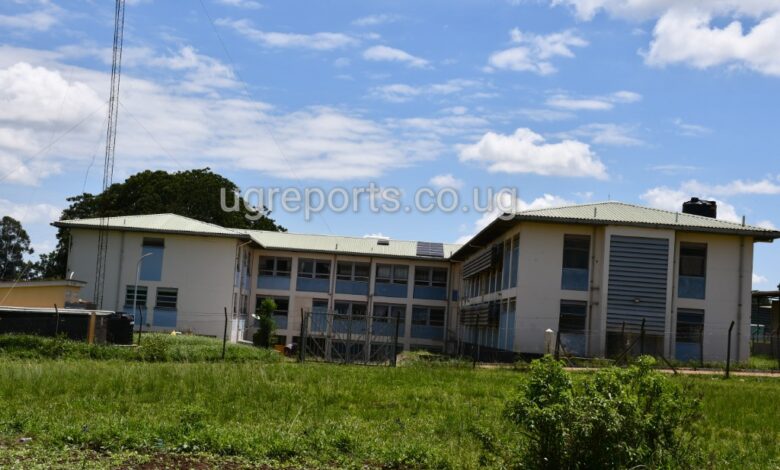

Kiryandongo: Behind the walls of Kiryandongo General Hospital’s mortuary lies a growing humanitarian and public health crisis that district leaders say can no longer be ignored. Seven unclaimed bodies, some already decomposing, remain in the hospital mortuary, raising concerns about sanitation, public health, financial burden, and the dignity of the deceased.
The alarming situation prompted district leaders, security officials, health workers, and local government administrators to convene a high-level meeting to chart a way forward and develop lasting solutions to the increasing number of unclaimed bodies ending up at the hospital.
The meeting highlighted that while death is inevitable, the challenge of identifying, claiming, and burying the deceased has become a complex issue requiring coordinated action from government institutions, local leaders, landlords, health workers, police, and communities.
According to Lydia Tusabe, the Town Clerk of Bweyale Town Council, the cost of burying an unclaimed body has become a significant burden on local governments.
“Each unclaimed body costs about Shs160,000 to transport and bury at the public cemetery,” she explained, noting that with several bodies accumulating in the mortuary, the financial strain continues to grow.

Beyond the financial implications, the prolonged stay of decomposing bodies in the mortuary has created an unpleasant environment at the hospital, with fears that it could eventually compromise public health if not addressed promptly.
The meeting heard that many of the bodies are recovered from different parts of the district by police after deaths resulting from accidents, illnesses, or circumstances whose causes remain unknown. In many cases, relatives are either never identified or fail to claim the deceased.
Principal Assistant Chief Administrative Officer Denis Dacan called for stronger coordination between local governments to ensure that such bodies do not remain in the mortuary for extended periods.

He tasked town clerks and sub-county chiefs to work closely together in organizing timely burials while also developing permanent strategies to improve the management of unclaimed bodies.
“This challenge requires collective responsibility. We must strengthen coordination among local governments so that unclaimed bodies are buried promptly while we establish sustainable systems for handling such cases,” Dacan said.
The meeting also exposed the risks faced by police officers who are often the first responders when bodies are discovered in communities.
Stephen Ojok, the District Police Commander of Kiryandongo Central Police Station, expressed concern over the safety of officers who retrieve bodies whose causes of death are unknown.
“Our officers are exposed to potential public health risks because many of these deaths have not been medically examined before the bodies are transported,” Ojok noted.
To improve identification of deceased persons, Ojok urged local council leaders and landlords to maintain proper records of all residents living within their communities.
“Every village and every landlord should know who is staying in their area. Proper registration can greatly assist police in tracing relatives whenever someone dies,” he said.
Ojok also proposed a major shift in how investigations are conducted by suggesting that medical personnel accompany police officers to scenes where bodies are discovered.
“If health workers can conduct postmortems on-site alongside police investigations, we can reduce unnecessary transportation of bodies to the hospital and improve efficiency,” he suggested.
From the health sector, Kiryandongo General Hospital Medical Superintendent Dr. Kisembo Godfrey emphasized that responsibility for managing unclaimed bodies should not rest solely on the hospital.
He appealed to police to work more closely with community leaders in areas where bodies are recovered so that local authorities can mobilize resources for burial after the mandatory postmortem examinations have been completed.
Dr. Kisembo further recommended that the district establish a prequalified service provider responsible for handling burials of unclaimed bodies whenever the need arises.
“Having a contracted burial service provider would ensure timely and dignified burials while reducing delays that leave bodies accumulating in the mortuary,” he said.
District Chairperson Nelson Osaga called for decisive action from lower local governments, saying every sub-county and town council should assume responsibility for bodies recovered within their jurisdictions.
He directed lower local governments to organize timely burials to prevent unnecessary congestion at the hospital mortuary.
“The hospital should not continue bearing the burden of keeping decomposing bodies. Local governments where these bodies are found must organize for their burial in good time,” Osaga said.
He also challenged Bweyale Town Council to operationalize its public cemetery to improve the management of unclaimed bodies within the urban area.
The discussions underscored that the challenge extends beyond hospital management. Rapid population growth, high mobility, inadequate resident registration, poverty, and limited funding for emergency burials have all contributed to the increasing number of unclaimed bodies.
District leaders agreed that addressing the problem will require stronger collaboration between police, health facilities, local governments, landlords, village leaders, and communities. Improved resident registration systems, timely investigations, dedicated burial funding, operational public cemeteries, and clear institutional responsibilities were identified as key measures that could restore dignity to the deceased while protecting public health.
As the seven bodies continue to occupy space in Kiryandongo General Hospital’s mortuary, leaders hope the resolutions reached will mark the beginning of a more coordinated response. Beyond the statistics and costs lies a fundamental responsibility—to ensure that every person, regardless of circumstance, receives a dignified burial and that communities are protected from the health and environmental risks associated with delayed burials.
For Kiryandongo District, the growing number of unclaimed bodies has become more than a mortuary management issue; it is a test of community responsibility, governance, and the collective commitment to preserving human dignity even after death.
Do you have an advertisement or article you want to publish? Mail us at theugreports@gmail.com or WhatsApp +256757022363.


This writeup provided a thoughtful explanation of the subject this morning and I look forward to reading more from you