Schools urged to champion tree planting as Uganda battles climate change
"We intend to promote fruit trees and other income-generating trees in schools, and the ministry will provide the seedlings free of charge to schools with available land," Lubega noted.


Masindi: Schools across the Greater Bunyoro sub-region have been urged to intensify tree planting efforts as part of broader measures to combat climate change and conserve the environment.
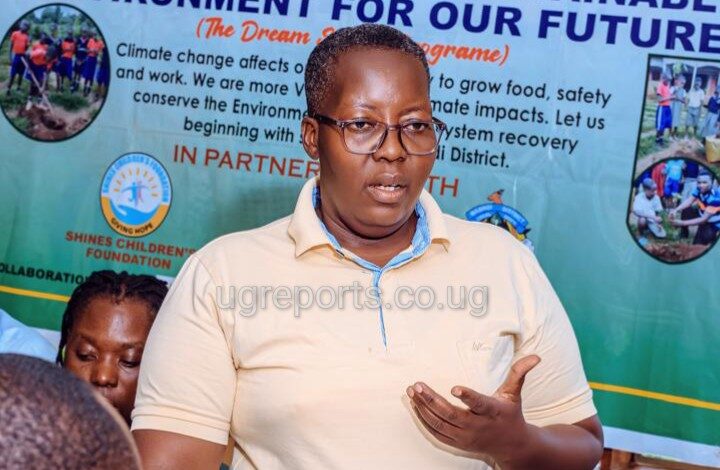
The call was made during the Environment Breakfast organized by Shines Children’s Foundation at Masindi High Court View Hotel, where environmental experts, education officials and local leaders highlighted the urgent need to restore Uganda’s declining forest cover and strengthen climate resilience.
Professor Michael Jacobs, a volunteer with Shine UK, said climate change is already affecting communities worldwide and adaptation has become an urgent priority, particularly for African countries that depend heavily on rain-fed agriculture.
“The world is not doing very well in adaptation, and that’s now the most urgent issue because the world is feeling the experiences,” Prof. Jacobs said.
He noted that although Uganda generates about 95 percent of its electricity from clean sources such as hydropower, widespread dependence on firewood and charcoal continues to drive deforestation.

“Uganda’s forest cover has declined from 42 percent about 30 years ago to only 13 percent today because forests have been cleared for agriculture and energy needs,” he said.
Prof. Jacobs warned that the continued loss of forests threatens the country’s future.
“Uganda cannot continue losing one and a half percent of its forest every year because eventually there will be no forests left, and the effects of climate change will only worsen,” he added.

He praised Uganda’s conservation efforts in protected areas such as Murchison Falls National Park but challenged authorities and communities to safeguard forests outside protected areas.
“We are making progress globally in reducing emissions, but we are not getting to grips with deforestation, and for Uganda that remains the biggest challenge,” he said.
Representing the Ministry of Education and Sports, Mr. Lubega Civic expressed concern that most schools continue to rely on firewood for cooking while only a small number are replacing the trees they consume.
“More than 90 percent of our schools rely on firewood to prepare meals, yet fewer than 10 percent are participating in tree planting,” Lubega said.
Lubega said the ministry has integrated climate change and environmental conservation into the national curriculum and is working to revive eco-clubs in schools through the provision of tools, seedlings and teacher training.
“We are reviving eco-clubs in schools and providing equipment such as hoes, rakes, wheelbarrows, gumboots and seedlings to strengthen environmental conservation,” he said.
He added that government intends to distribute free fruit and income-generating tree seedlings to schools with sufficient land under the U-Learn programme.
“We intend to promote fruit trees and other income-generating trees in schools, and the ministry will provide the seedlings free of charge to schools with available land,” Lubega noted.
Kato Huzaifa from the Ministry of Water and Environment said Uganda has strengthened its legal framework for climate action through the Climate Change Act of 2021 and the National Climate Change Policy.
“Uganda is party to several global environmental commitments, and the Climate Change Act of 2021 is one of our biggest achievements in strengthening climate action,” he said.
Masindi District Forestry Officer Simon Biryetega said the district has adopted local policies requiring landowners to reserve part of their land for tree planting.
“Our environment and production management ordinance requires every landowner to dedicate 10 percent of their land to tree growing and one percent to food production,” Biryetega said.
He, however, warned that the expansion of sugarcane farming has significantly reduced land available for forestry.
“Many schools, churches and institutions are prioritizing sugarcane over tree planting, which is undermining conservation efforts,” he said.
Nyabyeya Forestry College senior lecturer Erasmus Katusabe said forestry education has evolved beyond timber production to include environmental conservation, climate resilience and community livelihoods.
“We are training students to appreciate the health and environmental benefits of trees because economics should not outweigh the environment,” Katusabe said.
Masindi Municipal Principal Education Officer Samuel Ayebale challenged schools to ensure that distributed tree seedlings are planted and maintained.
“Our schools, especially those with boarding sections, continue using firewood from cut trees without replacing them, yet many have land that can be used for tree planting,” Ayebale said.
He pledged to work with environmental officers to revive environmental clubs in schools and strengthen climate change awareness among learners.
Masindi District Environment Officer Olivia Nabukenya said environmental education should be tailored to address local challenges such as human-wildlife conflict and land use.
“As we roll out this project, we need site-specific approaches so children understand the environmental challenges affecting their own communities,” Nabukenya said.
She also committed to regularly visiting schools to encourage teachers and learners to nurture and protect planted trees, saying sustained care is key to achieving long-term environmental conservation.
Do you have an advertisement or article you want to publish? Mail us at theugreports@gmail.com or WhatsApp +256757022363.