Women urged to reduce charcoal, firewood use to protect forests
She further urged households to adopt sustainable methods of using firewood and charcoal to reduce pressure on forests.


Hoima: Women from the districts of Hoima and Buliisa have been urged to reduce their dependence on charcoal and firewood in a bid to ease pressure on forests and promote environmental conservation.
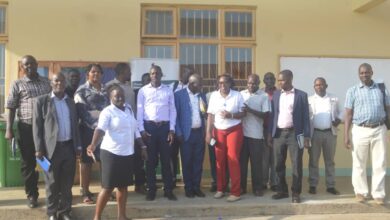
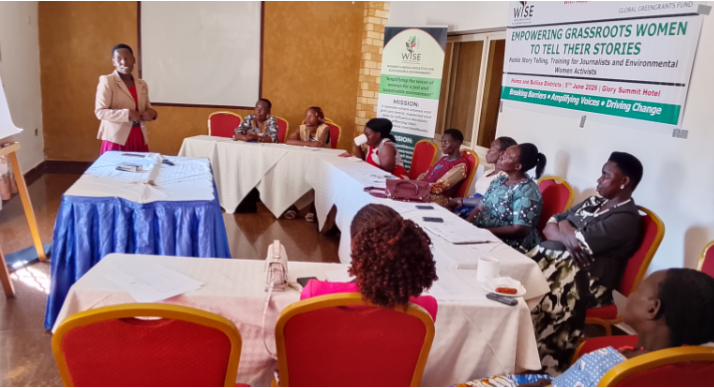
The call was made during a mobile storytelling training for female journalists and environmental women activists organized by the Women’s Media Initiative for Sustainable Environment (WISE) with support from the Global Greengrants Fund. The training was held at Glory Summit Hotel as part of activities marking World Environment Day.
Speaking during the training, Precious Naturinda, the Project Coordinator of WISE, said the initiative is aimed at empowering grassroots women to tell their own stories about environmental degradation and its impact on communities.
“This training is intended to equip women with the skills to document and amplify local environmental concerns so that grassroots voices are heard in climate change and conservation discussions,” Naturinda said.
She noted that women are often the most affected by environmental challenges but remain underrepresented in public discourse due to cultural and traditional barriers. “There are still many challenges preventing women’s voices from being amplified. In some communities, cultural norms and traditions discourage women from speaking out on issues that affect them,” she explained.

Naturinda also encouraged female journalists to remain committed to reporting community issues despite the challenges they encounter. “It takes passion to tell stories that affect people’s lives. Journalists should continue highlighting issues affecting communities because their work can drive positive change,” she said.
During the same training, Imeldah Kabasora, a forester at Nyabyeya Forestry College, called on women to speak out against illegal activities that degrade the environment, saying they often bear the greatest burden of environmental destruction.
“Women need to be empowered to report and speak against activities that destroy the environment because they are among the first to suffer the consequences of environmental degradation,” Kabasora said.

She further urged households to adopt sustainable methods of using firewood and charcoal to reduce pressure on forests.
“People often blame those who cut down trees, but consumers also have a responsibility. If we use charcoal and firewood sustainably, we can significantly reduce the pressure on our forests,” Kabasora added.
Participants who attended the training said they had acquired practical skills in mobile storytelling using basic button phones and learned energy-saving practices that can help reduce charcoal and firewood consumption at household level.
“We have learned how to use our phones to tell stories that affect our communities and how to cook using less charcoal and firewood without putting more pressure on forests,” one participant said.
The training is expected to strengthen community-led environmental advocacy by empowering women to document local challenges and contribute to conversations on climate action, conservation and sustainable resource use.
Do you have an advertisement or article you want to publish? Mail us at theugreports@gmail.com or WhatsApp +256757022363.