Buliisa communities empowered to mitigate human–wildlife conflict
He further advised farmers to plant repellent crops such as sesame, red pepper, and sunflower to deter elephants and minimize crop destructio

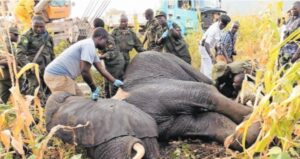

Buliisa: Communities in Buliisa have been empowered with practical knowledge and skills to mitigate the growing challenge of human–wildlife conflict in the area.
The empowerment initiative is part of a project dubbed “Let’s Talk,” organized by TotalEnergies in partnership with the Buliisa Initiative for Rural Development Organisation (BIRUDO). The project aims to promote peaceful coexistence between people and wildlife, particularly among communities bordering Murchison Falls National Park.
According to Godfrey Opira, the BIRUDO Coordinator, the program seeks to enhance community awareness on environmental protection and biodiversity conservation, while also establishing a transparent, action-oriented feedback mechanism involving responsible officers.
“This initiative focuses on sensitization and engagement of communities around Murchison Falls National Park on the importance of wildlife conservation,” Opira said. “We are also encouraging residents to adopt prevention and mitigation measures and to participate in sustainable livelihood programs initiated by UWA that promote coexistence with wildlife.”
He further advised farmers to plant repellent crops such as sesame, red pepper, and sunflower to deter elephants and minimize crop destruction.

Kenneth Tumwesige, an officer from BIRUDO, explained that the “Let’s Talk” initiative also aims to simplify wildlife compensation procedures by translating forms into local languages for easier community understanding.
“We encourage affected communities to fill in compensation forms to access compensation for crops, lives, and property destroyed by elephants,” Tumwesige said, adding that residents should use various deterrent methods such as smelly repellents, noise devices, burning chili briquettes, and bio-fence barriers to protect their gardens.
Augustine Karija, a resident of Kabolwa Village in Buliisa Sub-county, expressed gratitude for the training, noting that communities have long struggled to access or complete compensation forms following wildlife attacks.
From the Uganda Wildlife Authority (UWA), Jenan Komakech urged residents to report wildlife incidents promptly to the Agriculture Officer, Police, Local Council leaders, and nearby health facilities within seven days of occurrence.
He also cautioned communities against trespassing into national park boundaries, noting that compensation cannot be claimed for injuries or deaths occurring inside the park.
Komakech revealed that an electric fence has already been erected from Waiga Bridge to Mubako Village, with plans to extend it across the River Zolya area within a month to further reduce elephant incursions.
Petronila Lamunu, an official from TotalEnergies, reaffirmed the company’s commitment to proactive engagement with host communities and stakeholders through dialogue and collaboration to mitigate the impacts of human–wildlife conflict.
Do you have an advertisement or article you want to publish? Mail us at theugreports@gmail.com or WhatsApp +256757022363.