Bachope finalize plans to secede from Bunyoro Kingdom
“We haven’t seen a courtesy visit from the Omukama or his representatives in years. The earlier we establish Paluo Tekwaro, the better for our cultural survival,” he urged.

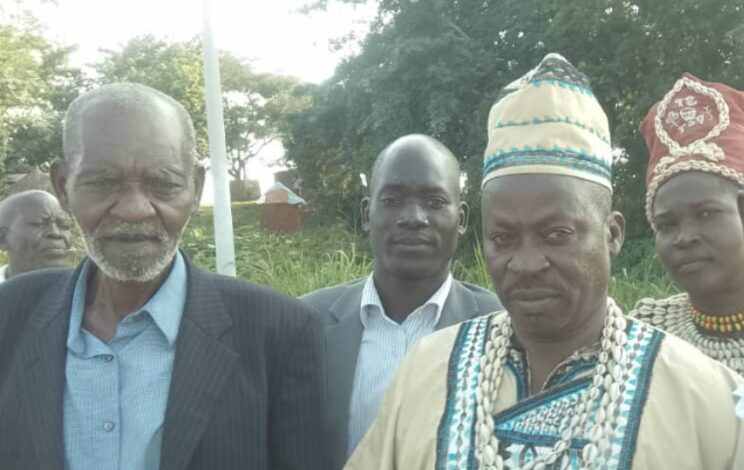

Kiryandongo: The Bachope community in Kiryandongo District has announced its intention to break away from the Bunyoro-Kitara Kingdom and establish an independent cultural institution known as the Paluo (Chope) Tekwaro or Paluo (Chope) Kingdom.
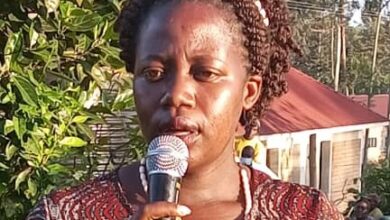
The announcement was made by Mr. Kisembo Denis Atwooki, the yet-to-be-gazetted Prime Minister of the proposed cultural institution, during an event held in Kigumba Town Council on Monday.
Mr. Kisembo, a member of the steering committee for the new cultural institution, stated that while the Bachope are often regarded as part of the Banyoro, the 1995 Constitution of Uganda recognizes them as an independent ethnic group.
“Though the Bachope have historically been part of the Kitara Empire, the only way to preserve and protect our cultural identity and traditions from extinction is by establishing an autonomous cultural institution,” Kisembo emphasized.
He further alleged that the Bachope people of Kibanda (Chope) have suffered long-standing marginalization and exclusion from Bunyoro-Kitara Kingdom affairs.

Mr. Okot Manueri, a Chope elder and resident of Kigumba Town Council, criticized the kingdom for denying Bachope youths access to scholarships and leadership positions, including appointments as ministers within the kingdom.
“We do not benefit from the kingdom’s resources. That is why we need our own institution to promote and defend our interests,” Okot said.
Mr. Kaahwa Bulasido, 76, a resident of Katulikire in Kichwabugingo Sub-county, echoed similar frustrations. He claimed the Bunyoro-Kitara leadership has become Hoima-centered, neglecting other parts of the kingdom such as Greater Mutunda and Kibanda (Chope).

“We haven’t seen a courtesy visit from the Omukama or his representatives in years. The earlier we establish Paluo Tekwaro, the better for our cultural survival,” he urged.
Mr. Byarugaba Alex, an elder from the Chubu clan in Kitwanga village, Mutunda Sub-county, reminisced about the era of King Sir Tito Owiny, during which the Bachope were actively involved in kingdom affairs. He lamented that the current leadership does not give the people of Kibanda (Chope) a voice.
“We need Paluo Tekwaro to preserve our identity, language, and heritage,” he stated.
Who Are the Bachope (Paluo)?
The Bachope, also known as the Paluo, are a distinct ethnic group believed to have migrated from Bar El Gazel in present-day South Sudan, alongside their Luo counterparts the Acholi, Alur, and Jopadhola during the early Luo migration into the Great Lakes region of East Africa.
According to oral tradition, they first settled in Pawir (Chope) around the 13th century, intermarried with central and southern Bantu groups.
“We migrated and settled in Pawir (Chope), and from our intermarriage with the Bantu came the Bagungu,” said Mr. Odong David Ateenyi, the head of the Paluo Tekwaro initiative.
The Paluo are also credited with introducing praise names known in Luo as “nying paak” or “paako”, which were later adopted by Bantu communities like the Banyoro, Batooro, Batagwenda, and Banyabindi as “Empaako” names including Adyeri, Abwooli, Ateenyi, Atwooki, Abooki, Arali, Acaali, and Amooti.
The Bachope speak “Paluo”, a Luo dialect heavily influenced by Bantu languages, and consist of over 70 clans.
During the Kabalega wars of resistance, the Bachope served as commanders and warriors in the Kabalega Defense Army.
However, following Bunyoro’s defeat and King Kabalega’s capture, the Bachope lost large tracts of their ancestral land, much of which was later converted into the Murchison Falls National Park and game reserves. Many fled the Kibanda (Chope) area and settled in other regions of the country.
Mr. Kisembo and other Bachope leaders reaffirmed their commitment to following legal and constitutional procedures in the establishment of Paluo (Chope) Tekwaro as a recognized cultural institution under Ugandan law.
They are now engaging relevant government bodies, including the Ministry of Gender, Labour, and Social Development, to fulfill the requirements for official recognition.
Do you have an advertisement or article you want to publish? Mail us at theugreports@gmail.com or WhatsApp +256757022363.