Zombo propose safeguard committee to combat rampant forest reserve depletion
Othora stressed that the committee would ensure community-led stewardship to safeguard ecosystems critical for climate resilience.


Zombo: Local leaders in Zombo District, led by councilors, have proposed the establishment of a Forest Safeguard Committee to protect critically endangered forest reserves, such as Kango, Nyagak, Atyak, and Omyer, which face severe depletion due to environmentally harmful human activities.
This initiative aligns with broader environmental and climate justice efforts to address Uganda’s alarming deforestation crisis and enforce President Museveni’s recent executive order aimed at conserving forest reserves.
In Zombo District, forest reserves are under siege from activities like bush burning for agricultural expansion, human settlement, and bricklaying, which degrade ecosystems and undermine biodiversity.
These practices exacerbate climate change by reducing carbon sinks, disrupting rainfall patterns, and intensifying extreme weather events, such as the violent winds recently devastating crops, homes, and schools in Zombo.
In response to escalating environmental degradation, President Yoweri Museveni issued Executive Order No. 3 of 2023, banning charcoal burning and trade in five northern sub-regions, including areas near Zombo, to curb deforestation.

The order also criticized security personnel for enabling illegal logging and charcoal trade, highlighting systemic corruption. However, local leaders in Zombo argue that enforcement remains weak, with influential actors often evading accountability.
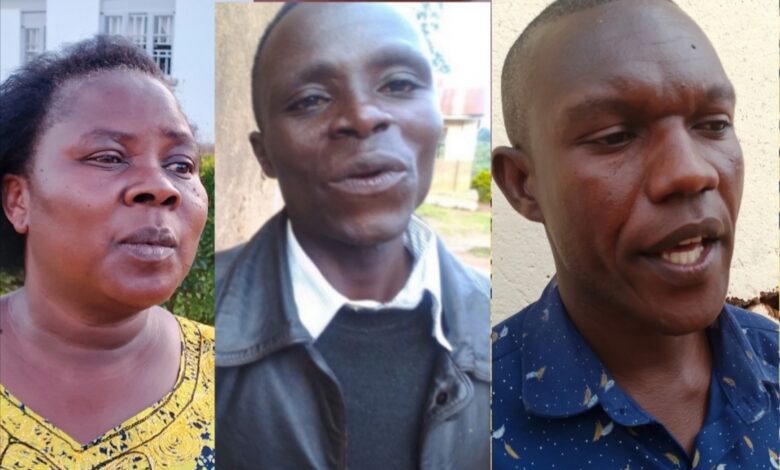
Jane Evelyne Othora, Chairperson of Production and Natural Resources, emphasized the urgent need for a Forest Safeguard Committee comprising local councilors (LCIs), elders, cultural leaders, and the Natural Resources Committee.
This collaborative body aims to protect reserves like Kango, which recently suffered deliberate burning by unidentified individuals, possibly from neighboring communities.

Othora stressed that the committee would ensure community-led stewardship to safeguard ecosystems critical for climate resilience.
Denis Dongwa, Secretary of the Production and Natural Resources Committee, expressed alarm over ongoing encroachment on Nyagak and Ora River buffer zones, calling for collective action to halt unsustainable practices.
He urged the National Forestry Authority (NFA) to intensify community sensitization on environmental conservation, noting that recently planted trees in Kango were destroyed by fire.
“The community must protect forest reserves for future generations,” Dongwa stated, advocating for partnerships to foster local ownership of conservation efforts.
Douglas Rupiny, Councilor for Padea Town Council, endorsed the proposal, calling for empowerment of the existing Natural Resources Committee to support the new safeguard initiative.
Meanwhile, Francis Bolingo, Councilor for Athuma Sub-County, condemned the role of “highly connected” individuals in depleting forests for timber and charcoal, referencing the 2004 destruction of Nyagak Forest Reserve as an example of unpunished environmental crimes. Bolingo highlighted the need for accountability to achieve climate justice.
Climate Justice and Community Action
Dan Pikisa, Executive Director of Colein Aid, a Zombo-based NGO, emphasized that combating climate injustice is a collective responsibility.
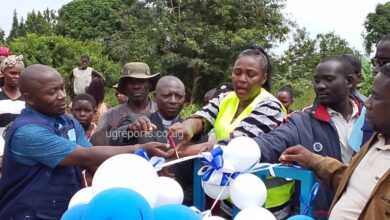
Through initiatives like planting indigenous tree species along the Ora River, Colein Aid promotes ecological restoration to mitigate climate impacts.
Pikisa underscored that “no one should be left behind” in the fight for environmental equity, particularly as marginalized communities bear the brunt of climate-related disasters.
Ripple effects of deforestation
The depletion of Zombo’s forests has triggered cascading impacts, including intensified storms and flooding, which disproportionately affect vulnerable populations reliant on agriculture.
These climate injustices exacerbate food insecurity and economic hardship, underscoring the need for robust conservation policies and enforcement of Museveni’s executive order.
Call to Action
Festus Ayikobua, Zombo Resident District Commissioner, condemned commercial charcoal burning and urged a cultural shift toward sustainable practices.
Stakeholders argue that achieving environmental and climate justice requires “all hands on deck” to enforce regulations, hold perpetrators accountable, and empower communities to protect Uganda’s dwindling forest reserves.
According to world bank, Uganda has lost 41.6% of its forest cover in the last 100 years (1921-2021). In 1900, Uganda’s forest cover stood at 54% and by 2017, it stood at a miserable 12.4%.
As 94% of Ugandans rely on unsustainably sourced fuel wood, with gas being prohibitively expensive, the vast majority of Ugandans rely on charcoal or firewood that has been harvested from national forests or the private lands of impoverished farmers. There has been a 180% charcoal price increase in the past six years, world bank figures shows.
The reports depict a consistent pressure on land for cultivation and settlement and increasing demand for wood fuel. While efforts have been made to restore the forest cover, the population has not been adequately involved in this restoration process.
The proposed Safeguard Committee represents a critical step toward restoring ecological balance and ensuring a just transition to a climate-resilient future in Zombo District.
Do you have an advertisement or article you want to publish? Mail us at theugreports@gmail.com or WhatsApp +256757022363.