Zombo authorities acknowledge failure to support ethnic minorities
“We are frustrated that our children are forced to learn in other languages.”


Zombo: Authorities in Zombo District have publicly acknowledged their failure to implement affirmative action policies for the Kebu and Ndrukpa ethnic minority communities.
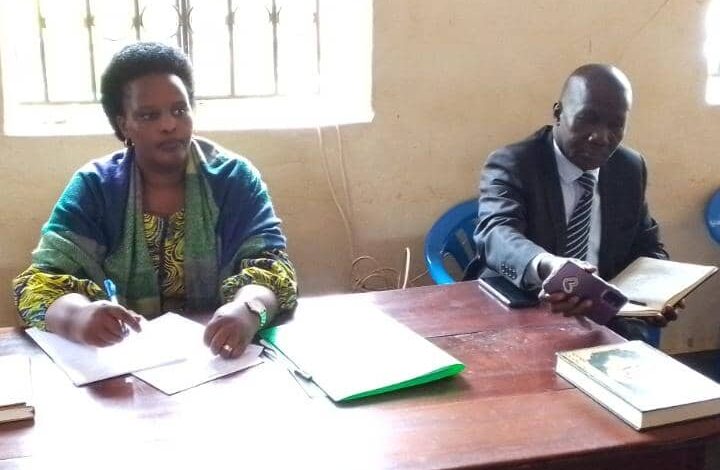
The commitment to rectify this oversight was made during a public tribunal convened by the Equal Opportunities Commission (EOC) at Alangi Council Hall in Alangi Sub-County on Tuesday, May 13, 2025.
The session, attended by EOC officials, district leaders, and representatives of the affected communities, addressed longstanding grievances around systemic exclusion and cultural marginalization.
Presiding over the tribunal, EOC Member Denise Tusime, alongside Undersecretary Prof. Sunday Nicholas Olwor and Head of Legal Services Musema Miragi, reaffirmed the Commission’s constitutional mandate under Articles 32(3) and 32(4) to eliminate discrimination based on ethnicity, among other factors.
The Kebu and Ndrukpa communities, recognized as indigenous minorities in Uganda’s West Nile region, submitted nine major complaints covering employment, political representation, land access, education, healthcare, cultural rights, and participation in government programs.

EOC’s Musema Miragi summarized the communities’ grievances, emphasizing the persistence of discrimination in public life.
During the tribunal, Ephraim Kumakech, Principal Assistant Chief Administrative Officer, admitted that no deliberate efforts had been made to include the Kebu and Ndrukpa in district planning or administrative decision-making.
Walter Ongiera, Senior Community Development Officer, echoed the sentiment, admitting that affirmative action had been overlooked:
“From today’s discussion, I see the need for affirmative action for the Kebu and Ndrukpa,” he stated.
The Kebu, known for their blacksmithing tradition, number about 54,000 in Zombo, particularly in Alangi. The Ndrukpa (also called Lendu), with around 20,000 people, live mainly in Zombo and neighboring Nebbi District. Both groups are constitutionally recognized as indigenous but remain marginalized in various sectors.
Community leaders highlighted the absence of a culturally relevant curriculum in schools serving their populations.
Mengu Celestinu, a Kebu leader, noted that none of the 16 government-aided primary schools in Alangi Sub-County teach in Kebu Tu, the Kebu language.
Similarly, Patrick Andhama, Secretary of the Ndrukpa Kingdom, criticized the exclusive use of Alur in schools, saying:
“We are frustrated that our children are forced to learn in other languages.”
Nicholas Odeba, Zombo’s outgoing District Education Officer, admitted the curriculum had failed the communities, citing limited demand and lack of materials. He proposed forming a District Language Board and training teachers fluent in Kebu Tu and Ndrulo.
He also announced plans to construct Alangi Seed Secondary School, with work scheduled to begin this year.
The Kebu called for the upgrading of Alangi Health Centre III to Health Centre IV to meet growing community needs.
Mark Bonny Bramali, Acting District Health Officer, acknowledged that health service planning does not consider ethnic composition, contributing to unequal access. While some Kebu and Ndrukpa personnel are employed in district health facilities, Bramali admitted broader inclusion is lacking.
Community representatives demanded restored access to ancestral lands Awang and Lendu forest reserves appropriated by the colonial government in the 1940s. These lands are vital for traditional medicine, farming, and spiritual practices.
The groups also called for formal gazettement as independent cultural institutions, a key step toward preserving cultural heritage under the Traditional and Cultural Leaders Act.
Peter Mungacel Angala, Principal Human Resource Officer, presented a comprehensive report acknowledging gaps and pledging district support for affirmative action.
In response, the EOC issued clear directives; submit certified documents on ethnic composition in employment and statutory bodies by April 19, 2025, implement inclusive reforms in education, health, and governance planning
“We need these documents to conduct a thorough audit and ensure accountability,” said Musema Miragi.
Prof. Olwor cautioned district leaders against undermining the EOC’s authority and reminded them of their constitutional duty to serve all citizens equitably.
EOC Presiding Member Denise Tusime affirmed the Commission’s role:
“Our presence here is to listen and address your concerns. No group should be left behind.” She added: “We thought our coming here would help us understand your complaints better and seek just remedies.”
Uganda recognizes 22 ethnic minorities among its 65 indigenous groups, including the Batwa, Ik, and Benet, many of whom face similar challenges rooted in historical discrimination and geographic isolation.
The Zombo tribunal reflects the EOC’s broader mandate under the Equal Opportunities Act, to redress these disparities through affirmative action and inclusive governance.
This public hearing represents a vital step in ensuring the human rights, cultural identity, and equitable participation of the Kebu and Ndrukpa communities an essential move toward social justice and national unity.
Do you have an advertisement or article you want to publish? Mail us at theugreports@gmail.com or WhatsApp +256757022363.