Rising HIV infections linked to bars employing underage girls
Lwanga called on stakeholders to address the issue to improve access to preventive services.

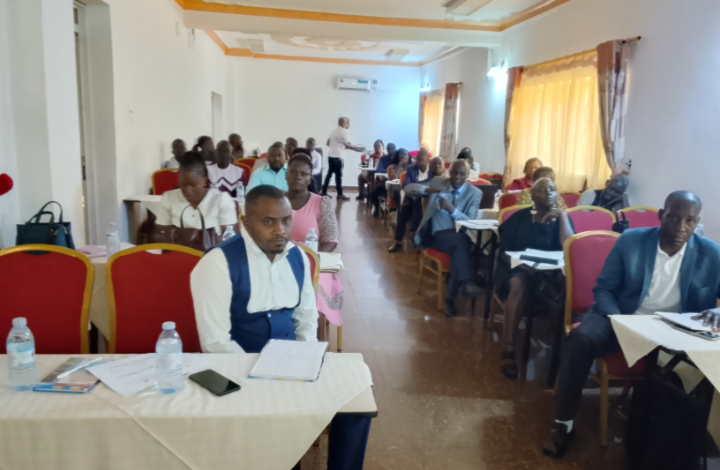

Hoima: The Hoima Resident City Commissioner (RCC), Badru Mugabi, has attributed the spread of HIV infections in the city to bars employing underage girls who are allegedly involved in prostitution-related activities.
Mugabi made the remarks on the sidelines of a one-day engagement organized by the Uganda AIDS Commission aimed at strengthening the capacity of HIV focal persons, people living with HIV (PLHIV), and leaders from Hoima City and District. The meeting was held at Glory Summit Hotel.
According to Mugabi, although statistics show that the HIV prevalence rate in Hoima City has dropped from 9.7 percent to 7.7 percent, more effort is needed to further reduce infections.
He noted that several bars in the city employ underage girls to attract customers, a practice he says contributes to the spread of HIV, especially among girls aged 15–24 years.
Mugabi urged parents to properly guide their children and keep them in school so they can acquire skills that will help them secure employment instead of exposing themselves to risky behaviors that increase the risk of HIV infection.

He also revealed that the government has mainstreamed treatment services, including HIV care, and encouraged residents to visit health facilities for medical attention.
Meanwhile, Brian Masimbi, an official from the Uganda AIDS Commission, said current statistics indicate about 37,000 new HIV infections nationally, a situation he said requires behavioral and lifestyle changes to reduce new infections to zero by 2030.
Masimbi further noted that more men are currently dying from HIV compared to women due to failure by many men to consistently seek treatment services.
During the same engagement, Edward Lwanga, the Hoima City Clerk, blamed the rising HIV infections among young people on a lack of guidance from stakeholders.
Lwanga said that unlike in the past, there is now limited community guidance for the younger generation, which has left many young people vulnerable.
He also noted that condoms are no longer easily accessible in many places as they used to be, adding that some people fear buying them.
Lwanga called on stakeholders to address the issue to improve access to preventive services.
On her part, Joanitah Kemigisha urged leaders and stakeholders to intensify community awareness about substance abuse, HIV prevention strategies, HIV testing, teenage pregnancies, and the prevention of gender-based violence (GBV).
Kemigisha emphasized the need for communities to understand the risk factors and structural drivers of HIV infections, including GBV.
Meanwhile, Sylvia Nalumaga Balyesiima, called for more sensitization, improved parenting, and stronger guidance for young people.
Nalumaga expressed concern over statistics showing that some children as young as 15 years are already infected with HIV.
She revealed that the city leadership plans to lobby for a 0.01 percent HIV allocation fund within the local government budget to support HIV prevention efforts.
Do you have an advertisement or article you want to publish? Mail us at theugreports@gmail.com or WhatsApp +256757022363.