Parliament should legislate on the tenure of cultural leaders
Clan chairpersons are men of integrity and should not be intimidated for articulating community positions. As a cultural institution, we shall protect them and allow them to speak freely on behalf of their people.



Op-Ed: It is trite law in Uganda that traditional leaders rule indefinitely. Their tenure is largely determined by customs and norms and, in most cases, lasts a lifetime ending only upon death or recall by the Almighty.
Power is often bequeathed to a preferred heir, usually a child, to usher in the next phase of leadership. Classic examples include the kingdoms of Bunyoro, Buganda, Toro, among others.
However, the situation is markedly different within cultural institutions, many of which have become sources of conflict within communities. Uganda currently has about 15 gazetted cultural leaders, with more expected to come on board in 2026, including Bugwere, Bunyole, and Sebei, after the general elections.
An English judge once remarked that anything claiming to be law must be found in the law books. I add on behalf of the Bugisu cultural institution that if something is not found in the law books, then it must be traceable in customs and norms. Yet, most Ugandan customs and cultures do not prescribe fixed time limits for cultural leaders.
About 99 percent of cultural institutions in Uganda are creations of statute, not purely creations of custom and culture. This reality demands a clear enabling legal framework governing how cultural leaders assume office and how long they serve. In the absence of such a framework, the issue of tenure becomes a recipe for persistent and future conflict.

Take the Acholi cultural institution as an example. Its cultural leader has been in office for over 20 years, arguably in line with the wishes of the Acholi people. However, this long tenure has generated deep internal conflicts, to the extent that the Chief Justice of Uganda, His Lordship Owiny-Dollo, had to intervene due to excessive tension among clan chiefs seeking to displace the cultural leader.
In Bugisu, the former Umukuka, Sir Bob Mushikori, attempted to reign beyond the prescribed five years, openly stating that as long as his ally President Yoweri Museveni remained in political office, he too was not going anywhere. Whether this self-extension reflected the aspirations of the people remains debatable.
His cabinet later planned to impeach him, citing misconduct allegations including womanizing and excessive alcohol consumption many of which were clearly false and politically motivated. It is difficult to imagine how a man who had undergone a medical vasectomy could be accused of such acts. Equally problematic was the impeachment attempt itself, since impeachment is a political process and is not applicable to cultural leaders.
More recently, during the Bamasaaba annual clan meeting held on 22 December 2025, clan chairpersons hinted at the possibility of extending the tenure of the current Umukuka to allow completion of pending projects, including follow-ups on government pledges to the Bugisu region. This proposal attracted loud criticism, particularly from individuals outside the recognized clan structures.
The Cultural Leaders Act, 2011 (Cap 242), which operationalizes Article 246 of the Constitution, leaves the determination of tenure to individual communities. In Buruli, a cultural leader rules as long as the community wishes; the same applies to Tororo among the Badama people.
As we enter 2026, Parliament or alternatively the Ministry of Gender, Labour and Social Development should initiate reforms toward a uniform tenure framework, perhaps 10 or 20 years, for all cultural leaders. The current governance model mirrors political systems yet lacks grounding in the laws that govern cultural institutions.
As already alluded to in Entick v Carrington, anything purporting to be law must be found in the law books. It is untenable for one cultural leader in Teso, Bugwere, or Acholi to reign for 20 years while another in Bugisu serves only five.
The law states that cultural leaders should rule in accordance with the wishes and aspirations of the people. Yet, whenever these aspirations are expressed, dissenting groups often allege bribery or manipulation. To cure such suspicions, Uganda needs a clear and uniform legal structure governing tenure.
When Bamasaaba clan chairpersons proposed that the current Umukuka serve 15 years instead of five, critics questioned who had authorized them and whether they had been compromised. This raises a critical question: who is legally mandated to express the wishes of a community the clan leadership or the general populace and through what process?
Clan chairpersons are men of integrity and should not be intimidated for articulating community positions. As a cultural institution, we shall protect them and allow them to speak freely on behalf of their people.
In conclusion, while customs and aspirations remain important, the tenure of cultural leaders in Uganda must be fixed by law to ensure consistency, legitimacy, stability, and peace across all cultural institutions.
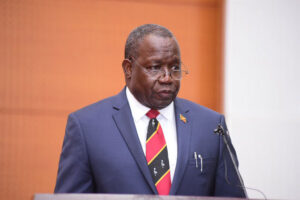
The author is Steven Masiga, the spokesperson Bugisu cultural institution
Disclaimer: As UG Reports Media LTD, we welcome any opinion from anyone if it’s constructive for the development of Uganda. All the expressions and opinions in this write-up are not those of UG Reports Media Ltd. but of the author of the article.
Would you like to share your opinion with us? Please send it to this email: theugreports@gmail.com.