Over 1,000 West Nile Farmers Adopt Bio-Liquid Fertilizer for Sustainable Crop Yields
"It delivers a balanced spectrum of macronutrients (nitrogen, phosphorus, potassium) and micronutrients , fostering vigorous root development and canopy health without residue risks," he notes."

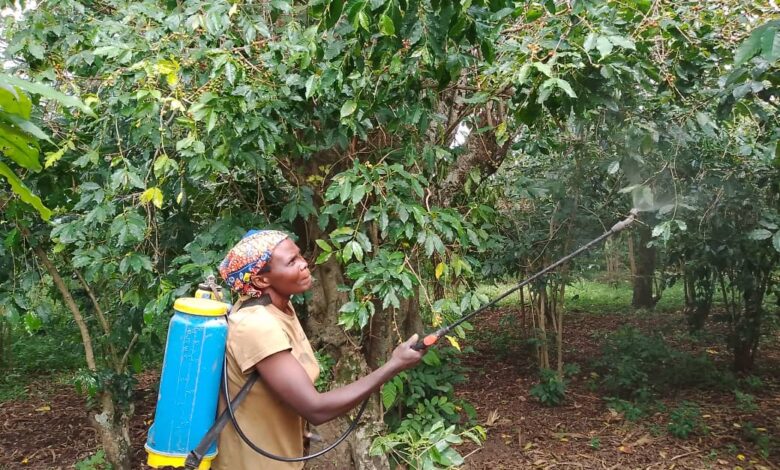

Nebbi: A five-year transformative agronomy initiative, known as the Power of Voices (PoV) or Fair for All project, has empowered thousands of smallholder farmers in Uganda’s West Nile districts of Nebbi, Zombo, and Arua, with hands-on training in bio-liquid fertilizer production.
This approach enhances soil organic matter, safeguards the nutritional integrity of produce, and improves market linkages for premium pricing.
Launched in 2020 and slated to wrap up in December 2025, the project is bankrolled by the Dutch Ministry of Foreign Affairs, with Oxfam providing technical oversight.
Implementation involves a consortium of partners: the Agency for Community Empowerment (AFCE), SEATINI Uganda, ESSAF Uganda, Uganda Agribusiness Alliance (UAA), and the Civil Society Budget Advocacy Group (CSBAG) Uganda.
Targeting coffee and horticultural value chains, the project has fortified six farmer-managed micro-stations, encompassing 1,388 members (665 women and 723 men) in Nebbi’s Erussi Sub-County; Zombo District’s Warr, Paidha, and Nyapea Sub-Counties; and Arua District’s Logiri Sub-County.

In Uganda, where over 70% of the populace relies on subsistence and semi-commercial farming, AFCE Project Officer Muddy Oyikuru underscores the initiative’s emphasis on certified organic inputs.
These yield higher farm-gate prices compared to conventionally grown crops reliant on synthetic agrochemicals.
Oyikuru reports that hundreds of growers have been onboarded and are receiving extension services to comply with global organic standards.
“We’re promoting bio-pesticides and composted manure to support coffee exports,” He explains. “All our micro-stations are in the conversion phase toward organic certification”
Globally, organic produce commands a 20-50% price premium over conventional yields, thus the need for the scaling up of farmer recruitment.
Sabiti God’s Compassion, a lead community based trainer at the Pakia Azi Micro-Station in Warr Sub-County, Zombo District, shares that the bio-liquid fertilizer, originally formulated for coffee hush-bush vigor production, has been fine-tuned for diverse horticultural rotations.
“It delivers a balanced spectrum of macronutrients (nitrogen, phosphorus, potassium) and micronutrients , fostering vigorous root development and canopy health without residue risks,” he notes.”
“Developed to ramp up coffee cherry yields and intercropping efficiency with onions, cabbages, maize, and beans, this foliar feed poses zero phytotoxicity to crops or end-users,” Sabiti adds.
This locally crafted organic amendment, a nutrient-rich foliar spray, amplifies photosynthetic efficiency and nutrient uptake. Production involves anaerobic fermentation of accessible substrates: bovine manure, rock phosphate dust, active yeast cultures, molasses or banana pulp, humus-rich forest topsoil, whey or bone meal, and water—fermented in lidded drums or containers
Jovian Akumu, a veteran coffee grower from Ayida Village, Pakia Parish, Warr Sub-County, Zombo District, and a Pakia Azi Micro-Station member, once harvested meager yields from her aging one-acre plantation.
In a September 18, 2025, interview, she recounts her turnaround: “Enrolled three years ago, I mastered the full fermentation protocol. Now, my coffee produce bumper annual yields , up to 25 kg of cherries per mature plant. This has transformed my family” Akumu said.
She added “Higher yields mean school fees covered and household food security. I’m grateful to the consortium for this regenerative farming shift.”
Project partners divvy up value-chain interventions: UAA spearheads onion bulb production and market aggregation, while AFCE drives coffee and high-value horticrops like cabbage, tomatoes, and green peppers.
Ms Mariam Akiror, Head of Program Development , Quality and Management at Uganda Agribusiness Alliance , rallied growers at Ayanyunga Micro-Station in Osoye Parish, Nyapea Sub-County, Zombo District, on September 17, 2025:
“We must expand organic staples to combat micronutrient deficiencies. Prioritize kitchen gardens for nutrient-dense greens, don’t give up , fellow farmers !” Akiror noted.
The consortium’s ecosystem includes AFCE-led community sensitization, leadership capacity-building, and farmer field schools for agroecological benchmarking.
Micro-stations aggregate eight Village Savings and Loan Association (VSLA) groups each, equipped with revolving kits for weekly thrift mobilization. These hubs double as wet-milling and hulling units, enabling on-farm value addition for parchment-grade coffee, seeded by Oxfam’s infrastructure grants.
Oyikuru elaborates on the “swap farming” model: peer-to-peer exchanges paired with VSLA tools to foster collective bargaining and input bulking”
Sabiti touts the bio-liquid’s effects saying “Unlike synthetic blends, this organic fertilizer is non-toxic on both humans and plants”
Trainers emphasize that ingredients are easily accessible for instance manure, wood ash for pH buffering, and forest litter are farmyard staples with no exotic imports needed.
Sabiti warns of inorganic pitfalls saying, “Chemical drenches scorch plants, kill earthworms and impact food chains. Without PPE, applicators suffer burns on the skin ”
Now in its last year, the program has revitalized coffee production, where pre-intervention bushes yielded under 1 kg of cherries per plant, far short of the 5 kg parchment benchmark.
Armed with bio-liquid protocols, farmers report 4-5x yield surges, increasing revenue engines.
Growers are now cross-training peers, embedding the practice in extension networks to normalize organic inputs
Sabiti calls for consortium boosts: “Sourcing rock dust from quarries is logistically tough; subsidized bulk procurement would accelerate adoption. Local yeast strains lag behind”
This organic fertilizer revolutionizes nutrient management, curbing middlemen price gouging that once eroded margins.
Now, consortium linkages secure 2,500-2,800 UGX/kg for cherries, with organic premiums pushing toward 3,500 UGX.
A 2019 Uganda Bureau of Statistics agricultural census revealed organic fertilizer uptake at 19% (first season) and 25% (second), outpacing inorganic use (9-10%). Yet, organic acreage lingers at 2% of farmland, hampered by certification fees, weak cold chains, and extension reach. The officials are hopeful that , this project chips away at those barriers, seeding a greener West Nile.
Do you have an advertisement or article you want to publish? Mail us at theugreports@gmail.com or WhatsApp +256757022363.