NARO assures farmers of effectiveness of newly developed anti-tick vaccine
He emphasized that Narovac is more cost-effective compared to the current practice of routine spraying, which often needs to be repeated every few weeks.

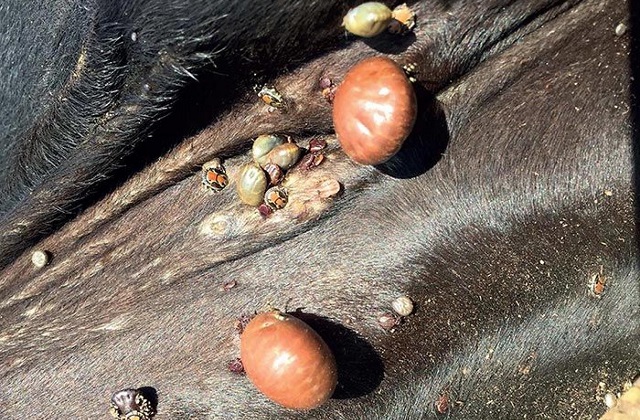

Masindi: The National Agricultural Research Organisation (NARO) has reaffirmed its commitment to supporting Uganda’s livestock sector by assuring farmers of the safety and effectiveness of its newly developed anti-tick vaccine, Narovac.
The assurance was given during a one-day media engagement held at Masindi Hotel recently aimed at updating journalists on the latest agricultural innovations developed by NARO.
According to Fredrick Kabi, Principal Research Officer at NARO, the organization developed the vaccine with government funding after 13 years of intensive research and trials.
“The vaccine has been tested and proven to be safe and effective. It’s already in use at several farms including Stock Farm in Mbarara, Ekiburara Prisons Farm in Ibanda, Isimba Prisons Farm in Masindi, and Maruzi Farm,” Kabi said.
He explained that Narovac works by enabling animals to develop antibodies that destroy ticks, thereby reducing the prevalence of tick-borne diseases. He noted that the country has been losing billions of shillings annually due to tick infestations and their impact on livestock productivity.

Kabi expressed optimism that mass vaccination of cattle across Uganda will begin by December 2025, a move expected to boost the production of milk, beef, and hides, enhance exports, and increase national revenue.
The rollout will prioritize cattle corridor regions such as Bunyoro, Karamoja, Lango, and Ankole, focusing on areas where ticks have shown resistance to existing commercial solutions.
Kabi outlined the vaccine administration in three phases including; initial treatment, booster dose after one month and final dose after six months.
He emphasized that Narovac is more cost-effective compared to the current practice of routine spraying, which often needs to be repeated every few weeks.
During the engagement, Frank Mugabi, NARO’s Head of Communications, shared other significant innovations. He highlighted a new fish smoking machine developed by NARO that drastically reduces cancer-causing agents in smoked fish.
“Research shows that traditionally smoked fish can contain up to 40,000 times more carcinogenic compounds than acceptable limits. Our machine-smoked fish contains only 0.88 parts per billion (ppb) well below the 2 ppb standard set by the European Union,” Mugabi revealed.
Dr. Sadik Kassim, NARO’s Deputy Director General for Agricultural Technology Promotion, underscored the importance of engaging with the media to inform the public about science-driven agricultural solutions.
“Science and technology are vital in addressing pressing challenges like food security and environmental conservation. Journalists have a key role to play in building trust and communicating these solutions effectively,” Dr. Kassim said.
He encouraged journalists to prioritize accuracy and credibility when reporting on scientific initiatives.
NARO noted that this engagement was organized to give journalists drawn from Masindi, Kiryandongo, and Hoima districts, a deeper understanding of the organization’s contributions to Uganda’s agricultural transformation.
Do you have an advertisement or article you want to publish? Mail us at theugreports@gmail.com or WhatsApp +256757022363.