Karamoja launches climate resilience project to combat food insecurity
“We are co-creating long-term strategies that empower people to adapt, innovate, and thrive in the face of adversity.”

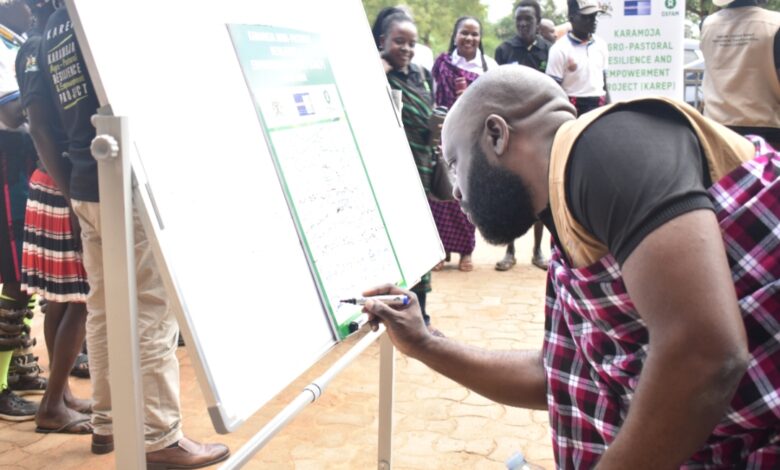

Kotido: In Uganda’s northeastern frontier, where the land is dry and challenges are deeply rooted, a new initiative is breathing fresh hope into the region. The Karamoja Agro-Pastoral Resilience and Empowerment Project (KAREP) was officially launched in Kotido District at Ateker Hotel, marking a significant milestone in the region’s battle against food insecurity, climate vulnerability, and economic exclusion.
Funded by the Kane Family and implemented by Oxfam in Uganda in partnership with the Warrior Squad Foundation, KAREP is a three-year, $1.1 million project targeting nine districts across the Karamoja sub-region: Kotido, Kaabong, Karenga, Nabilatuk, Abim, Moroto, Napak, Amudat, and Nakapiripirit.
According to the Uganda Bureau of Statistics and the Integrated Food Security Phase Classification (IPC), Karamoja is currently classified under Phase 3 (Crisis), with over 600,000 people facing acute food insecurity. Erratic rainfall, prolonged droughts, and rising temperatures continue to threaten both pastoral and agricultural systems.
At the launch, attended by local leaders, development partners, and community members, Nakong Night Teddy, Project Officer at Warrior Squad Foundation, captured the spirit of the initiative:
“This project is not just about agriculture it’s about restoring dignity, building resilience, and empowering communities to take charge of their future.”

KAREP will be implemented in the sub-counties of Napupum and Kapeta in Kotido District.
KAREP is built around a community-centered approach. It integrates Village Savings and Loan Associations (VSLA) into Agricultural Producer and Farmer Field School (APFFS) activities, rehabilitates degraded ecosystems through Cash for Work programs, and strengthens livestock disease management and rangeland governance.
A central pillar of the project is the promotion of climate-smart agriculture. With traditional farming methods struggling under climate stress, KAREP introduces adaptive techniques to improve soil health, conserve water, and boost productivity—all while protecting the environment.
Francis Odokorach, Country Director of Oxfam in Uganda, emphasized the project’s inclusive focus.“We are co-creating long-term strategies that empower people to adapt, innovate, and thrive in the face of adversity.”
The project specifically targets women and youth, who are disproportionately affected by poverty and climate shocks. Through training, tools, and financial literacy, KAREP aims to unlock their potential as agents of change.
Beyond direct community support, KAREP aims to build institutional capacity among district technical teams, Water User Committees, Community Animal Health Workers, and Producer Marketing Groups—ensuring sustainability well beyond the project’s lifespan.
Charles Ichogor, Resident District Commissioner (RDC) of Kotido, pledged full government support and called for collective ownership of the project:
“KAREP is more than a project; it is a promise of hope and resilience for the people of Karamoja. I urge all stakeholders to take ownership and work together to protect our environment and empower our communities.”
Local leaders echoed his sentiments, calling for transparency, regular monitoring, and inclusive decision-making. Community members expressed optimism that the participatory model would ensure accountability and tangible results.
KAREP represents a strategic departure from short-term emergency relief models. It focuses instead on long-term resilience, economic empowerment, and environmental restoration—a shift aligned with global calls for climate adaptation and sustainable development.
As Uganda faces escalating climate challenges, stakeholders hope KAREP will serve as a catalyst for broader change a model for inclusive, locally led development not only in Karamoja but across Uganda and the East African region.
The launch event was a celebration of culture and community spirit, featuring traditional dances, poetry, and storytelling. Attendees left energized and united in their commitment to building a more resilient Karamoja.
For many, KAREP is more than a project it is a symbol of renewed possibility and a blueprint for transformative change in one of Uganda’s most vulnerable regions.
Do you have an advertisement or article you want to publish? Mail us at theugreports@gmail.com or WhatsApp +256757022363.