How women in Kotido are using VSLAs to challenge widow inheritance
As Uganda pushes forward with national development programs, the voices of Kotido’s women once silenced are now helping shape the nation’s future.

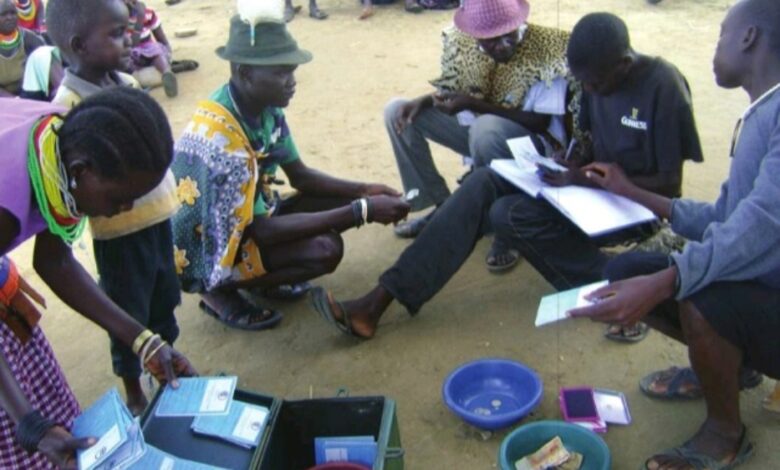

Kotido: In Kotido, where tradition is law and a woman’s worth is often measured in cattle, a quiet rebellion is taking root. Armed not with protest signs but with savings books and solidarity, women are transforming local Village Savings and Loan Associations (VSLAs) into engines of resistance challenging widow inheritance, demanding land rights, and exposing the cracks in government programs like the Parish Development Model (PDM).
What began as a way to pool coins for goats and seeds has become a movement one that is rewriting the rules of power, property, and womanhood in Uganda’s most patriarchal frontier.
In Karamoja, widow inheritance remains an entrenched cultural practice. When a man dies, his widow is often “inherited” by a male relative sometimes even a stepson. The rationale? Her dowry was paid, so she must remain within the clan.
For women like Angella Maria, this practice has been a cycle of grief and powerlessness.
“My husband paid 30 head of cattle as dowry. When he died, I was inherited by his brother. When he died, I was passed to another. I had no choice,” she shares.

Lotyang Agnes Lokiru, another widow, had a similar experience.“The man was not my choice, but I couldn’t refuse. The elders wouldn’t listen. Their minds are on cattle,” she says.
VSLA’s as advocacy hubs
The Kalokuruk VSLA, headed by Lokwang Peter, was originally formed to help women pool savings and access small loans. But it is now evolving into a forum for resistance and reform.
“We started saving to buy goats and seeds,” says Lokwang. “But we realized we could also use our meetings to talk about women’s pain and their power.”
Through this VSLA, Lokwang and other members have created a Women’s Network Forum, a bold initiative in a culture where women are barred from entering sacred clan shrines where marriage decisions are made. They now use the wives of male elders to relay their concerns into these traditionally male-only spaces.
“We must hold the decision-makers accountable,” says Lokwang. “We are creating a safe space for girls and women to thrive.”
Cultural resistance and pushback
Not everyone welcomes these changes. Kapeps Akore John Bosco, an elder in Kotido, still defends widow inheritance as a cultural safeguard:
“A man who enters the house of a widow before inheritance rituals may fall sick. The inheritor must be chosen from within the family.”
However, even Kapeps acknowledges that some practices such as sons inheriting their stepmothers are inappropriate and should be reviewed.
Women-Led VSLAs filling the gap
VSLAs, especially those led by women are stepping in where traditional structures and state programs fall short. They are teaching financial literacy and business planning, monitoring the use of Parish Development Model (PDM) funds, helping widows and vulnerable women access government programs and advocating for transparency and accountability in public service delivery.
“We are not just saving money,” says Koryang, a member. “We are saving each other and saving the system from failure.”
Government support and rising influence
The Ugandan government and development partners are increasingly recognizing the impact of women-led VSLAs. Through programs like the GROW Project and PDM, women are gaining access to credit, training, and leadership opportunities.
Charles Ichogor, Resident District Commissioner of Kotido, sees real change on the ground. “Women are now able to challenge decisions made without their input. They’ve long suffered under oppressive cultural norms with little intervention.”
Real impact, real change
The advocacy from VSLAs is already creating visible results including; dozens of widows have refused forced inheritance with the support of their VSLAs, women leaders now sit on parish-level PDM committees and legal awareness is spreading through peer education and dialogue.
Despite progress, several obstacles remain including; cultural resistance from traditional elders, limited access to legal aid and documentation, inadequate infrastructure for VSLA operations and weak monitoring of government programs.
Yet, the women of Kotido remain determined. “We are not waiting for change,” says Lochoro. “We are becoming the change.”
A new chapter for Kotido
What’s happening in Kotido is more than a local story it’s a blueprint for rural empowerment across Uganda. By turning VSLAs into platforms for both economic resilience and social advocacy, women are showing that financial inclusion and justice can go hand in hand.
As Uganda pushes forward with national development programs, the voices of Kotido’s women once silenced are now helping shape the nation’s future.
Do you have an advertisement or article you want to publish? Mail us at theugreports@gmail.com or WhatsApp +256757022363.