Government should popularize the Cultural Leaders Act by translating it into local languages
This, they say, would ease understanding among the Bamasaaba community and their clan chairpersons.


OpEd: Through several radio programs I have participated in, including online petitions, over 90% of the Bamasaaba have expressed the need for the Institution of Traditional or Cultural Leaders Act, 2011, to be translated into the Lumasaba language.
This, they say, would ease understanding among the Bamasaaba community and their clan chairpersons.
It is undisputed that the Uganda Law Reform Commission (ULRC) has diligently executed its mandate reforming laws and translating several key legal documents.
For instance, the Constitution of Uganda has been translated into multiple local languages, and other statutes such as the Local Governments Act (Cap 243) and the Local Council Courts Act, 2006, have also been rendered into local dialects for selected districts.
However, the Cultural Leaders Act, 2011, also known as the Institution of Traditional or Cultural Leaders Act, remains largely unpublicized and underutilized despite being in existence for 14 years. The Act serves as a regulatory legal framework for cultural institutions across Uganda.

Unfortunately, due to limited circulation and awareness, many communities have developed their own parallel laws some of which have caused confusion and division, such as the controversial Inzu ya Masaba constitution.
Translating the Cultural Leaders Act, 2011, into Lumasaba would make it easier for communities to understand how cultural institutions should elect or identify their leaders, as well as clarify the roles and responsibilities of a cultural leader in line with traditional customs.
The Act comprehensively outlines the framework for the identification and recognition of cultural leaders, yet many clan chairpersons, who are technically covered by the law, remain unaware of its existence.
To bridge this gap, the Uganda Law Reform Commission should organize sensitization workshops across traditional and cultural institutions throughout the country. This would ensure that community leaders—from Busiu, Bulucheke, Bududa, Busoba, Mufumbo, Bubwaya, Tandiga Muyobo, Wagogo, Mubutu, Mushika, Kigai, Wanale, Halasi, and beyond—gain awareness of the law governing cultural leadership and customs.
Continuous public sensitization about laws that affect communities not only deepens legal awareness but also empowers citizens to engage meaningfully in preserving and managing their cultural heritage.
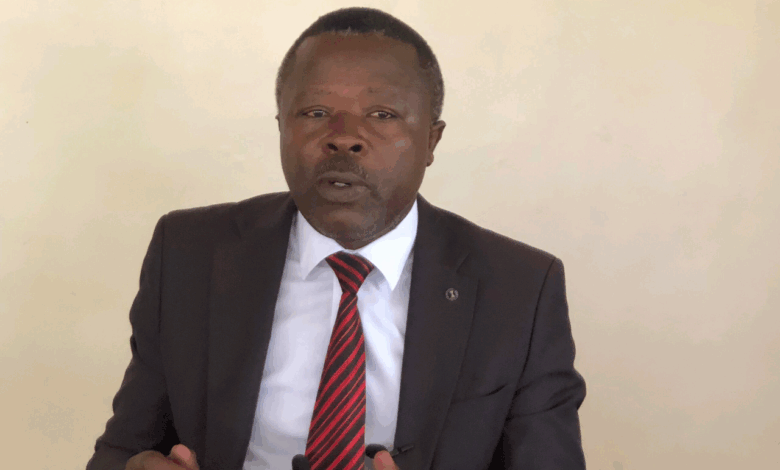
The author is Steven Masiga, a lawyer and spokesperson of the Bugisu Cultural Institution.
Disclaimer: As UG Reports Media LTD, we welcome any opinion from anyone if it’s constructive for the development of Uganda. All the expressions and opinions in this write-up are not those of UG Reports Media Ltd. but of the author of the article.
Would you like to share your opinion with us? Please send it to this email: theugreports@gmail.com.