Chope leaders seek meeting with Museveni over secession from Bunyoro
This displacement, combined with famine and diseases such as sleeping sickness, syphilis, smallpox, and elephantiasis, caused severe suffering and population decline, forcing many to migrate from Greater Kibanda.

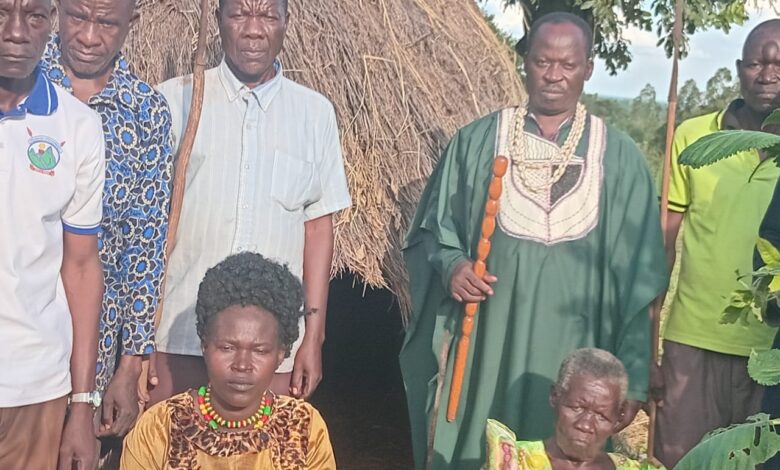

Kiryandongo: The cultural leaders of the Paluo-Chope people in Greater Kibanda are preparing to meet President Yoweri Kaguta Museveni ahead of his campaign rally scheduled to take place in Kiryandongo District this month.
Their move follows a recent declaration by the Chope community that they no longer recognize the authority of the Bunyoro-Kitara Kingdom over their cultural affairs. Instead, they pledge allegiance only to their own cultural institution Paluo (Chope) Tekwaro and to the Central Government of Uganda. This declaration was made at the institution’s headquarters in Katulikire, Kichwabugingo Sub-county, Kiryandongo District on Tuesday, December 2, 2025.
His Royal Highness (Dabanda) Odong David Ateenyi, the cultural leader of the Paluo-Chope people, stated that the Chope of Greater Kibanda are an independent ethnic group, not a sub-tribe of the Banyoro. He explained that Article 246 of the 1995 Constitution of Uganda (as amended) grants them the right to establish their own cultural institution.
Mr. Kisembo Denis Ochola Ateenyi, the Prime Minister of the yet-to-be-gazetted institution under the Ministry of Gender, Labour and Social Development, noted that before colonialism, Greater Kibanda (Chope) allied with the Bunyoro-Kitara Kingdom for protection and trade. However, he said that today the Chope only need protection from the Central Government of Uganda, not cultural administration from Bunyoro.
He further pointed out that the independence of the Buruli and Bunyala kingdoms from Buganda, as well as the Kumam chiefdom’s separation from Teso, are examples of the constitutional right to freedom of association.

The Chope, also known as Paluo, are a distinct ethnic group with a rich cultural heritage. They are native to the Greater Kibanda area covering Kiryandongo, Masindi, and parts of Hoima District. They speak a Luo dialect infused with Bantu influences and have more than 70 clans spread among the Banyoro. Their cultural dances include opere, unde, and bwera.
They also trace ancient marriage ties to the legendary Bachwezi rulers of Kitara. Oral tradition credits the Paluo with introducing pet names known as nying paak or paako in Luo meaning “praise words.” These evolved into what Bantu groups pronounce as empaako names such as Adyeri, Abwooli, Ateenyi, Amooti, Abooke, and Atwooki now widely used among the Banyoro, Batooro, Batagwenda, and Banyabindi to show respect, affection, and unity.
During King Kabaleega’s resistance against British colonial invasion, the Paluo served as prominent commanders and warriors in the Kabalega Defence Army. However, after Kabaleega’s defeat and the subsequent conquest of Bunyoro-Kitara, much of their land was gazetted into Murchison Falls National Park and surrounding game reserves.
This displacement, combined with famine and diseases such as sleeping sickness, syphilis, smallpox, and elephantiasis, caused severe suffering and population decline, forcing many to migrate from Greater Kibanda.
Do you have an advertisement or article you want to publish? Mail us at theugreports@gmail.com or WhatsApp +256757022363.