Bamasaaba intellectuals must explain the law on Bukuka
Our focus should be on educating the public about the correct law on bukuka and other aspects of our culture.


Op-Ed: Prof. Apollo Nsibambi once defined an intellectual as someone fascinated by knowledge. Sadly, there is a serious lack of understanding of the law in Bugisu, particularly regarding Bukuka, our cultural ceremonies.
It is now my earnest call to Bamasaaba intellectuals to pick up their pens and explain the law on bukuka to the common Umumasaba in Bukalasi, Bulambuli, and beyond rather than spreading rumors and misinformation in public spaces. Through UG Reports, I will serialize key aspects of the Ugandan law on bukuka.
There are two principal constitutional provisions relevant to cultural matters:
- Article 37 – Guarantees people the right to celebrate their culture, speak their language, and promote their cultural values. Examples include student associations such as the Bamasaaba Students Association at universities, Basoga and Baganda students’ associations, the North American Bamasaaba Association, and even local groups like the Bashebi (circumcisers) association in Bugisu.
- Article 246 – Governs the election of a cultural leader (Umukuka) and the resolution of post-election disputes. Parliament provides guidance on handling such disputes, reflected in Article 246(2) and Sections 15(1) and (2) of the Institution of Traditional Cultural Leaders Act 2011 (as amended).
The Cultural Leaders Act invalidated all voluntary community constitutions on bukuka. I urge all Ugandans to follow the law regarding cultural institutions and reflect on why these institutions exist. Mastery of Articles 37 and 246 is essential for anyone involved in cultural leadership or community education.
Any claimant to a cultural throne must be gazetted by the government to gain legitimacy. The local government provides office space if none exists. It is improper for a cultural leader to pay rent or be housed by an NGO instead of the local government.

Failure to follow these protocols often leads to conflicts. I observed this in the Acholi region, where some clan chiefs attempted to set up parallel offices claiming leadership. They abandoned the effort after the community refused to recognize them and sought forgiveness from the Acholi king.
Many intellectuals confuse Article 37 (celebration of culture) with Article 246 (election of cultural leaders). This misunderstanding contributes to disputes in our communities. If academics with robust experience cannot comprehend these basic legal scripts, it raises serious questions about our education system. Some so-called academics may need re-examination or retraining.
I also encourage those who studied non-doctrinal subjects to take an interest in doctrinal legal studies, particularly regarding cultural leadership.
With the support of the Uganda Law Reform Commission, we recently held public lectures to explain how community conflicts can be resolved using the law. We distributed translations of the Constitution into Lumasaba to schools, government offices, and public spaces across Bugisu.
The cultural institution will continue these outreach efforts across Bududa, Manafwa, Bulambuli, Sironko, Namisindwa, Mbale City, and Mbale District. While costly, this work is vital for promoting peace and understanding in our region.
Attending public lectures merely for allowances must be rejected. Our focus should be on educating the public about the correct law on bukuka and other aspects of our culture.
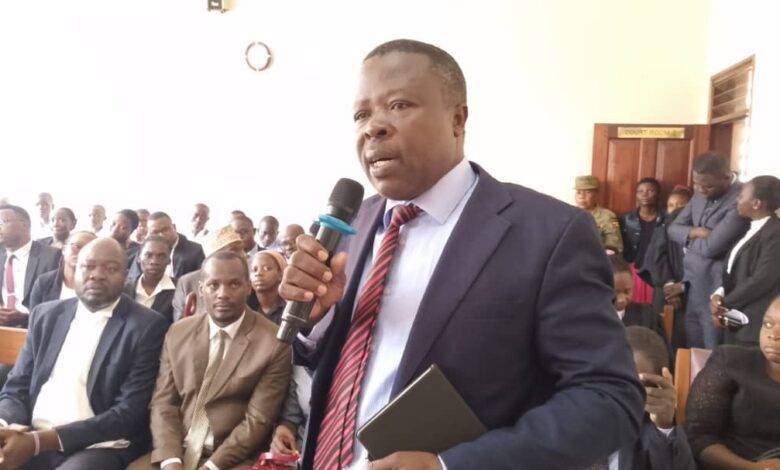
The author is Steven Masiga, the spokesperson of Bugisu cultural institution and Law scholar.
Disclaimer: The views expressed in this article are those of the author and do not necessarily reflect the opinions of UG Reports Media Ltd.
Would you like to share your opinion with us? Please send it to this email: theugreports@gmail.com.