Alcohol kills over 400 in Kotido
Smugglers rely on boda boda riders to avoid police checkpoints, sneaking alcohol along hidden village paths.


Kotido: “They drink to forget. They drink because hunger gnaws at their stomachs. They drink because there is nothing else.”
In Kotido District, where drought and poverty have gnawed away hope, alcohol has quietly claimed 498 lives over the past 15 years. It’s not just a public health crisis it’s a societal breakdown, leaving children orphaned, families shattered, and entire communities spiraling into addiction and despair.
Men, hollowed by addiction, stagger through the streets. Women, desperate to survive, brew the very substance that devastates their homes. Hospitals groan under the weight of patients suffering from liver disease, malnutrition, and alcohol-induced injuries.
This is not about personal choice it is the outcome of systemic failure, where alcohol has become both escape and executioner.
The crisis is being driven by an unregulated trade in crude waragi, smuggled into Karamoja from Jinja, Mbale, Soroti, and Lira. Often laced with toxic chemicals, this waragi is sold cheaply, ensuring rapid addiction and widespread destruction.

How waragi reaches Kotido
Smugglers rely on boda boda riders to avoid police checkpoints, sneaking alcohol along hidden village paths.
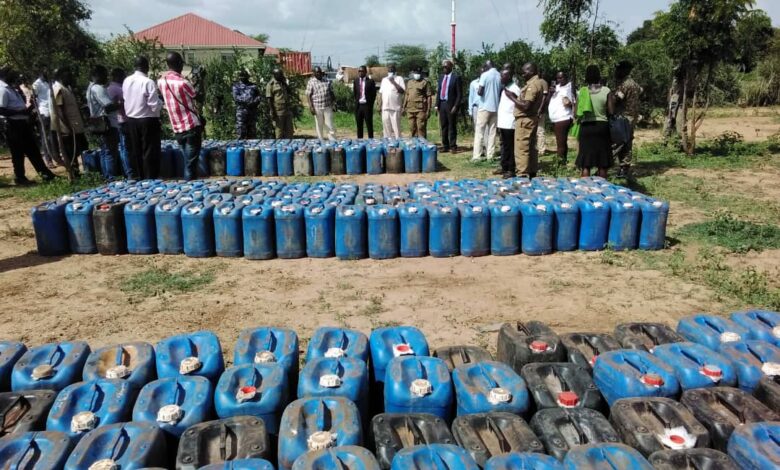
They allegedly bribe to security officers allow waragi to flood the markets unchecked and it arrives in unmarked jerricans, making regulation and tracking nearly impossible.
The deadly toll
Contaminated waragi causes mass poisoning and acute liver failure. In addition, alcohol-fueled cattle raids have surged, leading to violence and bloodshed.
Families, trapped in poverty, spend their meager income on alcohol, worsening malnutrition and domestic abuse.
Medical workers across Karamoja are sounding the alarm.
Dr. John Bosco Nsubuga, Medical Superintendent at Matany Hospital, warns: “Alcohol is now the third leading cause of death in Karamoja, responsible for 11% of deaths. Admissions for alcohol-related illnesses have surged by 25%. We’re seeing liver disease, violent injuries, traffic accidents, and suicide attempts this is a full-blown emergency.”
At just 34, Nakiru from Napupum is a widow. Her husband died of liver failure. Now she watches her son barely a teenager start drinking every morning.
“There is no food, only alcohol,” she says, choking back tears. “I don’t want to bury another.”
Kodet, once a fierce Karachuna warrior, died in a reckless cattle raid, drunk on half a jerrican of waragi.
“I begged him not to drink,” his brother recalls. “He said, ‘I need it to fight.’ He never returned.”
These are not isolated stories they are the everyday tragedies of Kotido.
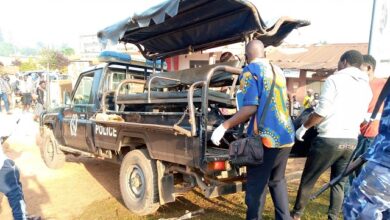
Police raids have seized illicit alcohol, but smugglers adapt quickly.
Church leaders and local authorities now speak out, urging communities to reject waragi and community awareness campaigns are growing but not fast enough.
A report by the Kapeps Ministry paints a harrowing picture of 221 deaths in Kacheri Sub County most drank on empty stomachs, 162 deaths in Kotido Municipality, including 42 women, 132 deaths in Greater Panyangara, all linked to crude waragi and 77 Karachunas died in alcohol-fueled raids.
Matany Hospital remains overwhelmed with alcohol-related cases: psychiatric disorders, liver disease, and severe malnutrition.
“If local leaders fail to act, Kotido will lose more lives at an unbearable rate,” warns John Bosco Akore, Kapeps Ministry founder. “Alcohol is taking everything our families, our livelihoods, our dignity.”
RDC Ichogor speaks out
Charles Ichogor, Kotido’s Resident District Commissioner, has pledged action:
“Now that peace has returned, it’s time to rebuild. We are committed to delivering services, supporting livelihoods, and ending this crisis.”
Ichogor has called for a united front government, local leaders, and citizens to prioritize rehabilitation, economic support, and alcohol regulation.
Do you have an advertisement or article you want to publish? Mail us at theugreports@gmail.com or WhatsApp +256757022363.