Reconciliation Theory of Law: Why Peace Should Prevail Over Retribution in African Jurisprudence
During mediation proceedings at the High Court, an elderly man in his early eighties confronted and physically accosted me in the presence of judicial officers appointed to mediate the matter.


Op-Ed: The reconciliation theory of law, which prioritises healing over punitive, adversarial, state-driven retribution, forms an integral part of African jurisprudence. It views the law as an instrument for restoring social harmony rather than merely punishing offenders. This philosophy is rooted in indigenous concepts such as Ubuntu, Obuntu Bulamu, and Butwela among the Bamasaba.
This theory is grounded in African ontological frameworks that regard justice as a communal and restorative process. The primary objective of a legal system, therefore, should be to repair broken relationships, promote reconciliation, and restore peace within society instead of perpetuating conflict through retributive punishment.
I recently experienced this philosophy firsthand while participating, on behalf of His Highness the Umukuka, in the court-mediated dispute concerning the leadership of the Bamasaba Cultural Institution. During mediation proceedings at the High Court, an elderly man in his early eighties confronted and physically accosted me in the presence of judicial officers appointed to mediate the matter.
Guided by the spirit of African jurisprudence, I chose forgiveness over retaliation. Had I followed the strict dictates of the Western adversarial legal system, the gentleman could have faced criminal charges relating to assault, battery and conduct that undermined court decorum. Instead, I deliberately chose peace over litigation because reconciliation often achieves what punishment cannot.
Our communities should embrace forgiveness rather than vengeance. A society that continually seeks revenge cannot genuinely claim to uphold the values of justice and humanity. Conflict resolution mechanisms should focus on repairing damaged relationships and reintegrating disputants into the community rather than isolating them.

The recent reconciliation of the Bamasaba people demonstrated this principle in practice. Former rivals openly shook hands, signalling a willingness to move beyond years of disagreement. This spirit of unity should not be reversed. We should all respect and uphold the court-mediated settlement reached in July 2026 regarding the leadership of the Bamasaba Cultural Institution.
An old African proverb wisely reminds us that, “Buffaloes are held by their horns, but men are held by their words.” Those who participated in the mediation process should honour the commitments they freely made. Anyone who deliberately violates the terms of the agreement should bear personal responsibility for the consequences of such actions.
Political interests should never be allowed to desecrate cultural institutions. The unfortunate incidents witnessed at Mutoto during the recent Imbalu launch were regrettable, and those responsible for acts of hooliganism should offer a sincere public apology. Cultural institutions should remain symbols of unity rather than arenas for political confrontation.

I am grateful to have played a role in initiating this journey towards cultural reconciliation. At a time when many expected prolonged confrontation, I petitioned for mediation as the most appropriate avenue for resolving the Bugisu cultural leadership disputes. The invitation by the Chief Justice, His Lordship Alfonse Owiny-Dollo, to participate in the Munyonyo mediation process was worthwhile.
I also commend Professor Khaukha and the many individuals who worked tirelessly behind the scenes to facilitate dialogue. Special appreciation goes to the mediation panel chaired by Deputy Chief Justice Emeritus His Lordship Richard Buteera for guiding the parties towards an amicable settlement.
Before mediation, the cultural institution and other parties had filed well over one hundred court cases against one another. Through African-inspired methods of dispute resolution, these disputes were successfully resolved, allowing the Bamasaba community to emerge united under one recognised cultural leader.
Today, the Bugisu region has one recognised cultural leader instead of multiple competing claimants. This achievement should be safeguarded. The leadership of the institution should continue the spirit of reconciliation by reintegrating willing brothers and sisters into the cultural leadership structures where appropriate. While it may not be possible to satisfy everyone, genuine reconciliation requires inclusion wherever possible.
The reconciliation theory of law reminds us that lasting justice is measured not by the number of people punished but by the number of relationships restored. As Africans, we should continue to embrace legal philosophies that strengthen community cohesion, preserve cultural harmony and promote lasting peace.
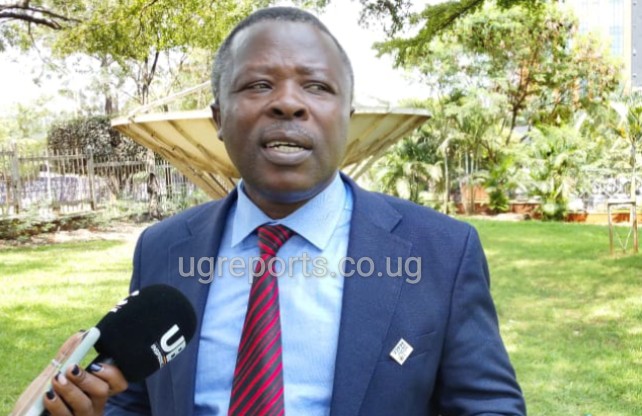
The author is Steven Masiga, the Legal Scholar and Spokesperson of the Bamasaba Cultural Institution.
Disclaimer: As UG Reports Media LTD, we welcome any opinion from anyone if it’s constructive for the development of Uganda. All the expressions and opinions in this write-up are not those of UG Reports Media Ltd. but of the author of the article.
Would you like to share your opinion with us? Please send it to this email: theugreports@gmail.com.