Masindi farmers grapple with striga weed, threatening food security
He added that the weed is spread through animals and farming tools such as hoes and tractors, as well as seedlings moved from one garden to another.

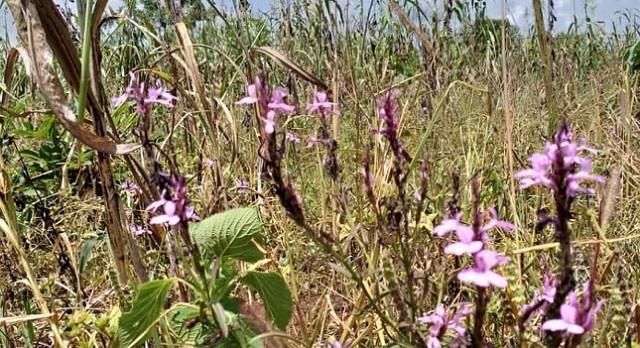

Masindi: Farmers in Masindi district are facing severe losses as striga weed, a parasitic plant, spreads across cereal crops such as maize, rice, and sorghum. The infestation has sharply reduced yields and is threatening local food security.
Kanaginagi Ateenyi Rutindo, a maize farmer from Bokwe Village, says farmers now harvest as little as two bags of maize per acre, compared to the ten bags they previously enjoyed.
“Farmers are incurring great losses from cereal crops due to striga weed. We used to harvest over ten bags per acre, but now we hardly get two bags from two acres,” he lamented.
Simon Omara of Kasenyi Village reported similar losses. He planted two acres of maize expecting 40 bags but harvested only ten, prompting calls for government intervention. John Tusiime, a farmer from Pakanyi Sub County, also urged the Ministry of Agriculture to support farmers in controlling the weed.
Tadeo Wabyona, manager at Gukwatamanzi Farmers Cooperative Society Ltd, explained that striga seeds survive in the soil for long periods and attach to cereal crop roots, stunting growth and reducing yields.

To combat the weed, Gukwatamanzi Farmers Cooperative Society Ltd,and the Soyabean Farmers’ Cooperative Society of Uganda (SOFACU), in partnership with Encot Foundation, have started training farmers on management strategies.
Emily Ainembabazi, Administrative Officer at Encot Foundation, recommends planting oily crops such as soybeans, groundnuts, and sunflower.
“Striga weed does not thrive in oily crops. Consistent cultivation over three to four seasons can contain its spread, and these crops also have ready markets,” she explained.

Francis Byamukama, Programs Manager at Gukwatamanzi, advises farmers to either reduce cereal crop production or practice crop rotation with oily seed crops to limit the weed’s multiplication.
Oliver Kiiza, Vice Chairperson of SOFACU, adds that crops like groundnuts, soybeans, and sim-sim provide stable income and market opportunities.
Sheila Kyomuhendo, Field Officer at Plant Village Uganda, notes that planting crops early in the season allows them to outgrow striga, reducing its impact.
In an exclusive interview with ugreports, the Masindi District Agricultural Officer, Job Byaruhanga, acknowledged that the district is still grappling with the invasion of the striga weed, noting that poor farming practices have increased its multiplication.
Byaruhanga said the invasion has negatively affected farmers, especially maize growers, stressing that productivity has greatly reduced. He added that some farmers have abandoned maize growing and shifted to other crops.
He said the district has undertaken several interventions, including farmer sensitization. Byaruhanga advised farmers to regularly monitor their fields, explaining that this helps in identifying and uprooting the weed at an early stage.
The agriculture officer noted that once the striga weed matures, it becomes difficult to control since its seeds are very small and cannot easily be picked from the ground.
He added that the weed is spread through animals and farming tools such as hoes and tractors, as well as seedlings moved from one garden to another.
To reduce the multiplication of the striga weed, Byaruhanga said the Ministry of Agriculture is conducting research and plant breeding to develop crop varieties that are resistant to parasitic weeds, including striga.
Do you have an advertisement or article you want to publish? Mail us at theugreports@gmail.com or WhatsApp +256757022363.






Soyabean will highly fight this striga. Food security is the mission
what a wonderful article, did you try checking out the best webdesign agencies in germany webdesignagenturnürnberg.de
A really good blog and me back again.