
Op-Ed: Tick tock the election clock is fast ticking away with the country heading for general and presidential elections scheduled to take place on January 15th 2026.
According to the Uganda Electoral Commission (EC) candidates aspiring for the presidential position is composed of a eight horse race namely :HE Yoweri Tibuhaburwa Kaguta Museveni of National Resistance Movement Party(NRM),incumbent and seeking a 7th uninterrupted term of office since 1986;Robert Kyagulanyi Ssentamu of the National Unity Platform party(NUP) and opposition;Robert Kasibante of the National Peasant Party(NPP) and opposition;James Nathan Nandala Mafabi of the Forum for Democratic Change(FDC) and opposition;Gregory Mugisha Muntu Oyera of the Alliance for National Transformation (ANT) and opposition;Mubarak Munyagwa Sserunga of the Common Man’s Party(CMP) and opposition;Frank Bulira Kabinga of the Revolutionary People’s Party (RPP) and opposition and Elton Mabirizi of the Conservative Party (CP) and opposition.
Uganda as a country coined by Sir Churchill Winston “The Pearl of Africa” is endowed with abundant natural,mineral,wildlife, and human resources coupled with fertile land consisting of arable soils;forested, terrestrial,aquatic,wetland ecosystems,with suitable climate and weather for crop and animal husbandry practices,tourism activities,settlement characterized by bimodal rainfall regimes in the central ,western and eastern regions along the equator and unimodal rainfall regimes in the northern and north eastern parts of the country with arid or semi-arid environments,River Nile which is Africa’s longest river,Lake Victoria the continent’s largest fresh water lake,Mountains Elgon and Rwenzori,Minerals,oil and gas resources,national parks and game reserves,birds,hospitable population comprising of diverse ethnic tribes.
According to the Uganda Bureau of Statistics (UBOS),Uganda occupies an area of 241,038 square kilometers,with a population size of 51,384,894;Number of districts 146;Number of counties 312;Number of sub counties 2,191;Number of parishes 10700;Number of villages 71,227.
The incumbent regime is credited for to the country wide implementation of various poverty eradication/reduction programmes over the four decade period in power.These are:

-The Parish Development Model (PDM) where the government provides funding to each parish with Uganda shilling 100 millions on a reimbursable basis;
-The Operation Wealth Creation (OWC) where the government distributes farm inputs (for example ,improved seeds,coffee seedlings,livestock,tools etc) to farmers country wide with the aim of boosting productivity, commercialize agriculture from subsistence to large scale profitable farming and increase household incomes among the rural communities;
-The Emyooga Funds:where government provides start up capital,Youth Livelihood programmes,Women Empowerment Funds and enterprise funds to groups and individuals including the youths and Persons with disabilities(PWDs).
-The Entandikwa Fund:where the government provides start up capital to help farmers to begin small businesses,boost food security and increase household incomes.
–National Agricultural Advisory Services (NAADS) where the government offers agricultural advisory/extension services and inputs to the farmers with the aim of increasing productivity,boost household incomes and ensure food security.
–The Four Acre Model : government programme to help small scale farmers acquire at least 4 acres of land with the aim of commercializing agriculture/farming,boost household incomes and ensure food security.
The government strives to capacitate and support its citizens through these poverty reduction /eradication programmes,however challenges existed that curtailed their successes namely:
-The politicization of these national programmes,
-The existing rampant corruption in the state apparatuses in service delivery to the citizens,
-Embezzlement of public funds by government officials meant for the rural poor communities.
-Some farmers can’t afford to acquire adequate land for commercial and profitable crop, agricultural and animal husbandry practices.
By the government adopting “a national community driven project economy model” it will be able to address and provide solutions to the following national challenges that are affecting the entire population:
-The rampant institutionalized corruption,
-Defalcation and embezzlement of public resources and funds by government officials,
-The exacerbated unemployment rates among the country’s productive and young population,
-Politicization of service delivery programmes to the citizens including health services and poverty reduction programmes,
-Effects of climate change and global warming,
-Lack of a national minimum wage for employable citizens,
-Military personnel assigned to manage service delivery and poverty reduction programmes /enterprises for example, Operation Wealth Creation(OWC),instead the government should employ its civilian citizens and the rural communities to run these enterprises by themselves. It creates a sense of belonging,ownership and trust.
-Abject poverty especially among the rural population,
-Majority of farmers in rural areas lack start up capital,collateral to access, borrow and finance agricultural credit from financial institutions and banks,
-Lack of markets for farm produce to be sold at fair prices,by excluding “middlemen” in the agricultural production supply chain,
-Lack of adequate farming tools and equipment for example tractors,ox ploughs,,hoes,pumps,irrigation equipment,generators etc,some of the tools used by farmers are rudimentary in nature and incapable of catalysing the genesis of the national community driven project economy model“.
-Absence of electricity/digital connections,robust road network country wide,to mention but a few.
The above challenges contributed to the failures by the government to ably implement the existing poverty reduction and service delivery programmes especially to the rural population country wide.
In the, Karamoja sub region the government can implement the “national community driven project economy model” by harnessing the fertile arid and semi-arid soils with the establishment of sustainable community irrigation systems.This can be done by sinking boreholes, construction of valley dams,restocking of livestock, diverting part of the river Nile waters to Karamoja for irrigation purposes in order to sustain crop and animal husbandry practices by the local communities,capacitate the local communities through sensitization about modern commercial farming and animal husbandry practices/methods, emphasize food security and make malnutrition and starvation related deaths history in this region during famine and dry seasons.
The main drivers of the national community driven project economy model” will be the youths and employable citizens,a need for the government to carry out human capital development through training, sensitization of the rural communities about establishing income generating projects in their areas and emphasize sustainability of these projects to ensure the communities reap the tangible benefits such as employment opportunities,get household incomes and be able to afford the basic needs to sustain their lives.
Under the “national community driven project economy model” each village in Uganda will be able to start up one or more of the following projects:
-Crop and animal husbandry,
-Tractorization of agriculture/farming,
-Commercial agriculture/farming,
-Poultry(Turkeys,chicken,ducks, guinea fowls etc),
-Pig rearing,
-Rabbit rearing,
-Goat rearing,
-Fruit growing (Oranges,Avocado, Mangoes, Guava,Jack fruits,Soursop,Paw paw,Passion fruits etc),
-Cereals/grains growing eg rice,millet,simsim,sun flower,sorghum,wheat etc,
-Silkworm production(Sericulture),
-Horticulture( the growing of vegetables,tomatoes,onions, pineapples water melons,cabbages etc),
-Tree planting especially Eucalyptus,Teak,Pines etc),
-Plantain growing,
-Root and tuber crop growing,
-Cash crop growing for example coffee,cocoa,tea etc
-Brick making,
-Dog breeding,
-Charcoal burning,
-Fish farming / fish ponds,
-Provision of communal labour for profit( synonymous with “The Ujamaa community system” in Tanzania),
-Tree/crop nursery beds,
-Organic manure/fertilizers,
-Agro processing /Value Addition of agricultural produce eg Threshing rice to remove husks,Milling cereals etc,
-Skill based activities, for example:Tailoring,motorcycle/motor vehicle/bicycle repairs;TV/Radio and other electrical appliances and equipment repairs,
-Irrigation systems,
-Improve energy saving stoves,
-Solar power systems(for places far from the national power grid),
-Commercial cultivation of medicinal plants,
-Bee keeping/ Apiary,
-Watering points eg wells,ponds,bore holes etc,to mention but a few.
The National Resistance Movement (NRM) main theme in the 2025-31 presidential campaign manifesto states that “Protecting the gains as Uganda transits to higher middle income status”.In my opinion,for Uganda to attain a middle income status it must first adopt the “national community driven project economy model” across the existing 71,227 villages country wide,where each homestead will be able to generate sustainable household incomes from their established commercial projects . By eliminating the rampant poverty among the local communities then the entire country will be ready to transit to a “Middle Income Status” phase.This is feasible although it requires some period of time to be fully implemented at national level by the government.
In any local community setting in Uganda,the adoption of this Model will have multiplier effects of increasing the life expectancy of the community members,improve on their quality of life,ensure that sustainable household incomes are readily available,afford the communities in establishing more income generating projects(scaling up from one income generating projects to more projects)implying increment in househoud incomes per homestead.
All established income generating projects within the communities must be monitored at all levels by the government to ensure that they are sustainable ,offer tangible benefits and address the needs of the local communities in line with the established government sectoral policies and the NRM 2026-2031presidential campaign manifesto.
For the past four decades in power since 1986,the NRM government has attempted to fight the rampant corruption and embezzlement of public resources /funds by some of it’s cadres,but these two vices have been persistent henceforth.
We anticipate that the government will re-strategize it’s approach to completely address the challenges of corruption and the defalcation of public funds by government officials,by instituting stringent punitive measures to all those arrested and convicted of corruption related offences.
In conclusion,as Ugandans await to usher in and welcome the government to be elected in power by the mandate of the people of Uganda through the January 15th 2026 general and presidential elections,it’s our prayers as bonafide Ugandans to request the government to adopt and implement the “national community driven project economy model” at village levels country wide so as to capacitate the rural based population to be able to earn household incomes on sustainable basis,to eliminate poverty and dependency syndrome,to encourage unemployed youths to migrate from urban to rural areas,ensure food security for all citizens ,activate the establishment of local food granaries at village levels,completely eliminate corruption and pilferage of public funds by some individuals,promote patriotism at all levels,depoliticize all government service delivery programmes to all Ugandan citizens,ensure that all project areas existing upcountry easily access markets to sale their farm products at fair prices,ensure that farmers are duly protected from the actions of unscrupulous”middlemen” in the agricultural production supply chains.
The incumbent government is credited for peace,security, infrastructure development,poverty eradication,human capital development and the implementation of Universal Primary Education(UPE), Universal Secondary Education(USE),Vocational Training Institutes(VTIs),health service delivery, manufacturing /value addition;harnessing oil and gas resources and discovery of other mineral resources;exporting of cash crops like coffee ,cocoa,tea,diary and other products,;regional co-operation,peace keeping and political integration into the East African Community (EAC).
The government should also introduce a Minimum wage bill to implement and actualize the Minimum wage laws on prospective employers in Uganda.
Quote:” There is no power for change greater than a community discovering what it cares about”-MARGARET WHEATLEY.
For God and our country.
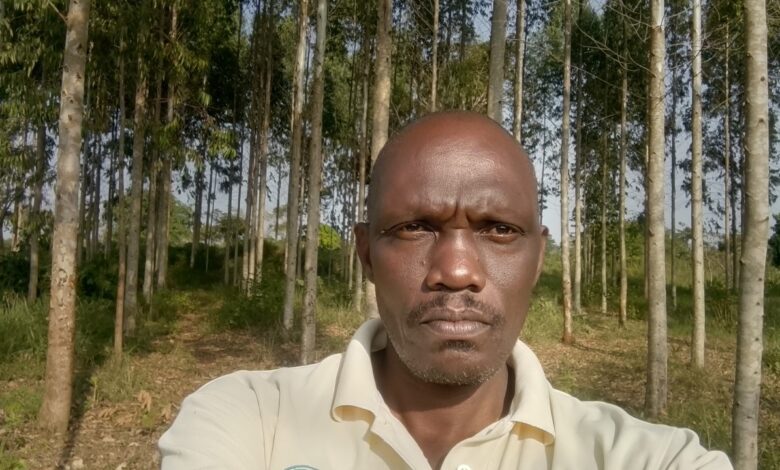
The author is Kizito Simon Njaye, Research Associate, African Research Consult-Uganda.
Disclaimer: As UG Reports Media LTD, we welcome any opinion from anyone if it’s constructive for the development of Uganda. All the expressions and opinions in this write-up are not those of UG Reports Media Ltd. but of the author of the article.
Would you like to share your opinion with us? Please send it to this email: theugreports@gmail.com.