We cannot allow one clan to elect Umukuka IV, V, VI, and VII
Only through respect for legitimate cultural order and collective goodwill can the Bamasaaba remain one united people under one cultural institution.

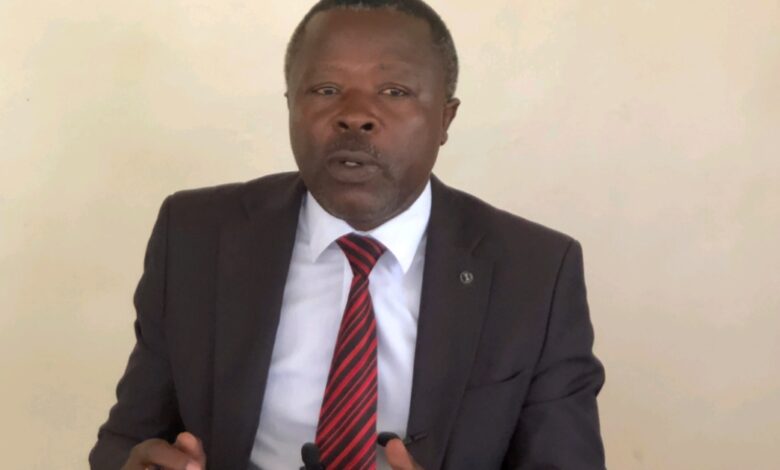

Op-Ed: I recently saw elder Wagabyalire calling upon the Wanale clan to elect another candidate so that he can hand over power to him in December.
Having followed every development within the Wanale clan, I can comfortably say that their actions appear calculated to create disunity among the Bamasaaba people.
Similar efforts were previously made to form another cultural institution in Bududa, but as a community we collectively rejected the idea — and I am happy to report that the architects of that move eventually listened to reason.
Today, there are a few individuals prepared to bypass the regulatory statutes governing the Inzu ya Masaba (Bugisu Cultural Institution). As an institution, we shall not allow such divisive and unlawful plans to materialize.
The Australian radical philosopher Eugene Ehrlich once urged the world to disregard government-enacted laws, arguing instead that societies naturally develop their own “living laws” through daily interactions.

While Ehrlich’s philosophy may hold some universal truth, it must be applied with caution. In Uganda’s context, the authority to make and enforce laws rests with the state, particularly under the positive school of legal thought.
There is sufficient literature indicating that Bamasaaba often struggle to trust one another, and this was clearly evident during the election of Umukuka I, His Highness Wilson Wamimbi. Those present at the time will recall that since the race involved candidates from both South and North Bugisu, there were concerns over bias. To ensure neutrality, Hon. Irene Manghali, then Deputy RDC of Manafwa, and Bishop Gimadu were invited to preside over the election process, as no one from North Bugisu was deemed neutral enough.
This historical event demonstrates that Bamasaaba are one people, and should never allow clan divisions to undermine that unity. While it is true that clans are an integral part of our identity, they should never be used as instruments of division.
Unity in any community does not stem merely from living together but from being bound by a shared vision or belief. If proximity alone created unity, then even husbands and wives would never disagree. For instance, a traditional healer in Bududa may find common ground with another in Busoga because they share similar beliefs — their unity is anchored in a common idea.
Unfortunately, there are deliberate efforts by some Bamasaaba to sever the umbilical cord of unity that has bound our people for generations. It is a well-established fact that the Bamasaaba originate from various clans and districts including Bududa, Bulambuli, Namisindwa, Mbale City, and Manafwa as recognized by Uganda’s local government structure.
However, if the division of Bamasaaba into clans such as Mwambu, Wanale, and Mubuya continues to deepen, it may eventually backfire, leading to communities demanding cultural independence and their own leaders. While I have no personal problem with clan chairpersons such as Mr. Mayatsa (Wanale Clan) or Dr. Wesonga (Buhalasi Clan), the real challenge will arise if these leaders begin to seek recognition as Umukuka for their respective clans — especially if such positions are expected to receive government facilitation.
The introduction of cultural leadership in Uganda was intended to foster unity, not division. However, this noble model must be nurtured, respected, and guided by law if it is to achieve its intended purpose.
Recently, during an Alternative Justice Systems training organized by the Chief Justice at Munyonyo, Hon. Justice Owiny-Dollo reminded participants why over 20 clan leaders from the Acholi region had attended. He noted that they were embroiled in disputes with their king and needed to appreciate the importance of mediation.
Cultural institutions are meant to be vanguards of unity in their communities and should always be ready to promote reconciliation and cooperation. Unfortunately, many communities today seem inclined to follow the anarchic thinking of scholars like Ehrlich — advocating for self-made laws instead of state-guided order.
The Bamasaaba must reject any obstacle to unity, particularly the divisive clauses in the Inzu ya Masaba constitution. We are not empowered to create our own parallel legal framework; rather, we must align with the state’s enabling laws on customs and cultural practices.
Only through respect for legitimate cultural order and collective goodwill can the Bamasaaba remain one united people under one cultural institution.
The author is Steven Masiga, the Spokesperson for Bugisu Cultural Institution.
Disclaimer: As UG Reports Media LTD, we welcome any opinion from anyone if it’s constructive for the development of Uganda. All the expressions and opinions in this write-up are not those of UG Reports Media Ltd. but of the author of the article.
Would you like to share your opinion with us? Please send it to this email: theugreports@gmail.com.