Bamasaaba should distance themselves from divisive ‘legislations’
Only by embracing lawful, inclusive, and unifying approaches can we safeguard the integrity and future of the Inzu Ya Masaba and preserve the shared identity of the Bamasaaba people.

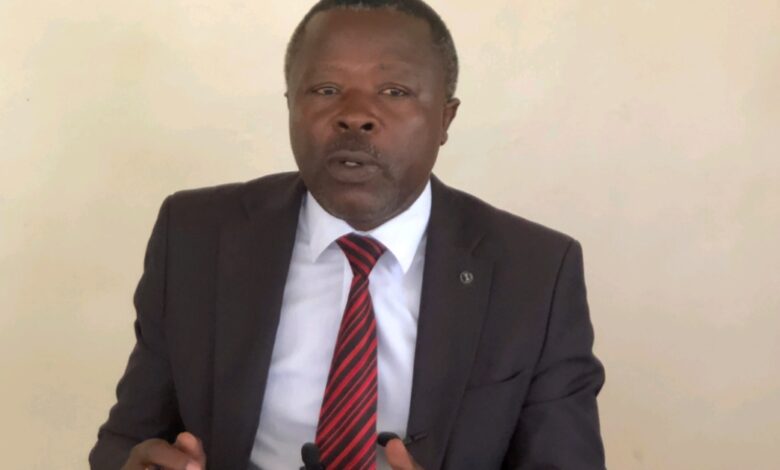

Op-Ed: An Australian radical philosopher, Eugene Ehrlich, once urged the world to disregard state-enacted laws, arguing instead that communities already possess their own “living laws” norms shaped by daily human interaction. While his idea carries some universal truth, it must be approached with caution.
In the Ugandan context, the authority to make laws rightly resides with the state, consistent with the positive school of legal thought.
There is sufficient evidence to suggest that the Bamasaaba sometimes struggle to trust one another, as was evident during the election of Umukuka I, His Highness Wilson Wamimbi.
Those present will recall that it was deemed necessary to bring in a neutral figure Hon. Irene Manghali, then Deputy RDC of Manafwa to oversee the process, alongside Bishop Gimadu, because candidates hailed from both South and North Bugisu. This lack of trust reflected a dangerous undercurrent of division that must be addressed.
The Bamasaaba are one people and should resist any attempts to divide themselves along clan lines. While our clans are part of our heritage, they should not be sources of disunity.

True unity is not merely about living together geographically but about being bound by a shared purpose. If cohabitation alone guaranteed harmony, then even married couples would never disagree. Rather, unity arises from shared beliefs and values just as traditional healers in Bududa may feel kinship with those in Busoga due to shared spiritual practices.
Unfortunately, there are deliberate efforts by some individuals to sever the umbilical cord that has long held the Bamasaaba together. It is well-established that the Bamasaaba comprise several clans spread across Bududa, Bulambuli, Namisindwa, Mbale City, and Manafwa Districts.
However, the increasing fragmentation into subgroups such as the Mwambu, Wanale, and Mubuya clans could eventually lead to damaging cultural rivalries, with each faction seeking its own leader or Umukuka.
While it is acceptable for clans to have their respective chairpersons like Mr. Mayatsa, elected as Wanale clan chairman, or Dr. Wesonga of the Buhalasi clan problems arise when such leaders begin to aspire to broader cultural leadership positions. This risks politicizing our culture and turning it into a competition for state facilitation rather than a vehicle for unity.
The establishment of cultural leadership in Uganda was never intended to breed division, but rather to foster unity and identity. However, the current model requires careful nurturing and respect if it is to fulfill its intended purpose.
Recently, while attending an Alternative Justice System training in Munyonyo organized by the Chief Justice, His Lordship Justice Owiny-Dollo observed that the Acholi region had nearly 20 clan chairmen present almost half of all participants. He noted that such fragmentation stems from internal power struggles and emphasized the importance of mediation to restore harmony.
Similarly, the Bamasaaba cultural institution must remember that traditional structures exist to unite, not divide. Unfortunately, some within our community have embraced philosophies like Ehrlich’s “living law,” using them to justify rejecting state laws or introducing divisive community constitutions such as the current Inzu Ya Masaba constitution.
The Bamasaaba must therefore distance themselves from any form of “legislation” or internal law-making that undermines unity. We are not vested with the authority to enact independent laws as a community. Instead, we must operate within the national legal framework that recognizes and regulates cultural institutions in Uganda.
Only by embracing lawful, inclusive, and unifying approaches can we safeguard the integrity and future of the Inzu Ya Masaba and preserve the shared identity of the Bamasaaba people.
The author is Steven Masiga,a lawyer and spokesperson of the Bugisu Cultural Institution.
Disclaimer: As UG Reports Media LTD, we welcome any opinion from anyone if it’s constructive for the development of Uganda. All the expressions and opinions in this write-up are not those of UG Reports Media Ltd. but of the author of the article.
Would you like to share your opinion with us? Please send it to this email: theugreports@gmail.com.



This topic really needed to be talked about. Thank you.