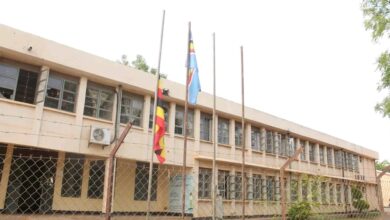
Kiryandongo moves to boost local revenue collection
“We need to identify what is hindering our revenue collection at the grassroots so we can collectively address it,” he said.

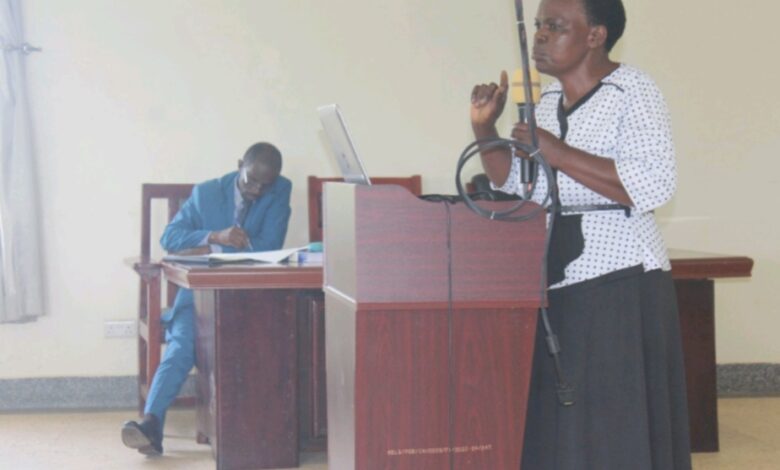

Kiryandongo: The Kiryandongo District Revenue Task Force has convened to devise strategies for enhancing local revenue collection during the 2025/2026 financial year.
The meeting followed the District’s underperformance in meeting its revenue targets for both the District headquarters and the 13 lower local governments.
The District had set a target of UGX 2.88 billion in locally raised revenue comprising UGX 810.9 million from the District headquarters and UGX 2.07 billion from the lower local governments. However, by September 30, 2025, only UGX 391.6 million had been collected, against a quarterly target of UGX 719.5 million.
During the meeting, Mr. Deo Kabugo, the Deputy Chief Administrative Officer, urged parish chiefs and revenue collectors to openly discuss the challenges affecting their performance so that the Task Force could provide targeted support.
“We need to identify what is hindering our revenue collection at the grassroots so we can collectively address it,” he said.

Ms. Jennifer Tingiramurungi, the District Revenue Officer, highlighted that nomination fees for political leaders had positively contributed to revenue performance in the first quarter. However, she raised concern over delayed transfers of collected funds from the Uganda Revenue Authority (URA), noting that such delays disrupt district operations and service delivery.
“Delayed remittances from URA have affected not just our revenue performance but also the implementation of planned activities,” she explained.
Tingiramurungi proposed that revenue collectors be given quarterly targets tailored to the specific potential of their respective parishes. She further emphasized the need for community sensitization about the new Integrated Revenue Administration System (IRAS) to enhance compliance and transparency in revenue collection.

In his remarks, Mr. James Michael Ociba, the Assistant District Health Officer for Environmental Health, reminded the Task Force of the importance of adhering to the Public Health Act, which provides several avenues for generating local revenue.
“Proper enforcement of public health regulations can help improve both service delivery and revenue mobilization,” he noted.
Currently, locally raised revenue accounts for 6.9% of Kiryandongo District’s total budget for the 2025/2026 financial year. Officials emphasized that achieving the revenue target would significantly enhance budget performance and the overall quality of service delivery across the district.
Do you have an advertisement or article you want to publish? Mail us at theugreports@gmail.com or WhatsApp +256757022363.