Respect for the Rule of Law in Cultural Institutions: A Call to Bamasaaba and the Nation
“Even if you don’t like the antelope, you must at least admire its speed.”


Op-Ed: I am compelled to echo the famous words of General Eyadema, former President of Togo, who once said:
“Even if you don’t like the antelope, you must at least admire its speed.”
In this spirit, I urge all fellow Bamasaaba to read, understand, and respect the Ugandan laws that regulate Bukuka (the cultural leadership institution) in Masaabaland. As a cultural institution, we cannot move forward without the guidance of Uganda’s municipal laws. It’s akin to constructing a house — you need both cement and water; without either, the bricks are of no use.
Just as cement requires water to initiate construction, our cultural practices must be blended with legal frameworks to establish legitimacy and sustainability. Ignoring this is perilous.
I hereby call upon the relevant Ministries and the Judiciary to examine the so-called Inzu Ya Masaaba Constitution. This document must be declared an impugned provision, as it remains a major source of confusion in our region. It should be struck down by the courts because it was enacted by individuals (elders) who were not legally clothed with such powers. This act contravenes Article 3 and Article 79(1)(2) of the 1995 Constitution of Uganda, and Section 38 of the Local Government Act.

The making of laws in Uganda, right from the colonial era, has always been a function of Government initially through Orders in Council and later through Acts of Parliament.
This function remains the exclusive domain of Parliament, and not of individuals or cultural elders. Any attempt to usurp this role is not only illegal but also amounts to attempting to create a parallel state structure, a serious constitutional affront.
It is worrying that a few individuals in Bugisu continue to ignore Ugandan regulatory laws governing cultural institutions. This behavior is dangerous and subversive. Elders and other actors within our cultural institution must understand that they cannot make laws that is Parliament’s job. Article 79 of the Constitution is clear on this.

Some of these actions are tantamount to treasonous behavior, where individuals operate outside the legal framework and try to establish alternative governance structures. As Ugandans, and particularly as Bamasaaba, we must reject such illegality.
I challenge the Government and relevant Ministries, in line with Articles 4 and 5 of the Constitution, to step up efforts in constitutional education and dissemination.
The ignorance of the law, even among the educated is disturbing. Some claim that if you haven’t studied law, you shouldn’t speak about it. This kind of elitism is dangerous and only fosters more ignorance and disobedience.
In Uganda, no traditional or cultural leader can ignore the enabling laws. Anyone aspiring to cultural leadership must first understand the legal framework that governs such institutions. Culture must operate within the bounds of the law, not above it. Refer to Article 2(1)(2) of the Constitution which affirms the supremacy of the Constitution over all other laws, including customs and traditions.
Our cultural norms and government laws must work concurrently and cooperatively, not in opposition. As Article 246 of the Constitution affirms, traditional and cultural leaders in Uganda only exist legally through the constitutional framework. Without this recognition, no one can be legitimately considered a traditional or cultural leader.
Just like a traditional surgeon needs both the knife and lifukhulu (traditional dust) during circumcision, cultural leadership requires both culture and legal authority to function effectively.
At the recent AJS (Alternative Justice Systems) summit in Munyonyo, I had the privilege as a member of the ADR movement to share how the Bamasaaba people peacefully resolved leadership disputes within Inzu Ya Masaaba.
This was achieved by harmonizing the law and culture, especially by assembling elders in line with Article 246(1) of the Constitution and the provisions of the Cultural Leaders Act (2011). This peaceful process is a national success story.
Unfortunately, some individuals are now attempting to revive outdated political agendas and dynasties. As a cultural institution, we must not allow ourselves to be used as tools to fight political battles or divide the people of Bugisu.
We stand for unity not political fragmentation and reject any form of external funding meant to destabilize our leadership.
No one can displace the role of Government in making laws not in Uganda, not anywhere in the world. Culture must walk hand-in-hand with the law. If you wish to lead a cultural institution, first understand the Constitution and the laws that empower it. Only then can we build a peaceful, united, and legally sound future for the Bamasaaba people.
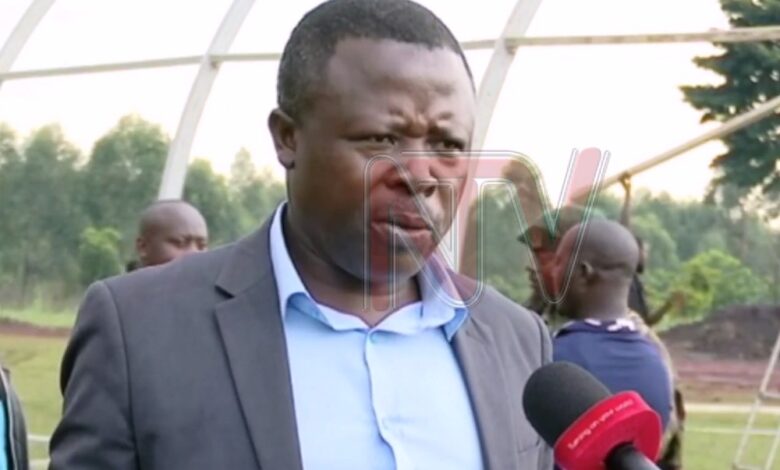
The author is Steven Masiga, the Spokesperson of Bugisu Cultural Institution & Master of Laws (LLM) Candidate.
Disclaimer: As UG Reports Media LTD, we welcome any opinion from anyone if it’s constructive for the development of Uganda. All the expressions and opinions in this write-up are not those of UG Reports Media Ltd. but of the author of the article.
Would you like to share your opinion with us? Please send it to this email: theugreports@gmail.com.