West Nile journalists trained on ethical reporting
It ranks among the most common serious birth defects globally, though it is less prevalent than congenital heart defects.

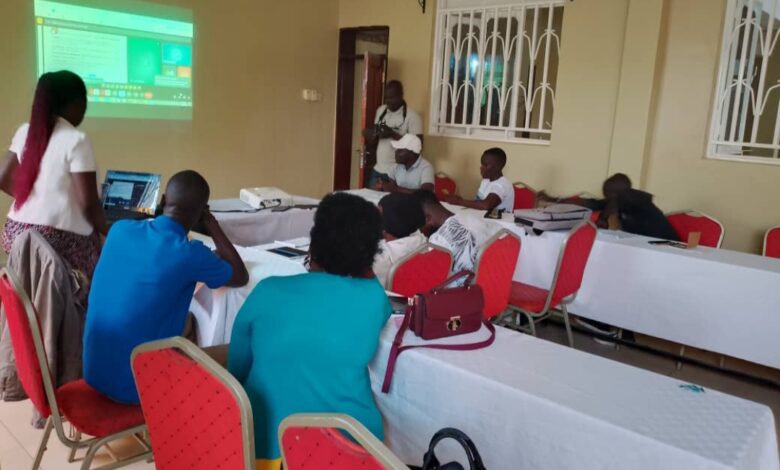

Nebbi: Journalists from various media outlets across the West Nile Subregion underwent a one-day intensive training aimed at promoting ethical reporting and increasing public awareness of spina bifida and hydrocephalus two major congenital neurological conditions affecting thousands in Uganda.
The training, held on September 3, 2025, at Gaf Apartment Motel in Nebbi Municipality, was organized by the Spina Bifida and Hydrocephalus Association of Uganda (SHAU).
The session focused on equipping journalists with knowledge and tools to report sensitively and accurately on these often misunderstood conditions.
SHAU’s Mission and Impact
Founded in 2016, SHAU is a non-profit organization dedicated to improving the quality of life for individuals living with spina bifida and hydrocephalus and supporting their caregivers. Headquartered in Kampala, SHAU operates regionally across Uganda, advocating for disability rights, inclusive health services, and community empowerment.

Through lived experiences and partnerships, SHAU promotes policy reforms, inclusive education, and public awareness to dismantle stigma and drive systemic change.
Call for Ethical Journalism
In a virtual address via Zoom, SHAU Executive Director Ruth Nalugya emphasized the critical role of the media in addressing the “silent burden” of spina bifida and hydrocephalus.

“As media, we must report on the challenges faced by individuals with spina bifida and hydrocephalus without using stigmatizing or derogatory language,” Nalugya urged.
Jackline Ahimbisibwe, SHAU’s Monitoring and Evaluation Officer, also encouraged evidence-based reporting that champions inclusive healthcare, rehabilitation, human rights, and educational access.
She underscored SHAU’s values of diversity, equity, compassion, and integrity, highlighting the importance of peer-to-peer support systems in families, schools, and communities.
According to the World Health Organization (WHO), the global incidence of spina bifida and other neural tube defects (NTDs) ranges from 0.1 to 5 per 1,000 live births, influenced by factors such as geographic region and folic acid fortification programs.
Spina bifida, a common congenital neural tube defect, results from incomplete closure of the neural tube during embryonic development, often leading to motor and sensory impairments.
Hydrocephalus, characterized by an accumulation of cerebrospinal fluid in the brain, can cause increased intracranial pressure and cognitive challenges if untreated, according to WHO.
Journalists’ Responses
Alex Pithua, a journalist with Radio Paidha, called on colleagues to apply the training to enhance community awareness and sensitization efforts.
Jenny Watango, a Nebbi-based journalist, noted, “This training has significantly expanded our understanding of spina bifida and hydrocephalus, conditions we previously knew little about.”
Edna Piyic, a Vision Group journalist from Nebbi, expressed enthusiasm, stating, “From today, we can educate mothers on preventive measures to reduce the risk of these conditions.”
Hillary Alithum, a journalist from Zombo with Voice of Madi, pledged to uphold ethical reporting standards, expressing satisfaction with the training.
Spina bifida, a significant congenital disorder, exhibits notable geographic variation in prevalence, ranging from 1 in 100 births in parts of China to 0.4 per 1,000 births in developed countries like the United States.
It ranks among the most common serious birth defects globally, though it is less prevalent than congenital heart defects.
The introduction of mandatory folic acid fortification in staple foods has proven to be a critical intervention, substantially reducing the incidence of neural tube defects (NTDs) in countries that have adopted this strategy, highlighting its effectiveness in primary prevention.
CURE International’s Hydrocephalus Research in Uganda:
A prospective study by CURE International in Uganda examined the etiology and treatment of hydrocephalus, focusing on endoscopic third ventriculostomy (ETV) in 300 children, predominantly under 1 year old. The study found that 60% of cases were caused by cerebrospinal fluid infections, with 76% of these infections occurring in the first month of life.
According to SHAU, the five-year training program aim to empower journalists to raise awareness about spina bifida and hydrocephalus.
By fostering community education and advocacy, the organization notes that such efforts shall reduce complications associated with these conditions, leveraging the preventive benefits of interventions like folic acid supplementation to address NTDs on a broader scale.
Do you have an advertisement or article you want to publish? Mail us at theugreports@gmail.com or WhatsApp +256757022363.