Current Ugandan tribes and their ancient names
He lived in a time when formal identity documentation was virtually nonexistent and naming conventions were far simpler.


Op-Ed: Many of Uganda’s current major tribes and ethnic groups received formal recognition well before independence, particularly as referenced in Section 2 of Uganda’s pre-independence Constitution, which was drafted in London by over 110 eminent figures representing various political and social interests across the country.
However, a closer look at our pre-colonial history reveals that many of these ethnic groups and regions were once known by different names a fact that has sparked ongoing conversations around identity, naming, and historical accuracy.
Evolving Names and Identities
In Buganda, for instance, historical records indicate that in the 13th and 14th centuries, the region was referred to as “Muwawa”, which roughly meant “a sparsely populated place.” Similarly, Ankole was originally known as “Kaaro Karungi,” a term still fondly remembered by cultural historians.
Busoga, now a prominent kingdom in eastern Uganda, was once referred to as “Usoga”, possibly derived from a small hill in the area that acted as a geographical marker. Meanwhile, Karamoja home to the Karimojong people was originally inhabited by the Jie, a group believed to have migrated from Ethiopia approximately 500 years ago. The name “Karamoja” is thought to have evolved from the expression “Eker ngimojong”, meaning “no further movement,” a reference to the group’s exhaustion and refusal to trek further.

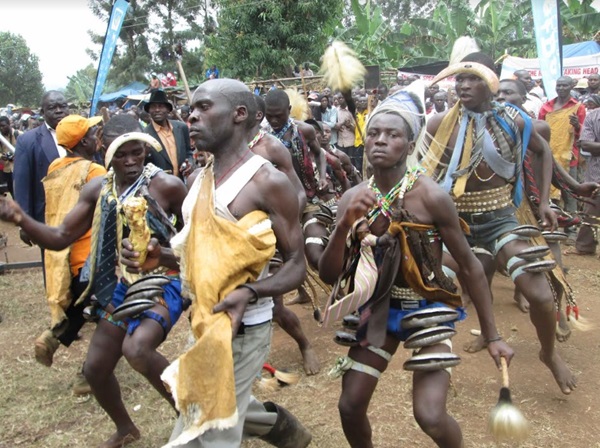
In the Bugisu region, the current name is increasingly under review, with calls for reverting to “Bamasaaba” the people who live in the area. While Bugisu is the region, Bamasaaba is the actual ethnic identity of the people, and many now advocate for the tribe to be recognized accordingly.
Until 1980, what is now Kapchorwa District was officially known as Sebei District, and Kabale was commonly referred to as Kigezi, or simply, “the land of the highlands.”
Limited Movement and Enclosed Societies

Roughly 200 years ago, the people of Bugisu/Masaabaland had little interaction with the outside world. Limited transportation, the threat of wild animals, and fears of Arab and European slave traders or colonial conscriptors meant that movement beyond one’s immediate surroundings was rare.
People lived enclosed lives, focusing on their local communities and subsistence lifestyles. In areas such as Bukalasi, oral histories suggest that residents feared interaction with strangers, especially Arab traders, who were sometimes involved in slave raids or recruitment for foreign wars.
My great-grandfather, Nasasa, born around 1870, had only one name much like Moses in the Bible. He lived in a time when formal identity documentation was virtually nonexistent and naming conventions were far simpler.
The Case for Cultural Reconsideration
As Uganda continues to evolve, it’s only natural to revisit our cultural narratives, especially names that may have been colonially imposed or historically inaccurate. For the Bugisu region, the argument to shift from the regional term “Bugisu” to the ethnic “Bamasaaba” is one rooted in historical truth and cultural authenticity.
Such changes would not only reflect the true identity of our people but also honor the ancestral narratives that have been passed down for generations. In doing so, we can foster a deeper understanding of who we are, where we came from, and what we aspire to preserve.
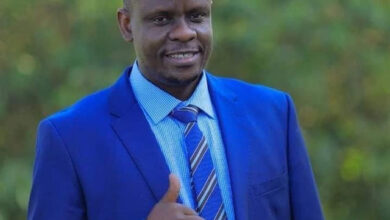
The author is Steven Masiga, Spokesperson, Bugisu Cultural Institution.
Disclaimer: As UG Reports Media LTD, we welcome any opinion from anyone if it’s constructive for the development of Uganda. All the expressions and opinions in this write-up are not those of UG Reports Media Ltd. but of the author of the article.
Would you like to share your opinion with us? Please send it to this email: theugreports@gmail.com.